
Avelino Formosinho / CC BY-SA 4.0, via Wikimedia Commons
Thymus carnosus: complete guide
Thymus carnosus
¿Quieres ver Thymus carnosus: complete guide en tu jardín?
1 minuto, sin tarjeta de crédito
Overview
Thymus carnosus, known as fleshy thyme, is a small, compact aromatic groundcover native to the limestone rocks of southwestern Spain and southwestern Portugal. This extremely rare and specialized thyme species is renowned for its fleshy, grey-green leaves and compact, ball-shaped growth habit. Though less familiar than common thyme varieties, this species deserves considerable attention in alpine and rock garden settings.
The plant is extremely hardy and can thrive even under challenging conditions, making it a gem for specialized gardeners.
Appearance & Bloom
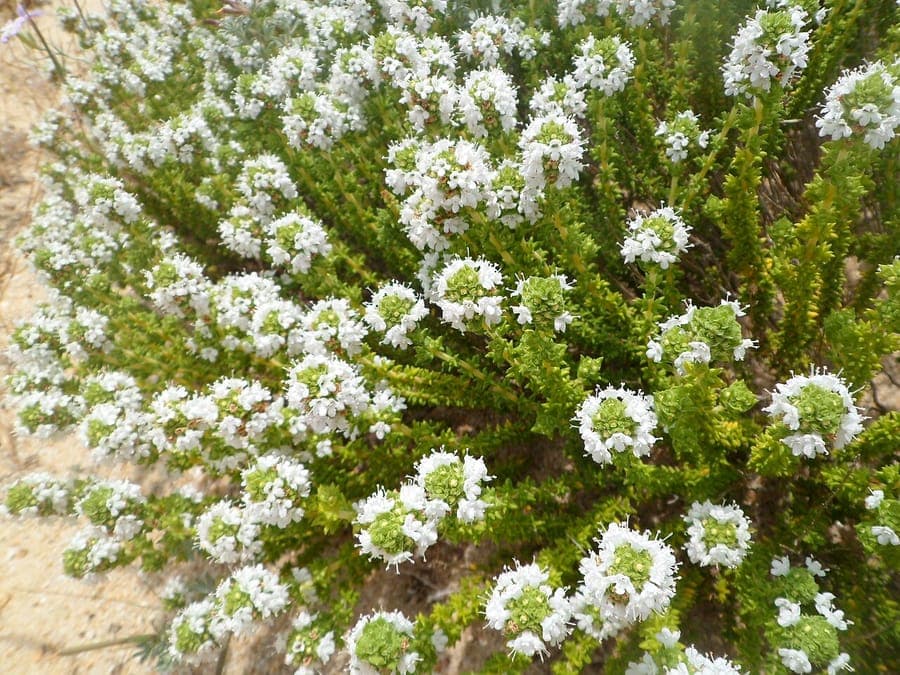
Thymus carnosus forms a compact, ball-like mound only 10-20 cm tall. The leaves are larger than many other thyme species, fleshy (succulent) in texture, and grey-green in color. The plant develops its natural, organic form without extensive pruning requirements.
During summer, small pink to purple flowers appear in tight clusters at branch tips. These flowers are highly attractive to honeybees and butterflies. Bloom time is quite extended, from July through October in most regions.
Ideal Location
Thymus carnosus thrives optimally in very sunny locations with at least eight hours of direct sunlight daily. The plant is unsuitable for shady locations. It performs particularly well on sloped terrain where soil rapidly drains.
This plant is ideal for alpine troughs, rock gardens, crevice planting, and containers. It also functions as a low groundcover in moisture-poor areas with excellent drainage.
Soil
Thymus carnosus is extremely particular about soil requirements. It must have very well-draining medium, ideally a mixture of grit, sand, and small gravel with minimal organic matter. True loam soils are unsuitable. The plant tolerates lime-rich soils well.
Heavy soils must be drastically amended by adding mineral material. Waterlogging is fatal to this alpine specialist.
Watering
Once established, Thymus carnosus is highly drought-tolerant thanks to its fleshy leaves that store water. Minimal water is needed outside of moderate drought periods. In troughs or pots, monthly water during peak growth may be sufficient.
Avoid overwatering, especially in winter. In temperate winters with regular rainfall, supplemental water is rarely needed once the plant is well-established.
Diseño gratis
¿Quieres ver Thymus carnosus: complete guide en tu jardín? Crea un diseño gratis ahora.
Pruning
Thymus carnosus requires minimal pruning. The plant naturally forms a compact ball shape. After flowers fade, light cutting back to shape may help, but aggressive pruning is neither needed nor desired.
Remove only dead or rotted plant parts. This is not a plant for formal shaping.
Maintenance Calendar
Spring: Check for frost damage. Remove dead material. Begin moderate watering as growth resumes.
Summer: Water minimally. Enjoy the flowers. Ensure continued good drainage.
Fall: Flowers continue. Gradually reduce watering as the growing season ends.
Winter: Virtually no watering needed. Protect against excess moisture through good drainage.
Winter Hardiness
Thymus carnosus is very hardy to zone 7 (-15 degrees Celsius) and can tolerate much colder conditions. However, it's usually winter moisture, not cold, that threatens the plant. Well-draining growing medium is essential to prevent frost damage.
In very harsh winters, light protection with a glass cloche may be beneficial.
Companion Plants
Thymus carnosus combines well with other alpine specialties and rock garden plants. Plant it alongside Gentiana (gentian), Sempervivum (houseleek), saxifrages, and other alpines. In containers, it pairs well with succulents.
Avoid high-moisture-requirement plants, as they don't share the same growing requirements.
Closing Thoughts
Thymus carnosus is a gem for specialized gardeners who love alpine plants. While it's less easy to grow than many thyme varieties, it rewards those who can meet its specific requirements. The intriguing grey-green leaves and extended bloom make it valuable for enthusiasts.
Searching for this rare plant? Specialized plant nurseries and alpine plant specialists are your best sources. On gardenworld.app, discover more inspiration for alpine gardens and how to effectively integrate other specialty plants. Visit gardenworld.app for more information on rock garden plants and alpine specialist varieties.
¿Quieres ver Thymus carnosus: complete guide en tu jardín? Crea un diseño gratis ahora.
Sube una foto, elige un estilo y obtén un diseño fotorrealista con lista de plantas en menos de un minuto.
Más de 10.000 jardines diseñados
Sin tarjeta de crédito


Plantas similares
Apple mint (Mentha x villosa): complete guide
Mentha x villosa
Meet apple mint (Mentha x villosa): a fruity-scented kitchen herb with woolly leaves, perfect for tea and mojitos.
Salvia peyronii: complete guide
Salvia peyronii
Discover Salvia peyronii, a rare Lebanese mountain sage. Growing tips, hardiness, and companion planting for a Mediterranean gravel garden.
Bigleaf mint (Mentha x rotundifolia): complete guide
Mentha x rotundifolia
Discover bigleaf mint: cultivation, care tips, and garden uses. Learn how to grow this aromatic herb with soft, hairy leaves.