
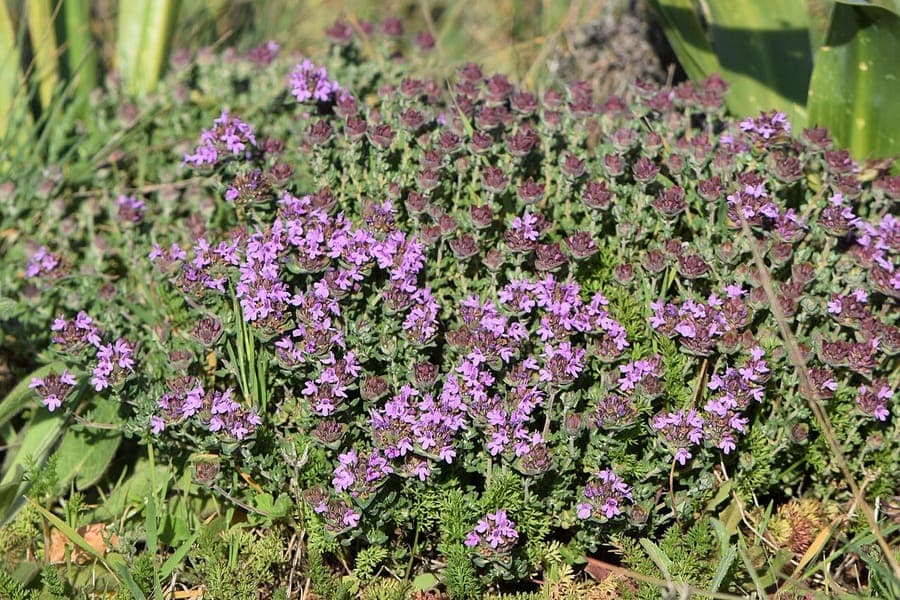
Krzysztof Ziarnek, Kenraiz / CC BY-SA 4.0, via Wikimedia Commons
Thymus camphoratus: complete guide
Thymus camphoratus
¿Quieres ver Thymus camphoratus: complete guide en tu jardín?
1 minuto, sin tarjeta de crédito
Overview
Thymus camphoratus is a rare and distinctive herb originating from the mountain regions of southern and southwestern Portugal. Also known as Camphor Thyme or Sea Thyme, this Thyme closely resembles other Thymus species but distinguishes itself through strong camphor scent and exceptionally compact, dense growth form.
This plant holds botanical significance as it is endemic to Portugal - naturally occurring only in this country. It represents an exception in gardens, particularly for Portuguese enthusiasts and aromatic plant collectors. Thymus camphoratus is much more compact than most other Thyme species, making it perfect for rock gardens, containers, gravel patches and small borders. Intense camphor aroma makes it also interesting for medicinal and culinary applications.
Appearance and bloom
Thymus camphoratus grows as an extremely compact, cushion-forming plant, typically only 10 to 20 cm high with greater spread. The plant forms dense mats and can self-propagate via shallow roots.
Leaves are extremely small, needle-like to linear, green to grey-green, very densely packed on stems. When rubbed, they immediately release extremely strong camphor scent - not pleasant eucalyptus or lemon, but rather pure camphor like from medicine cabinets.
Flowers are small, approximately 3 to 5 mm across, in purple, pink or sometimes white hues. They appear in dense, short inflorescences from April through May. Flowers are highly attractive to bees and butterflies.
Ideal location
Thymus camphoratus performs best in full sun, certainly at least six to eight hours of direct sunlight daily. This plant is no shade-lover - the more sun, the better.
The plant prefers windswept, exposed positions where it benefits from full air circulation. In regions with excessive heat, light afternoon shade remains acceptable. Position it where it benefits from natural ventilation.
Due to its rocky origins, this plant feels at home on slopes, rocky coasts and roofs. Perfect for roof gardens where elevated drainage is not only acceptable but necessary.
Soil requirements
Thymus camphoratus is completely undemanding regarding soil, as long as drainage is perfect. This herb grows on poor, sandy-rocky soils, calcareous substrates and virtually all well-draining materials.
In gardens, add sand, gravel, perlite or pumice stone if you have heavy clay. The plant makes no demands for nutrient richness - poor, mineral-poor soil is actually ideal.
A pH of 7.5 to 8 (neutral to slightly alkaline) is perfect, but the plant grows equally well in more acidic conditions.
Diseño gratis
¿Quieres ver Thymus camphoratus: complete guide en tu jardín? Crea un diseño gratis ahora.
Watering
Once established, Thymus camphoratus is highly drought-tolerant. Water regularly during the first growing season until roots penetrate deeply. Thereafter, minimal watering suffices.
In temperate European regions, natural rainfall provides everything. Even during dry periods, no supplemental water is needed. The plant tolerates extreme drought better than wet feet.
Winter overwatering represents the greatest risk factor. In winter, especially in frost-prone regions, ensure excellent drainage. Waterlogging during winter months can cause plant death.
Pruning
Thymus camphoratus requires very little pruning. In spring (March-April), you can gently remove misshapen or damaged branches. Avoid aggressive cutting back, as this plant dislikes being cut to bare wood.
Flowers can be removed after bloom if you wish to prevent seed set, though this remains unnecessary. Old, thin stems can be carefully removed.
Cleaning dead leaf litter in spring helps promote compact growth.
Maintenance calendar
Spring (March-May): Light pruning in early spring. Flowers appear April-May. Minimal watering.
Summer (June-August): Plant in full growth. No watering needed in temperate climates. Check for diseases, though rare.
Autumn (September-October): Plant prepares for winter dormancy. No maintenance required. Monitor drainage.
Winter (December-February): No active maintenance. Ensure good drainage after snow or rain.
Winter hardiness
Thymus camphoratus is highly frost-hardy and tolerates temperatures to around -15 degrees Celsius without any protection. In alpine regions and northeastern areas, very low temperatures are survived without issue.
The plant is much hardier than many tropical herbs. However, the main winter threat is waterlogging and poor drainage during wet seasons, not frost itself.
Companion plants
Thymus camphoratus combines beautifully with other compact Mediterranean herbs and alpine plants:
- Lavandula stoechas - another Portuguese herb
- Dianthus - attractive compact bloomer
- Sedum and Sempervivum - other rock garden dwellers
- Armeria - low-growing flowers
- Erica and Calluna - heaths and heather
- Anthyllis and Cytisus - other Portuguese plants
Create rocky stone gardens, alpine troughs and mountain-top plantings.
Conclusion
Thymus camphoratus is not for everyone, but for enthusiasts of Portuguese flora and aromatic mountain plants, it is an absolute must-have. With its rarity, compact growth, intense camphor aroma and robustness in dry conditions, it adds unique character to gardens.
The plant thrives excellently in European mountain gardens and arid landscapes. It is harder to source than standard Thyme species, so seek specialized nurseries. Sow from seed in spring or obtain young plant material.
A perfect addition for rock garden lovers, alpine enthusiasts and Mediterranean mountain plant collectors. Visit gardenworld.app for more inspiration on rare herbs and alpine flora.
¿Quieres ver Thymus camphoratus: complete guide en tu jardín? Crea un diseño gratis ahora.
Sube una foto, elige un estilo y obtén un diseño fotorrealista con lista de plantas en menos de un minuto.
Más de 10.000 jardines diseñados
Sin tarjeta de crédito


Plantas similares
Apple mint (Mentha x villosa): complete guide
Mentha x villosa
Meet apple mint (Mentha x villosa): a fruity-scented kitchen herb with woolly leaves, perfect for tea and mojitos.
Salvia peyronii: complete guide
Salvia peyronii
Discover Salvia peyronii, a rare Lebanese mountain sage. Growing tips, hardiness, and companion planting for a Mediterranean gravel garden.
Bigleaf mint (Mentha x rotundifolia): complete guide
Mentha x rotundifolia
Discover bigleaf mint: cultivation, care tips, and garden uses. Learn how to grow this aromatic herb with soft, hairy leaves.