
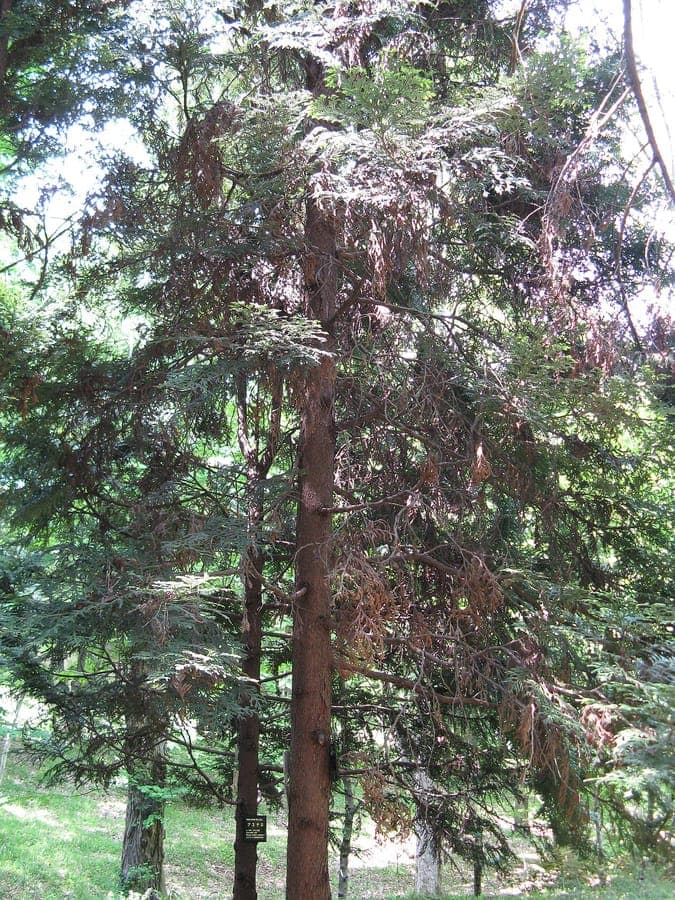
KENPEI / CC BY-SA 3.0, via Wikimedia Commons
Hiba: complete guide
Thujopsis dolabrata
¿Quieres ver Hiba: complete guide en tu jardín?
1 minuto, sin tarjeta de crédito
Overview
The Hiba (Thujopsis dolabrata), also known as Japanese-thuya or false arborvitae, is a refined evergreen conifer originating from the mountainous regions of Japan. With its elegantly drooping growth habit and delicate, feathery foliage, this remarkable tree ranks among the finest specimens for temperate gardens. The botanical name refers to the distinctive flattened branchlets that grow in a weeping fashion, creating a graceful silhouette that commands attention in any landscape.
Appearance and bloom
The Hiba develops into a medium to large conifer with a pyramidal to columnar form, with branches naturally inclined to droop gracefully downward. The foliage is extremely fine, scale-like, and densely packed, giving the entire tree a soft, feathery texture. During the growing season, the foliage displays a deep green to gray-green coloration, sometimes developing bronze-purple tones in winter. Male flowers are minute and inconspicuous, while female flowers develop into small, cone-like structures that ripen throughout the season.
Ideal location
Hiba thrives best in locations offering full sun to partial shade. While this tree tolerates lower light conditions, it achieves strongest growth with at least four to six hours of direct sunlight daily. In warmer climates, afternoon shade provides beneficial protection against excessive heat stress and foliage desiccation. Ensure the tree is sheltered from strong, dry winds that can desiccate foliage and damage the delicate branch structure.
Soil
The ideal growing medium for Hiba must offer excellent drainage while maintaining adequate soil moisture. This species performs optimally in slightly acidic to neutral soil types with pH between 6.0 and 7.0. For container cultivation, use premium potting soil amended with extra perlite or coarse sand to ensure superior drainage. Avoid waterlogged conditions entirely, as these inevitably lead to root rot and plant decline.
Watering
Hiba requires consistent moisture supply, particularly during its first growing season and throughout dry periods. Water deeply and evenly, maintaining consistently moist but never waterlogged soil. Never allow soil to dry completely between waterings, especially during active growth phases. Reduce watering significantly during autumn and winter months. Young specimens require more attentive moisture monitoring than established mature trees.
Diseño gratis
¿Quieres ver Hiba: complete guide en tu jardín? Crea un diseño gratis ahora.
Pruning
Hiba requires minimal pruning, thanks to its naturally elegant architecture and refined growth pattern. Remove only dead, damaged, or diseased branches at their point of origin with clean cuts. Light formative pruning in spring helps maintain symmetry, especially on younger specimens. Avoid aggressive removal of large branches, as this creates permanent scars and disrupts the natural weeping form. Regular light maintenance proves far superior to occasional drastic pruning.
Maintenance calendar
Spring: Initiate regular watering as temperatures rise. Inspect for winter damage and apply balanced fertilizer. Summer: Ensure adequate moisture during hot, dry spells. Monitor for pests and diseases. Autumn: Gradually reduce watering as growth slows. Expect natural leaf coloration changes. Winter: Minimal care required. Water sparingly to prevent frost desiccation in continental climates.
Winter hardiness
Hiba exhibits winter hardiness to approximately minus 15 Celsius (USDA zone 8a), though established trees develop enhanced cold tolerance. Young specimens benefit from protective mulch in regions experiencing harsh winters. In very cold areas, frost damage to new growth may occur, but serious injury remains uncommon. Protection from severe northern winds proves invaluable, especially in continental climates.
Companion plants
Hiba creates stunning combinations with fellow evergreen conifers, particularly Japanese maples, rhododendrons, and dwarf conifers. Pair with low-growing groundcovers such as creeping thyme, compact sedums, or fine ornamental grasses. Position beside deciduous shrubs with autumn color or beside birches for textural contrast. The vertical weeping form provides elegant background definition for lower ornamental plantings.
Closing
The Hiba stands as an exceptional choice for landscape designers seeking sophistication and natural elegance. With its distinctive architectural form, perpetual deep green foliage, and minimal maintenance requirements, this remarkable tree provides a distinguished accent to any garden setting. Available at specialty nurseries throughout northern Europe and North America. For garden design inspiration featuring specimen trees, visit gardenworld.app/en and gardenworld.app/nl.
¿Quieres ver Hiba: complete guide en tu jardín? Crea un diseño gratis ahora.
Sube una foto, elige un estilo y obtén un diseño fotorrealista con lista de plantas en menos de un minuto.
Más de 10.000 jardines diseñados
Sin tarjeta de crédito


Plantas similares
Cupressus macnabiana: complete guide
Cupressus macnabiana
The Fragrant Cypress offers elegant growth with fine, aromatic foliage. Perfect for temperate climates and as specimen trees in contemporary gardens.
Cupressus guadalupensis: complete guide
Cupressus guadalupensis
The Guadalupe cypress: an elegant conifer for gardens. Complete cultivation guide for this Mexican cypress. Information about care, location, form and maintenance.
Austrocedrus chilensis: complete guide
Austrocedrus chilensis
Discover Austrocedrus chilensis, the Chilean Cedar ornamental conifer. Elegant specimen with fine foliage and columnar form for permanent structure.