
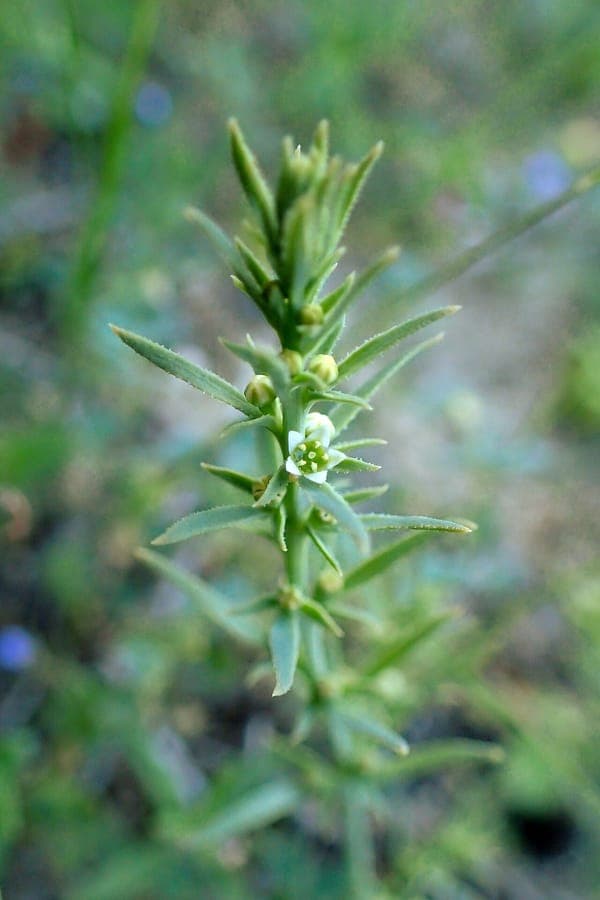
Krzysztof Ziarnek, Kenraiz / CC BY-SA 4.0, via Wikimedia Commons
Thesium humile: complete guide
Thesium humile
¿Quieres ver Thesium humile: complete guide en tu jardín?
1 minuto, sin tarjeta de crédito
Overview
Thesium humile, commonly known as Low Bastard Toadflax or Bergflachs, is a modest yet charming herb from the Mediterranean region. This small plant reaches only 10-30 centimeters in height and is perfect for gardens where minimal maintenance is desired. It grows in Mediterranean and semi-arid regions from North Africa to Iran and forms part of the natural plant landscape. Though small, this herb contributes interesting ecological value through pollinator-supporting flowers.
Appearance and Bloom
Thesium humile is a low, creeping to erect herb with thin, narrow leaves elegantly arranged. The plant grows compactly and forms small tufts. The flowers are tiny, white to pale pink, appearing in small clusters. The blooming period extends from March to May in mild climates. Though individual flowers are small, their abundance creates a subtle visual effect. Small fruits follow after blooming.
Ideal Location
Low Bastard Toadflax grows best in full sun, warm locations. The plant thrives in dry, rocky, or gravelly soils where many other plants cannot grow. Full sun is essential - at least six hours of direct sunlight daily. The plant prefers ventilation, so provide an open location without too much nearby vegetation. This herb is ideal for rock gardens, gravel gardens, or as ground cover along hot pavements.
Soil
Thesium humile makes minimal soil fertility demands. It actually performs better on poor, fast-draining soils. Heavy clay or moist soils will disappoint. A gravelly or sandy substrate with lime is ideal. The plant handles rocks and mineral-rich soils well. Adding compost is unnecessary and may overcomplicate the plant.
Diseño gratis
¿Quieres ver Thesium humile: complete guide en tu jardín? Crea un diseño gratis ahora.
Watering
Once established, this plant is very drought resistant. Water during the first season to get the plant established. After that, almost no supplemental water is needed. Excessive moisture causes problems and can lead to root rot. In Mediterranean or dry Asian gardens, you can manage without extra irrigation. Only water in very dry periods.
Pruning
Minimal pruning is needed. Remove only dead or damaged plant parts. The plant naturally forms a compact shape and needs no formal pruning. After blooming, you can carefully remove spent flowers if aesthetically desired, but this is optional.
Maintenance Calendar
January-February: Check for winter damage in temperate climates. March-May: Blooming period, enjoy flowers. June-July: Minimal maintenance, remove only dead leaves. August-October: Reduce watering further. November-December: Protect against extreme cold in frost zones.
Winter Hardiness
Thesium humile is hardy down to approximately -5 to -10 degrees Celsius. In areas with extreme winters (below -10 degrees), the plant may die. It grows best in zones 8-11. In cold climates, plant as annual seedlings or in containers that can be moved indoors.
Companion Plants
Combine Thesium humile with other drought-loving herbs. Good companions are Thyme (Thymus), Sage (Salvia), Linaria, and other Mediterranean herbs. These combinations create pest-free gardens where food and medicinal values can be appreciated.
Conclusion
Thesium humile is a small jewel for the eco-friendly garden. With its subtle charm and minimal maintenance requirements, it enriches any Mediterranean garden. This plant is difficult to find in large garden centers but can be grown from seed or through specialized nurseries. For more plant selection and inspiration, visit gardenworld.app.
¿Quieres ver Thesium humile: complete guide en tu jardín? Crea un diseño gratis ahora.
Sube una foto, elige un estilo y obtén un diseño fotorrealista con lista de plantas en menos de un minuto.
Más de 10.000 jardines diseñados
Sin tarjeta de crédito


Plantas similares
Juniper Dwarf Mistletoe: complete guide
Arceuthobium oxycedri
Full profile of Arceuthobium oxycedri, the juniper dwarf mistletoe: biology, host range, identification, and garden management advice.
Meadow Flax: complete guide
Thesium pyrenaicum
Cultivate Meadow Flax (Thesium pyrenaicum): delicate alpine plant, white flowers, acid soil preference, sparse nutrition, and Pyrenean mountain garden care.
White Osyris: complete guide
Osyris alba
Discover Osyris alba, a Mediterranean shrub with fine grey-green foliage and red berries. Ideal for dry, sunny gardens and wildlife gardens.