
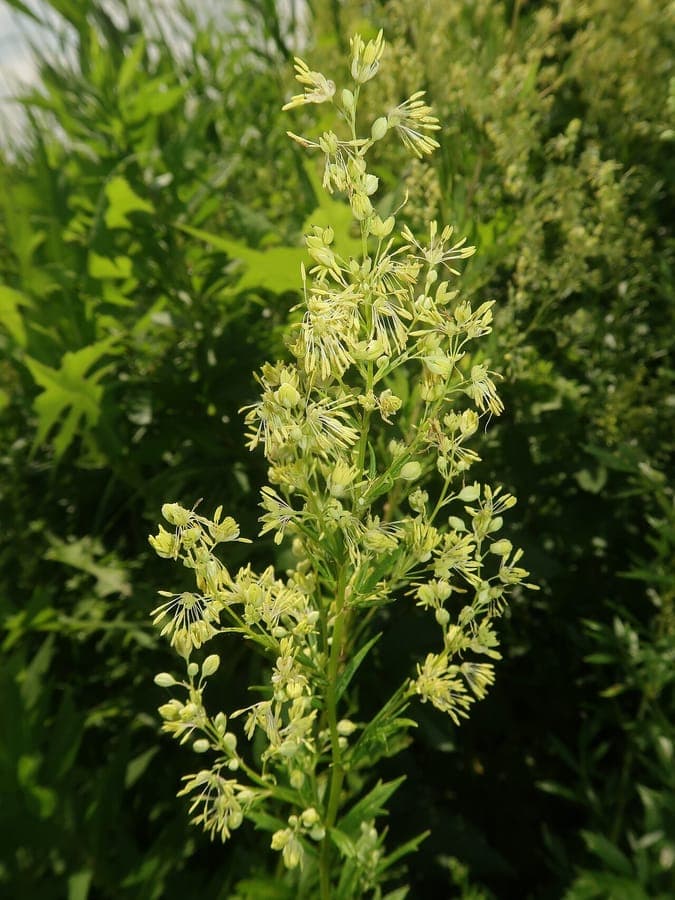
Qwert1234 / CC BY-SA 4.0, via Wikimedia Commons
Small meadow-rue: complete guide
Thalictrum simplex
¿Quieres ver Small meadow-rue: complete guide en tu jardín?
1 minuto, sin tarjeta de crédito
Overview
Thalictrum simplex, commonly known as small meadow-rue, is an elegant perennial from the Ranunculaceae family. This refined plant is native to Eurasian meadows and mountain areas, offering unique texture to garden borders. Known for its delicate, airy flower clusters and feathery foliage, it creates an almost cloud-like effect.
Small meadow-rue is an excellent choice for gardeners seeking refined, natural beauty. Unlike bolder flowers, this plant offers subtlety and grace. With proper care, this perennial can provide structure and movement to your borders for many years.
Appearance and bloom
Thalictrum simplex grows to approximately 50-100 cm tall, depending on growing conditions. The plant features fine, feathered foliage that can display a blue-gray tone. This foliage forms an attractive base for flowers rising above.
Flowers appear in July and August in dense clusters of small yellow blooms. The distinctive feature lies in the long, delicate stamens that form the true attraction of the flower, giving it a wispy, almost ethereal appearance. Flowers are excellent for cutting and drying.
The fruits are small, ribbed nutlets that appear in autumn, adding extra interest.
Ideal location
Thalictrum simplex thrives best in a location with at least 6-8 hours of direct sunlight daily. In warmer climates, the plant benefits from afternoon shade. This plant appreciates space around it where wind can play through its fine foliage.
The plant grows naturally in mountain meadows and feels at home in open, airy garden scenes. Combine this plant with other delicate flowering perennials or ornamental grasses to showcase its elegant character.
Soil
Small meadow-rue prefers well-draining soils. Heavy clay soils can be amended with compost or grit. The plant grows best in soil with a pH between 7.5 and 8.
Ensure good drainage to prevent root rot. Improve soil with organic matter to encourage healthy growth and better flowering.
Diseño gratis
¿Quieres ver Small meadow-rue: complete guide en tu jardín? Crea un diseño gratis ahora.
Watering
Once established, Thalictrum simplex has moderate water needs. Water regularly during the growing season, especially in dry periods. Avoid waterlogging, particularly in winter. The plant is fairly drought-tolerant once well established.
During the flowering period, supplemental water can help promote longer, better flowers. In dry summers, misting can be beneficial.
Pruning
Thalictrum simplex requires minimal pruning. Remove flower heads after blooming if you wish to prevent self-seeding. This also encourages a fuller, more compact growth habit.
In early spring, dead stems can be cut short. The plant will then regrow from the base. No hard pruning is necessary.
Maintenance calendar
Spring: Apply compost around the plant. Remove dead stem material. Summer: Water regularly. Support tall specimens with stakes if necessary. Autumn: Leave seed heads on the plant for winter interest. Self-seeding can be beneficial. Winter: Minimal activity. Plant is dormant.
Winter hardiness
Thalictrum simplex is extremely hardy and suitable for USDA zones 3-9. The plant tolerates European winters well. In harsh frost areas, mulching around the base provides additional protection.
Companion plants
This elegant plant pairs well with:
- Purple-flowering geraniums
- Lavender
- Dogwood
- Achillea
- Delphinium
- Gypsophila
- Ornamental grasses
For quality plant material and growing aids, visit your local garden center. More information is available at gardenworld.app/en.
Closing
Thalictrum simplex offers gardeners the opportunity to incorporate subtle elegance and natural texture into their borders. With minimal care and good growing conditions, this perennial will provide enjoyment for many years. The delicate flowers and fine foliage make it an essential choice for refined garden plans.
For further design tips and plant recommendations, visit gardenworld.app/en.
¿Quieres ver Small meadow-rue: complete guide en tu jardín? Crea un diseño gratis ahora.
Sube una foto, elige un estilo y obtén un diseño fotorrealista con lista de plantas en menos de un minuto.
Más de 10.000 jardines diseñados
Sin tarjeta de crédito


Plantas similares
Drummond's anemone: complete guide
Anemone drummondii
Discover Drummond's anemone (Anemone drummondii): a silvery-grey mountain plant for cool rock gardens and alpine troughs.
Korean clematis: complete guide
Clematis serratifolia
Clematis serratifolia is a hardy climber with fragrant yellow bell flowers in August-September. Pruning group 3, location and care tips.
Aquilegia brevistyla: complete guide
Aquilegia brevistyla
Discover Aquilegia brevistyla, the elegant North American columbine. Growing tips, shade tolerance, and design ideas for woodland and shadowed gardens.