
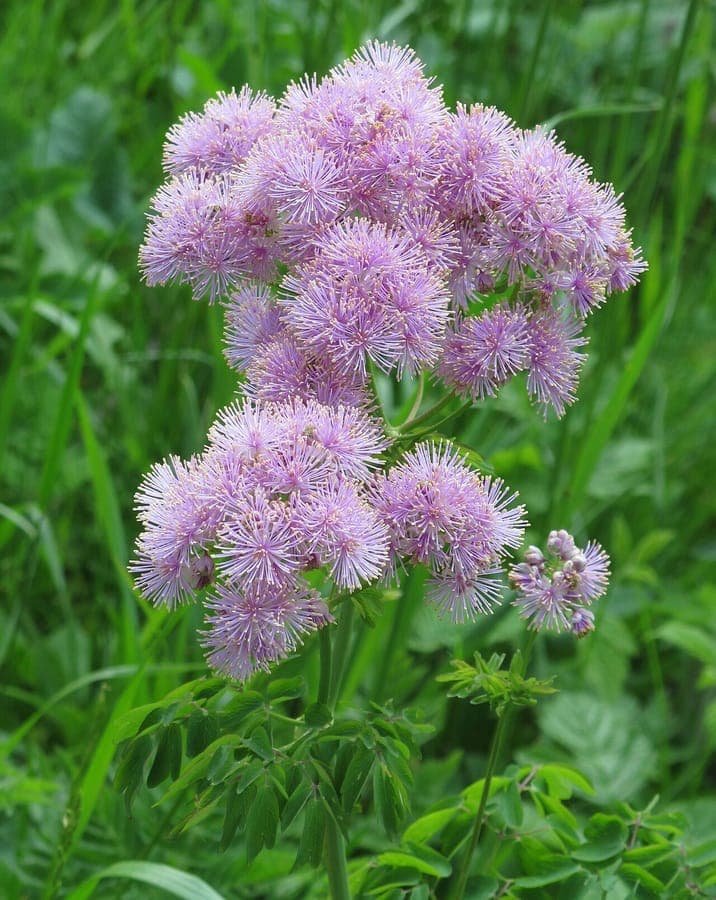
Robert Flogaus-Faust / CC BY 4.0, via Wikimedia Commons
Columbine meadow-rue: complete guide
Thalictrum aquilegiifolium
¿Quieres ver Columbine meadow-rue: complete guide en tu jardín?
1 minuto, sin tarjeta de crédito
Columbine meadow-rue: complete guide
Overview
Columbine meadow-rue (Thalictrum aquilegiifolium), also called French meadow-rue and columbine pigamon, is a spectacular perennial from the Ranunculaceae family. This elegant garden plant naturally grows from Europe to Central Asia and brings alpine meadow sophistication to any garden. With feathery foliage and impressive purple flower clusters, columbine meadow-rue is a highlight of early summer.
Historically cultivated in English and German gardens, columbine meadow-rue quickly became a favorite border plant. Modern gardeners appreciate it for elegance, reliability, and ability to attract pollinators.
Appearance and bloom time
Columbine meadow-rue forms graceful fountains of fine, tripinnately divided leaves that are bright green. The foliage strongly resembles columbine (Aquilegia), explaining the botanical name 'aquilegiifolium' (columbine-leaved). The delicate foliage imparts an airy appearance.
Flowers appear from May to July in dense, showy clusters above the foliage. Flowers are tiny, but the many delicate stamens create spectacular purple to pink pompom-like balls. This characteristic flower structure is unique among meadow-rues.
The plant reaches 40 to 100 centimeters tall depending on growing conditions. In rich soils it grows taller. Flowering lasts 4 to 6 weeks.
Ideal location
Columbine meadow-rue thrives in full sun to light dappled shade. It prefers more sun than many other Thalictrum species. In warm climates, afternoon shade helps prevent scorching and drying.
Position well in mixed borders, behind shorter plants, or in perennial masses. Its height and structure make it excellent background material. Ideal for cottage gardens and meadow borders.
Soil
Columbine meadow-rue grows best on moderately fertile, moist soils. Unlike many meadow-rues, it tolerates drought well and grows on dry sandy soils. It tolerates neutral to slightly acidic soils.
Incorporate organic matter for moisture retention. On heavy clay, add sand for drainage. A pH of 6.5 to 7.5 is ideal, though it grows from pH 5.5 to 8.0.
Diseño gratis
¿Quieres ver Columbine meadow-rue: complete guide en tu jardín? Crea un diseño gratis ahora.
Watering
Columbine meadow-rue prefers moderate to regular watering during growing season (April to October). Regular water, especially in the first season, promotes strong growth. Established plants tolerate dry periods well.
Ensure water does not stagnate around plants. Good drainage prevents root rot. In very dry periods, deep watering helps. In natural mountain meadow conditions, it grows in moist but well-drained soils.
Pruning
Pruning is largely optional. The plant naturally forms neat shape. After flowering, you may remove spent flower stems for tidiness and to reduce self-seeding. In spring, remove dead stems from the previous year.
Columbine meadow-rue can be pruned to previous season's shape, though it grows well without pruning.
Maintenance calendar
March-April: Clean dead material, early growth appears May-June: Growth accelerates, regular water and feeding June-July: Full bloom, enjoy pollinators August-October: Growth slows, gradually reduce water November-February: Dormancy, minimal care
Winter hardiness
Columbine meadow-rue is fully hardy throughout Western Europe to USDA zone 4 (-30°C). The plant dies completely back to the root system in winter, but the rhizome is entirely reliable. New shoots emerge in March.
Companion plants
Columbine meadow-rue combines beautifully with other perennials: red astilbe, coneflower, sage, coral bells, and feather reed grass. In meadow borders, it works well with yarrow, betony, and other perennials. In front, position shorter plants like catmint, heuchera, and blue sage.
In shade gardens, combine with ferns, hostas, and other shade-loving perennials.
Closing thoughts
Columbine meadow-rue is a first choice for anyone seeking elegant, reliable perennials. The feathery foliage and spectacular purple pompom flowers make it an early summer showstopper. Easy to grow, it attracts pollinators and adapts to diverse conditions.
Plant stock is widely available at garden centers. Plant in groups of 3 to 5 for maximum impact.
¿Quieres ver Columbine meadow-rue: complete guide en tu jardín? Crea un diseño gratis ahora.
Sube una foto, elige un estilo y obtén un diseño fotorrealista con lista de plantas en menos de un minuto.
Más de 10.000 jardines diseñados
Sin tarjeta de crédito


Plantas similares
Drummond's anemone: complete guide
Anemone drummondii
Discover Drummond's anemone (Anemone drummondii): a silvery-grey mountain plant for cool rock gardens and alpine troughs.
Korean clematis: complete guide
Clematis serratifolia
Clematis serratifolia is a hardy climber with fragrant yellow bell flowers in August-September. Pruning group 3, location and care tips.
Aquilegia brevistyla: complete guide
Aquilegia brevistyla
Discover Aquilegia brevistyla, the elegant North American columbine. Growing tips, shade tolerance, and design ideas for woodland and shadowed gardens.