
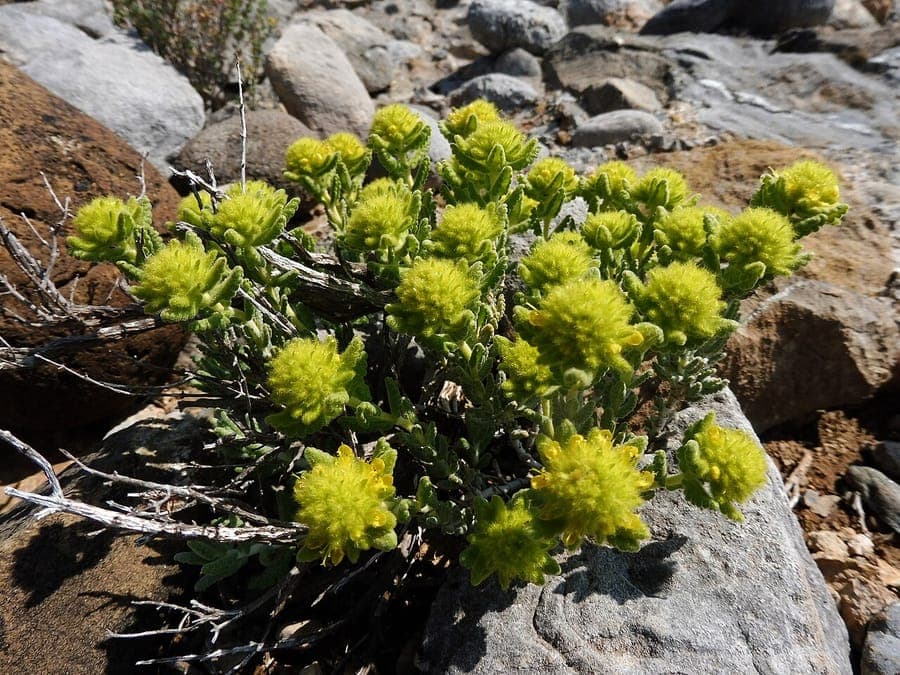
Isidre blanc / CC BY-SA 4.0, via Wikimedia Commons
Teucrium polium: complete guide
Teucrium polium
¿Quieres ver Teucrium polium: complete guide en tu jardín?
1 minuto, sin tarjeta de crédito
Overview
Teucrium polium is a charming Mediterranean herb that captivates gardeners seeking dry, sun-drenched landscapes. Known as Poley, Cat Thyme and Hulwort, this diminutive shrub originates from rocky hillsides across the Western Mediterranean where it thrives in arid conditions. Belonging to the Lamiaceae family (mint family), it represents an excellent choice for xeriscape designs and Mediterranean landscape projects.
This hardy perennial produces months of delicate flowers combined with striking silver-grey foliage. With minimal care, it develops into a compact, elegant specimen. Teucrium polium proves perfect for low-maintenance gardens that refuse to compromise on visual appeal.
Appearance and bloom
Teucrium polium grows as a low, spreading shrub, typically reaching 30-50 cm in height with similar spread. Its leaves are small, linear to lance-shaped, densely hairy and display a silver-grey to whitish appearance. This pubescent texture creates a velvet-like quality that shimmers beautifully in sunlight.
Flowers emerge in dense, vertical spike-like clusters atop stems from May through July. They are predominantly white, occasionally tinged with pale pink, displaying the characteristic two-lipped structure typical of the mint family. Bees and butterflies visit these blooms regularly.
Following flowering, the plant produces small seeds that scatter naturally. It maintains attractive foliage year-round, providing textural interest to gardens even during winter months.
Ideal location
Teucrium polium thrives in full sun, requiring at least six to eight hours of direct sunlight daily. This herb is undemanding regarding exposure as long as light remains abundant. Partial shade is tolerated, though flowering may be less prolific.
Position the plant where it receives unobstructed sky exposure and benefits from good air circulation. In temperate climates, placing it at the base of a south-facing wall captures extra warmth. This species tolerates coastal conditions exceptionally well, including salt-laden sea breezes.
Generally speaking, maximum sunlight and air movement result in the healthiest, most compact specimens. This makes it ideal for roof gardens, stone walls and other open situations.
Soil requirements
Soil flexibility represents one of Teucrium polium's greatest strengths. The plant grows well in sandy, well-draining soil conditions. Sandy loam, calcareous earth and rocky substrates prove ideal.
Avoid heavy clay or moisture-retentive soils. If your garden contains heavy clay, amend it with sand, perlite or pumice to improve drainage. Teucrium polium actually prefers poor soil - rich, heavily fertilized earth can promote excessive foliage growth at the expense of flowers.
The species performs better in neutral to slightly alkaline soil (pH 7.5-8). In acidic conditions, it will flower less prolifically, so add lime if your garden tends toward acidity.
Watering
Once established, Teucrium polium behaves as a true drought-tolerant plant. During its first growing season, water regularly until roots penetrate deeply enough to access subsurface moisture.
Once established (after approximately six months to a year), this plant requires virtually no supplemental watering. It tolerates dry periods well and actually prefers aridity over wet conditions. In regions receiving moderate rainfall, natural precipitation suffices entirely.
Watering must remain minimal. Irrigate only when the soil surface feels completely dry. Overwatering represents the most common reason why Teucrium polium fails in gardens, particularly during winter when evaporation remains low.
Diseño gratis
¿Quieres ver Teucrium polium: complete guide en tu jardín? Crea un diseño gratis ahora.
Pruning
Pruning helps maintain Teucrium polium in a compact, dense form. Perform this task in early spring before new growth commences. Remove approximately one-third of old wood while ensuring you never cut back into bare timber.
After flowering, dead flowers can be removed to prevent seed set and promote extended blooming, though this remains optional. Overly long, leggy stems may be removed in June following bloom.
This plant tolerates heavy pruning, so avoid hesitation when reshaping. However, always avoid severe cutback in autumn or late fall, which can damage frost-prone plants.
Maintenance calendar
Spring (March-May): Prune in early spring, removing dead wood. Water if conditions prove very dry. Flowers appear late May.
Summer (June-August): Provide minimal water except during exceptional drought. Remove spent flowers for continuous bloom (optional). Monitor for leaf and root rot issues.
Autumn (September-November): Reduce watering as temperatures decline. No feeding required. Plant prepares for winter dormancy.
Winter (December-February): No active maintenance needed. In frost-prone gardens, monitor drainage following snow or excessive rain.
Winter hardiness
Teucrium polium is highly cold-hardy in temperate European gardens, surviving temperatures to approximately -10 to -15 degrees Celsius without protection. In mountainous and northeastern regions experiencing more extreme winters, provide protection through a loose mulch layer (twigs or dried leaves) around the plant in November.
The species proves exceptionally tolerant of snow and wind. Heavy snow may damage branches but rarely causes serious harm. After frost periods, dead stems can be removed if desired.
Companion plants
Teucrium polium combines beautifully with other drought-tolerant Mediterranean herbs and plants. Excellent companion choices include:
- Lavender (Lavandula) - similar climate preferences and appearance
- Rosemary (Rosmarinus officinalis) - another hardy Mediterranean herb
- Santolina - yellow or orange flowers contrast nicely with Teucrium's white blooms
- Dianthus and Armeria - low-growing flowers for foreground
- Stipa and Festuca - ornamental grasses provide texture
- Sedum and Delosperma - other succulents for dry conditions
In European gardens, it partners well with alpine plants, rock gardens and herb collections. Combine with stones and gravel for authentic Mediterranean appeal.
Conclusion
Teucrium polium represents the quintessential low-maintenance herb for drought-tolerant landscaping. With its elegant silver foliage, delicate white flowers and virtually zero maintenance requirements, this species suits busy gardeners or those seeking water conservation and reduced upkeep.
In temperate European climates, it thrives beautifully, particularly in southern regions. Grow it from seed or source young plants from specialized nurseries. Many garden centers don't stock it, so visit gardenworld.app for more inspiration on drought-tolerant planting schemes.
The plant demands minimal effort yet delivers maximum visual impact. Perfect for those dreaming of authentic Mediterranean gardens without exotic plant complexity. Whether building a rock garden, roof planting or substantial low-maintenance border, Teucrium polium remains a definitive choice.
¿Quieres ver Teucrium polium: complete guide en tu jardín? Crea un diseño gratis ahora.
Sube una foto, elige un estilo y obtén un diseño fotorrealista con lista de plantas en menos de un minuto.
Más de 10.000 jardines diseñados
Sin tarjeta de crédito


Plantas similares
Apple mint (Mentha x villosa): complete guide
Mentha x villosa
Meet apple mint (Mentha x villosa): a fruity-scented kitchen herb with woolly leaves, perfect for tea and mojitos.
Salvia peyronii: complete guide
Salvia peyronii
Discover Salvia peyronii, a rare Lebanese mountain sage. Growing tips, hardiness, and companion planting for a Mediterranean gravel garden.
Bigleaf mint (Mentha x rotundifolia): complete guide
Mentha x rotundifolia
Discover bigleaf mint: cultivation, care tips, and garden uses. Learn how to grow this aromatic herb with soft, hairy leaves.