
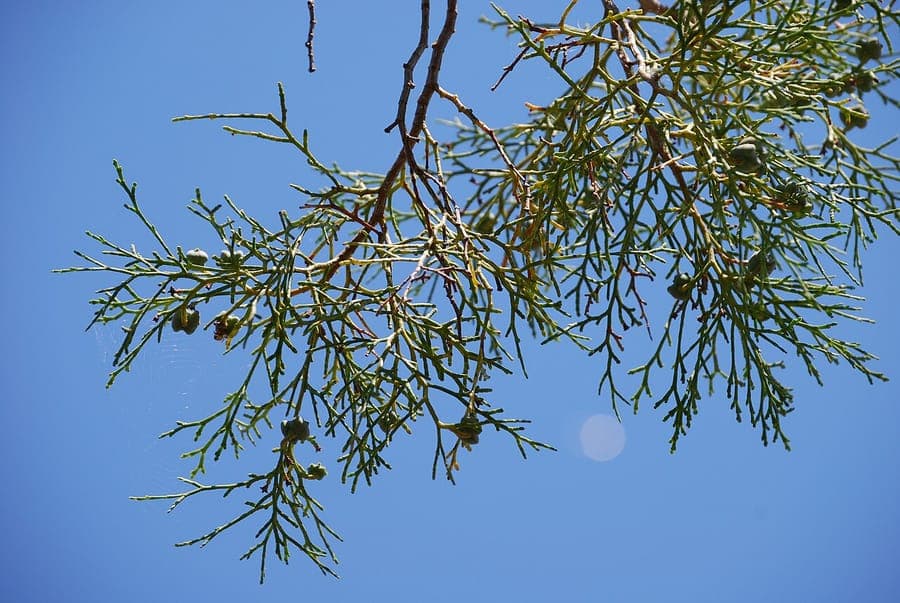
Cs california / CC BY-SA 3.0, via Wikimedia Commons
Tetraclinis articulata: complete guide
Tetraclinis articulata
¿Quieres ver Tetraclinis articulata: complete guide en tu jardín?
1 minuto, sin tarjeta de crédito
Overview
Tetraclinis articulata, also known as sandarac, arartree, or Mediterranean sandarac-cypress, is a fascinating Mediterranean conifer native to Spain, Morocco, Algeria, Tunisia, and Libya. This tree is a member of the cypress family and is renowned for its fine, scale-like foliage and aromatic fragrance. With its elegant form and yellow-brown bark, the tree brings exotic character to any front garden.
Sandarac grows slowly to medium size (8-15 meters at full maturity, but much smaller in garden situations). In the Netherlands and Belgium, you can find young plants at specialized nurseries and warm microclimate garden centers. German gardeners may need to seek southern locations or warm coastal areas. The tree is ideal for those seeking an exotic, aromatic tree with minimal maintenance.
Appearance and growth
Tetraclinis articulata grows as an elegant, conical tree with upward-pointing branches. The leaves are exceptionally small, scale-like, and densely packed around the twigs. They are green to yellow-green in color and highly aromatic; brushing against the foliage releases a pleasant fragrance.
The bark is flaked, thin, and yellow-brown in color. The tree grows slowly, typically 3-5 centimeters per year. The 'flowers' are actually tiny cones that appear in spring. After pollination, small, angular seed cones form and persist on the tree for up to two years.
Ideal location
Tetraclinis articulata thrives best in full sun, with at least six hours of direct sunlight daily. The tree can also grow in light partial shade but will be less dense and elegant. Plant in a sunny, sheltered location protected from strong winds.
This is a heat-loving tree that grows better in warm regions. In the Netherlands and Belgium, it is only suitable for warm microclimates (sheltered gardens in southern Limburg, Flanders). In Germany, it is only suitable for very warm Rhine areas or warm coastal locations. For colder areas, container cultivation may be preferable.
Soil
Tetraclinis articulata thrives best in well-drained, lean to average soil. Sandy soils are ideal; the tree naturally grows in sandy, semi-arid environments. Clay soils should be amended with sand and gravel.
Ensure excellent drainage; waterlogged soil is highly problematic. The tree tolerates salt from sea winds well, making it suitable for coastal gardens. pH can be neutral to slightly acidic (6.5 to 7.5). Nutrition is barely needed; the tree grows in poor soils.
Watering
Once established, Tetraclinis articulata is highly drought-tolerant. After all, this is a tree of dry, North African regions. During the first year after planting, water regularly until the tree is well-established. After that, barely any water is needed.
In dry summers, supplemental water can be beneficial, especially for young trees. However, overestimating moisture needs is risky; excess water causes root rot. Once mature, no extra water is needed. The tree tolerates drought better than moisture.
Diseño gratis
¿Quieres ver Tetraclinis articulata: complete guide en tu jardín? Crea un diseño gratis ahora.
Pruning
Tetraclinis articulata requires minimal pruning; the tree grows naturally elegant. Light pruning is possible to maintain shape or remove damaged branches. Prune carefully; this tree recovers slowly from heavy pruning.
Best is light preventive pruning in late spring (May-June), aimed at shape maintenance. Avoid pruning in autumn; the tree is less vital then. In the first year after planting, do not prune; allow the tree to establish itself.
Maintenance calendar
January - February: Tree rests. Check for winter damage or frost damage (in cold regions).
March - April: Initial growth. Water carefully. No fertilizer needed.
May - June: Active growth. Light pruning possible for shape. Regular watering for young trees.
July - September: Growth declines in drought. Water only in extreme drought. Tree rests.
October - December: Tree prepares for winter. No water needed. In cold areas, consider protection.
Winter hardiness
Tetraclinis articulata is sensitive to severe frost periods and low temperatures. The tree tolerates temperatures down to approximately -10 degrees Celsius but grows optimally in areas where winter temperatures do not drop below -5 degrees. In areas with regular frost below -10 degrees, the tree is not suitable for outdoor growing.
In colder areas (Netherlands, northern Germany, Belgium), container cultivation is advisable, with winter protection in a sheltered greenhouse or conservatory. In very cold winters, foliage and branch damage may occur; these usually shoot out again in spring.
Companion plants
Tetraclinis articulata pairs beautifully in Mediterranean plant groupings. Combine with other heat-loving plants such as Cistus, Phoenix palms, Myrtus, aromatic herbs, and Rosemary. Also a lovely combination with gray-foliaged plants like Artemisia and Helichrysum.
In coastal gardens, it fits well with other salt-tolerant, southern plants. It creates a beautiful silhouette against blue skies and sea. Highly suitable for modern, minimalist gardens in warm regions.
Closing
Tetraclinis articulata is ideal for those seeking an exotic, elegant tree with Mediterranean character. The combination of fine foliage, aromatic fragrance, drought tolerance, and ornamental bark makes it valuable. Plant in well-drained, sandy soil in full sun and enjoy decades of slow, elegant growth. Ensure good location choice to warm, sheltered spots in southern Netherlands, southeastern Belgium, or warm German microclimates. On gardenworld.app you will find inspiration for integration into Mediterranean and exotic garden designs.
¿Quieres ver Tetraclinis articulata: complete guide en tu jardín? Crea un diseño gratis ahora.
Sube una foto, elige un estilo y obtén un diseño fotorrealista con lista de plantas en menos de un minuto.
Más de 10.000 jardines diseñados
Sin tarjeta de crédito


Plantas similares
Cupressus macnabiana: complete guide
Cupressus macnabiana
The Fragrant Cypress offers elegant growth with fine, aromatic foliage. Perfect for temperate climates and as specimen trees in contemporary gardens.
Cupressus guadalupensis: complete guide
Cupressus guadalupensis
The Guadalupe cypress: an elegant conifer for gardens. Complete cultivation guide for this Mexican cypress. Information about care, location, form and maintenance.
Austrocedrus chilensis: complete guide
Austrocedrus chilensis
Discover Austrocedrus chilensis, the Chilean Cedar ornamental conifer. Elegant specimen with fine foliage and columnar form for permanent structure.