
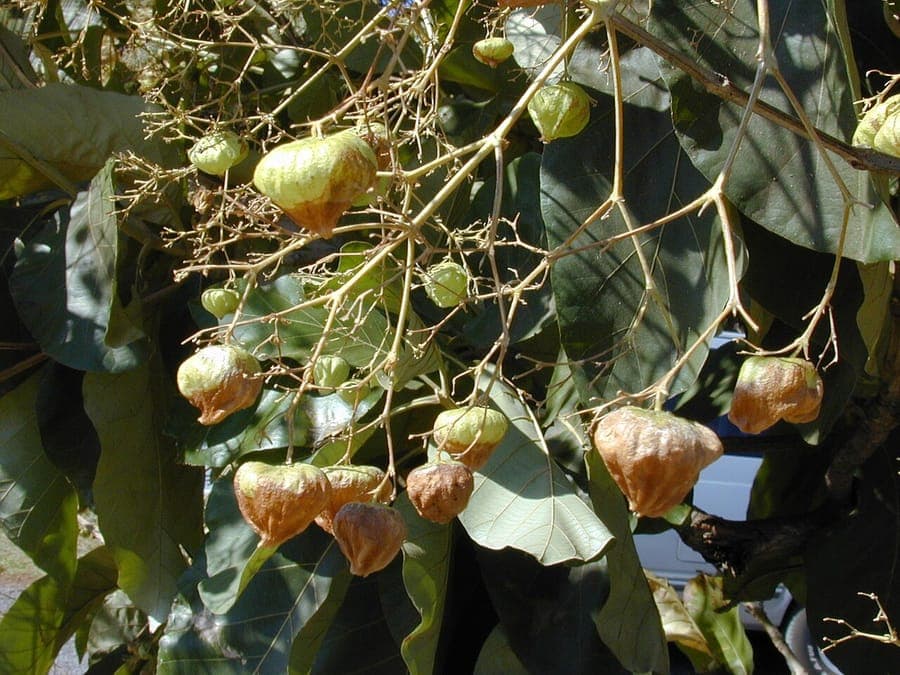
Forest & Kim Starr / CC BY 3.0, via Wikimedia Commons
Teak (Tectona grandis): complete guide
Tectona grandis
¿Quieres ver Teak (Tectona grandis): complete guide en tu jardín?
1 minuto, sin tarjeta de crédito
Overview
Tectona grandis, commonly known as teak, is a majestic tree native to India and Indochina. This timber giant is globally renowned for its exceptional wood quality and durability. Teakwood naturally contains oils that resist weathering, making it ideal for outdoor furniture, shipbuilding, and interior joinery.
Appearance and Bloom
Teak is a deciduous tree reaching 40 meters in natural forests. Its large, rough-textured leaves are ovate with a distinctive blue-green hue. During the growing season, small yellow flowers appear in pyramidal panicles, attracting numerous pollinators and creating a stunning floral display.
Ideal Location
Teak thrives in full sun with warmth and humidity. This tree requires tropical to subtropical conditions with consistently high temperatures. In temperate climates, grow teak in a sunny greenhouse or conservatory to ensure optimal development and growth rates.
Soil
Teak prefers fertile, well-draining soils. However, this adaptable tree tolerates less-than-ideal conditions. Ensure good drainage to prevent waterlogging. For container cultivation, use general-purpose potting compost amended with perlite or sand for superior drainage.
Watering
During the growing season, water regularly to keep soil consistently moist but not waterlogged. Reduce watering during winter or when temperatures drop. In tropical regions with abundant rainfall, supplementary watering is minimal. Always allow the top inch of soil to dry between waterings.
Diseño gratis
¿Quieres ver Teak (Tectona grandis): complete guide en tu jardín? Crea un diseño gratis ahora.
Pruning
Teak naturally develops a strong form requiring minimal pruning. Remove only dead, diseased, or crossing branches. Light pruning improves air circulation through the canopy. Trim any unwanted growth anytime during the year. Promote a balanced structure through selective branch removal.
Maintenance Calendar
Feed monthly from May to September during the growing period. Gradually reduce feeding in autumn. Winter is dormant - cease fertilizing entirely. Monitor regularly for pests and diseases, especially indoors. Ensure young trees receive ample water until fully established in their location.
Winter Hardiness
Teak is not frost-hardy in temperate climates. This tree demands minimum temperatures of 15-20 degrees Celsius. In cold regions, maintain indoors or provide frost protection. Avoid sudden temperature fluctuations and draughts which damage foliage and growth.
Companion Plants
Teak pairs beautifully with other tropical species such as orchids and bird's-nest ferns. Both share identical growing requirements for warmth and humidity. Create layered tropical gardens with complementary understory plants for visual interest.
Closing Remarks
Tectona grandis represents the pinnacle of tropical horticulture for enthusiasts seeking impressive timber trees. With proper light and warm conditions, teak thrives and produces magnificent shade. Visit gardenworld.app for additional cultivation resources and design inspiration. Happy growing!
¿Quieres ver Teak (Tectona grandis): complete guide en tu jardín? Crea un diseño gratis ahora.
Sube una foto, elige un estilo y obtén un diseño fotorrealista con lista de plantas en menos de un minuto.
Más de 10.000 jardines diseñados
Sin tarjeta de crédito


Plantas similares
Apple mint (Mentha x villosa): complete guide
Mentha x villosa
Meet apple mint (Mentha x villosa): a fruity-scented kitchen herb with woolly leaves, perfect for tea and mojitos.
Salvia peyronii: complete guide
Salvia peyronii
Discover Salvia peyronii, a rare Lebanese mountain sage. Growing tips, hardiness, and companion planting for a Mediterranean gravel garden.
Bigleaf mint (Mentha x rotundifolia): complete guide
Mentha x rotundifolia
Discover bigleaf mint: cultivation, care tips, and garden uses. Learn how to grow this aromatic herb with soft, hairy leaves.