
Vengolis / CC BY-SA 4.0, via Wikimedia Commons
Cape Honeysuckle: complete guide
Tecoma capensis
¿Quieres ver Cape Honeysuckle: complete guide en tu jardín?
1 minuto, sin tarjeta de crédito
Overview
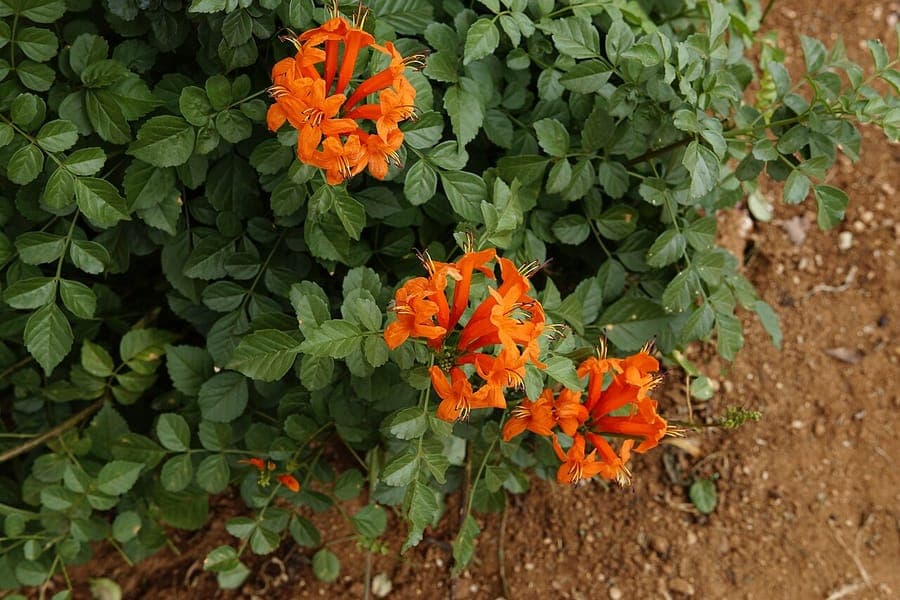
Cape honeysuckle (Tecoma capensis) is a stunning climbing plant from South Africa, belonging to the Bignoniaceae family. With its brilliant orange-red flowers and vigorous growth habit, this is an excellent choice for gardeners seeking spectacular, tropical effects. The plant is renowned for its profuse flowering, creating masses and garlands that climb walls and pergolas.
This plant offers season-long interest and thrives in warm, sunny environments. With its lush growth and abundant blooms, Cape honeysuckle adds explosive color to vertical garden elements.
Appearance and Bloom
Tecoma capensis exhibits attractive, paired, light-colored leaflets that grow along slender vines. The flower displays, however, are the true highlight: brilliant red to orange flowers appear in numerous clusters, continuously throughout summer and autumn. Each flower has a characteristic funnel or tubular shape with five lobed lips.
The plant climbs vigorously and can rapidly reach 3-4 meters or higher, depending on support. The foliage usually remains green throughout the season, though the plant may shed leaves in cold winters.
Ideal Location
Cape honeysuckle thrives best in very sunny locations. The more sun, the more flowers you will see. The plant loves warm sun-exposed walls, pergolas, or along trellises where it receives full sunlight.
The plant tolerates shade poorly and will flower much less in shady locations. For optimal performance, at least 6-8 hours of direct sunlight is essential. The plant thrives in warm microclimate areas.
Soil
Tecoma capensis is not particularly fussy about soil but grows best in well-draining, moderately fertile ground. A lightly sandy to clay loam is ideal. The plant is less comfortable in very poor material, though it will still grow.
Good drainage is important, especially in rainy seasons. Waterlogging can cause root rot. Mix in some compost when planting to increase soil fertility.
Watering
During the growing season (summer), Cape honeysuckle needs regular watering to bloom well. Water when the top centimeter of soil feels dry. In hot periods, daily watering may be necessary.
In autumn and winter, watering can be reduced significantly, especially in regions with winter rainfall. The plant prefers moderately moist conditions, neither wet nor dry.
Diseño gratis
¿Quieres ver Cape Honeysuckle: complete guide en tu jardín? Crea un diseño gratis ahora.
Pruning
Cape honeysuckle grows vigorously and appreciates regular pruning. Prune in late winter (February-March) before growth begins. This stimulates a more compact, fuller plant with more flower buds.
Remove straggling or damaged branches and guide young growth along desired support. Regular pruning also helps keep the plant within bounds and prevents it from becoming too wild.
Maintenance Calendar
Spring (March-May): Pruning complete; begin regular watering. Feed for flowering. Care for new growth.
Summer (June-August): Peak blooming period. Water regularly. Feed biweekly. Train new growth.
Autumn (September-October): Blooming continues. Gradually reduce feeding. Water less frequently as temperatures drop.
Winter (November-February): Minimal watering. Prepare for pruning. Protect from frost in cold regions.
Winter Hardiness
Cape honeysuckle is sensitive to freezing. In regions with severe winters, the plant will only grow in very protected spots or against heated walls. In temperate climates, protection with burlap or straw can be beneficial.
In milder climate zones, the plant grows without problems. The plant won't die back from light frosts but will be severely damaged by prolonged freezing.
Companion Plants
The brilliant red Cape honeysuckle combines beautifully with silver-foliaged plants like dusty miller and artemisia. Cultivated garden association with red and yellow flowering companions delivers a tropical effect.
Low shrubs with contrasting flowers or foliage, such as purple or silver-leaved plants, support the architectural framework.
Closing Words
Cape honeysuckle is a spectacular choice for gardeners wanting to add dramatic color and vigor. With its vibrant orange-red flowers and rapidly climbing vines, this South African plant transforms every vertical element into a flowering masterpiece. Plant in a sunny, protected spot and enjoy a long season of colorful blooms.
For Cape honeysuckle purchase, consult specialized nurseries for advice on local suitability and adapted support structures. Visit gardenworld.app for more planting ideas and garden inspiration.
¿Quieres ver Cape Honeysuckle: complete guide en tu jardín? Crea un diseño gratis ahora.
Sube una foto, elige un estilo y obtén un diseño fotorrealista con lista de plantas en menos de un minuto.
Sin tarjeta de crédito


Plantas similares
Tabebuia pallida: complete guide
Tabebuia pallida
Full growing guide for Tabebuia pallida: location, soil, watering, pruning, hardiness and companion plants for this tropical trumpet tree.
Northern catalpa: complete guide
Catalpa speciosa
Everything about northern catalpa (Catalpa speciosa): bold white flowers, fast growth, and how to grow this striking tree in your garden.
Desert willow: complete guide to Chilopsis linearis
Chilopsis linearis
Complete growing guide for desert willow (Chilopsis linearis): sun, soil, flowering, pruning, and winter care for this spectacular flowering small tree.