
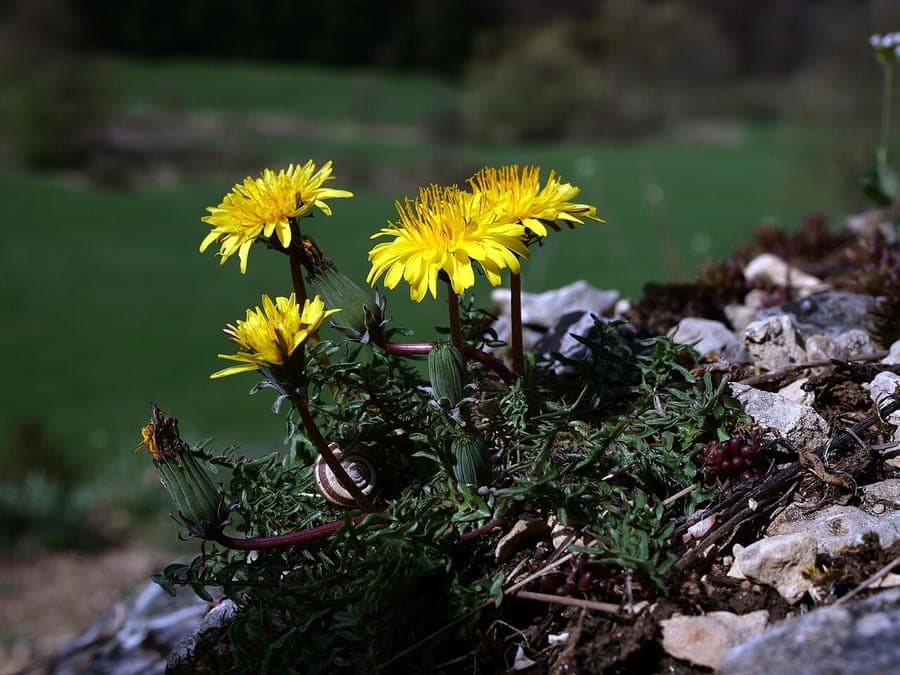
(c) Wolfgang Jauch, some rights reserved (CC BY) / CC BY 4.0, via Wikimedia Commons
Taraxacum rubicundum: complete guide
Taraxacum rubicundum
¿Quieres ver Taraxacum rubicundum: complete guide en tu jardín?
1 minuto, sin tarjeta de crédito
Overview
Taraxacum rubicundum, commonly known as red-veined or ruddy dandelion, is a fascinating variant of the familiar dandelion found naturally throughout Europe. This plant distinguishes itself from its relatives through red tints in its stems and seedheads, giving it unique decorative value. While it may be considered a 'weed,' it is a nutritious plant with significant potential for use in modern garden designs and food production.
Red-veined dandelion is a strong, hardy plant requiring far less maintenance than many ornamental flowers. In the Netherlands and Belgium, you can find seeds and seedlings from specialized herb growers and garden centers like Intratuin. The plant grows easily and can be used in wildflower gardens, borders, and even food gardens for the edible roots and leaves.
Appearance and bloom
Taraxacum rubicundum grows as a low, rosette-like plant, typically 10 to 30 centimeters tall. The leaves resemble common dandelion, deeply lobed, but have a reddish tint especially along the veins. The characteristic red stems give the plant its name.
Flowers appear in spring and summer (April through October, depending on location and weather). Each flower is yellow and typically several bloom per plant. After flowering, impressive ball-shaped seedheads form, changing from white to red as they ripen, creating an additional decorative effect. The seeds disperse by wind.
Ideal location
Taraxacum rubicundum thrives best in full to partial sun, with at least four hours of direct sunlight daily. The plant also grows in shade, though flowering will be less abundant. It is extremely flexible regarding location.
Plant in a windless to moderately windy location, as the fine seedheads can be damaged by storms. The plant is completely indifferent to north/south orientation or special microclimate requirements.
Soil
Taraxacum rubicundum grows in almost all soil types, from heavy clay to light sand, from poor to rich. This makes it exceptionally tolerant. The plant performs better in well-drained soils but can thrive in less ideal conditions.
The plant grows well at pH values from 5.5 to 7.5, essentially everywhere. No soil preparation is needed; simply plant it and the plant will care for itself. Fertilization typically leads to lush foliage without much additional flowering.
Diseño gratis
¿Quieres ver Taraxacum rubicundum: complete guide en tu jardín? Crea un diseño gratis ahora.
Watering
Once established, Taraxacum rubicundum is highly drought-tolerant and needs barely any supplemental water. Only in very dry summers can occasional watering be beneficial, especially for young plants in their first year. Once mature, no extra water is needed.
Excessive watering can be harmful, as it increases the risk of fungal diseases. The plant prefers dry feet to wet ones. With normal spring and summer rainfall, the plant grows without additional help.
Pruning
Taraxacum rubicundum requires no real pruning. You can let the plants grow as they wish. If you prefer less self-seeding, remove seedheads before they ripen and disperse. This also extends the flowering period.
At season's end (October to November), you can leave wilted leaves and stems as nutrition for next season. In early spring, there is no need to cut back; the plant regrows completely from the rootstock.
Maintenance calendar
January - February: Plant rests. No maintenance needed. Previous season self-seeding may appear.
March - April: New planting possible. Initial growth begins. No fertilizer needed.
May - June: Full growth and bloom. Remove seedheads if desired. No watering needed.
July - September: Continuous bloom. Watering only in extreme drought. Plant self-seeds.
October - December: Growth declines. Leaves wither. Plant does not die; roots remain alive.
Winter hardiness
Taraxacum rubicundum is fully hardy throughout Europe, tolerating temperatures down to -30 degrees Celsius. The plant survives all typical winters without protection and regrows each spring from its rootstock. The plant also tolerates extreme drought and repeated freezing cycles.
No protection is needed; the plant is self-sufficient. Even in very severe winters, above-ground growth retreats, but the root always survives.
Companion plants
Red-veined dandelion pairs beautifully in wildflower gardens with other native flowers like chicory, button snakeroot, and chamomile. Combinations with dandelion relatives, anemones, and wild tulips look lovely.
In food gardens, it grows well with other insect-pollinated flowers and dandelion varieties. In modern borders, it can be used as a low flower accent, especially for the red seedheads.
Closing
Taraxacum rubicundum is ideal for those seeking interesting, low-maintenance wildflowers with decorative value and food potential. Its extreme hardiness, minimal water and nutrition needs, and long blooming from spring through autumn make it valuable. Plant it anywhere other plants struggle, and enjoy the red tints in flower and seed. This is a self-caring plant. On gardenworld.app you will find inspiration for use in wild-ecological and modern garden designs.
¿Quieres ver Taraxacum rubicundum: complete guide en tu jardín? Crea un diseño gratis ahora.
Sube una foto, elige un estilo y obtén un diseño fotorrealista con lista de plantas en menos de un minuto.
Más de 10.000 jardines diseñados
Sin tarjeta de crédito


Plantas similares
Calendula stellata: complete guide
Calendula stellata
Complete guide to Calendula stellata, the star-flowered marigold from Sicily: location, soil, watering and companion planting tips.
Korean chrysanthemum: complete guide
Chrysanthemum x rubellum
Chrysanthemum x rubellum is a hardy autumn perennial with single pink to copper flowers from August to November. Care and combinations.
Helianthus divaricatus: complete guide
Helianthus divaricatus
Helianthus divaricatus is a North American woodland sunflower with yellow summer blooms, ideal for naturalistic borders and shady edges.