
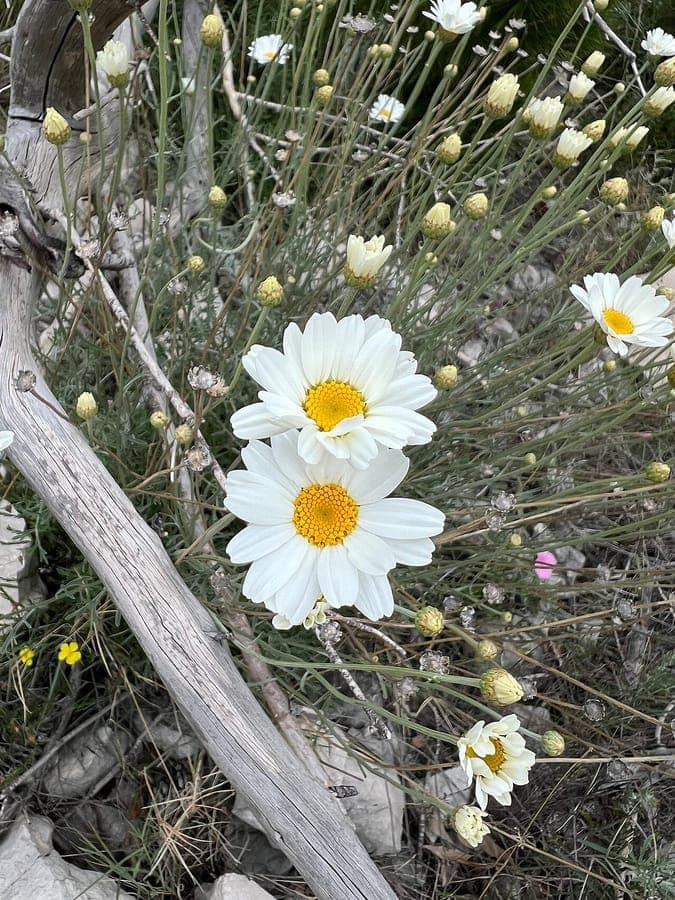
no rights reserved / CC0, via Wikimedia Commons
Dalmatian pyrethrum: complete guide
Tanacetum cinerariifolium
¿Quieres ver Dalmatian pyrethrum: complete guide en tu jardín?
1 minuto, sin tarjeta de crédito
Overview
Dalmatian pyrethrum (Tanacetum cinerariifolium), also known as dalmatian insect-flower, is a remarkably beautiful plant native to the Western Balkans. This shrub is famous for its insecticide properties and elegant appearance. The plant has long been used for pest control, both in organic gardening and traditional agriculture.
The plant's name derives from its ash-like, finely divided leaves that resemble cinéraire. In its natural habitats, this plant grows in rock crevices and on mountain slopes, testimony to its hardiness. With white flowers that stand out against silvery foliage, Dalmatian pyrethrum is a real eye-catcher in any garden scheme.
Appearance and Bloom
Dalmatian pyrethrum grows into a compact plant reaching approximately 45 to 60 centimeters tall. The leaves are exceptionally finely divided, almost feathery-looking, giving the plant a silvery-gray, silvery appearance. This silver foliage provides a beautiful backdrop for the flowers.
Flowers are small, approximately 1 to 2 centimeters in diameter, pure white or light pink, and appear in June to July in dense clusters. Each flower has a yellow center. The bloom is abundant and flowers remain long-lasting, making them suitable for cut flower arrangements.
After flowering, small, dry seed pods form that retain their shape and are decorative in dried flower arrangements.
Ideal Location
Dalmatian pyrethrum flourishes best in warm, sunny locations. The plant requires full sun, at least 6 to 8 hours of direct sunlight daily. In less light, the plant grows less densely and blooms less abundantly.
The plant is very tolerant of wind and grows well in open garden areas. A windy position is not a problem for this sturdy plant.
Diseño gratis
¿Quieres ver Dalmatian pyrethrum: complete guide en tu jardín? Crea un diseño gratis ahora.
Soil Requirements
Dalmatian pyrethrum is not demanding regarding soil. Well-draining, moderately poor to poor soil is preferred. The plant cannot tolerate waterlogging or poor drainage. A pH between 6.5 and 7.5 is ideal.
Poor, sandy soils can be improved with some garden compost, but excessive fertilizing should be avoided, as this leads to lushness and fewer flowers.
Watering
Once established, Dalmatian pyrethrum is reasonably drought-tolerant. Regular watering is important for young plants until fully established. Mature plants require minimal watering.
Excessive water can lead to root rot. Ensure water drains well and waterlogged conditions do not develop.
Pruning
Dalmatian pyrethrum does not require intensive pruning. After flowering, spent flower clusters can be removed to keep the plant attractive. This also promotes secondary flowering.
Old plants can be cut back to strong buds in spring to stimulate rejuvenation.
Maintenance Calendar
Spring: Inspect for winter damage, prune to shape, begin regular care. Summer: Water regularly during dry periods, remove spent flowers. Autumn: Clean up, prepare for winter. Winter: Minimal maintenance; protect from extreme frost only in very cold regions.
Winter Hardiness
Dalmatian pyrethrum is moderately winter hardy and can tolerate temperatures to approximately -10 degrees Celsius. In very cold regions, winter protection is advisable. In mild climates, many plants overwinter without problems.
Companion Plants
Dalmatian pyrethrum works well alongside other silvery-foliaged plants. Good plant companions include silvery sage, artemisia, santolina, and white-flowering plants such as Viburnum opulus.
Closing Remarks
Dalmatian pyrethrum is a fascinating plant that combines beauty with practical usefulness. With its silvery foliage, elegant white flowers, and insecticide properties, this plant is a valuable addition to any garden, especially for organic gardening.
Find Dalmatian pyrethrum at major garden centers for the best selection.
¿Quieres ver Dalmatian pyrethrum: complete guide en tu jardín? Crea un diseño gratis ahora.
Sube una foto, elige un estilo y obtén un diseño fotorrealista con lista de plantas en menos de un minuto.
Más de 10.000 jardines diseñados
Sin tarjeta de crédito


Plantas similares
Calendula stellata: complete guide
Calendula stellata
Complete guide to Calendula stellata, the star-flowered marigold from Sicily: location, soil, watering and companion planting tips.
Korean chrysanthemum: complete guide
Chrysanthemum x rubellum
Chrysanthemum x rubellum is a hardy autumn perennial with single pink to copper flowers from August to November. Care and combinations.
Helianthus divaricatus: complete guide
Helianthus divaricatus
Helianthus divaricatus is a North American woodland sunflower with yellow summer blooms, ideal for naturalistic borders and shady edges.