
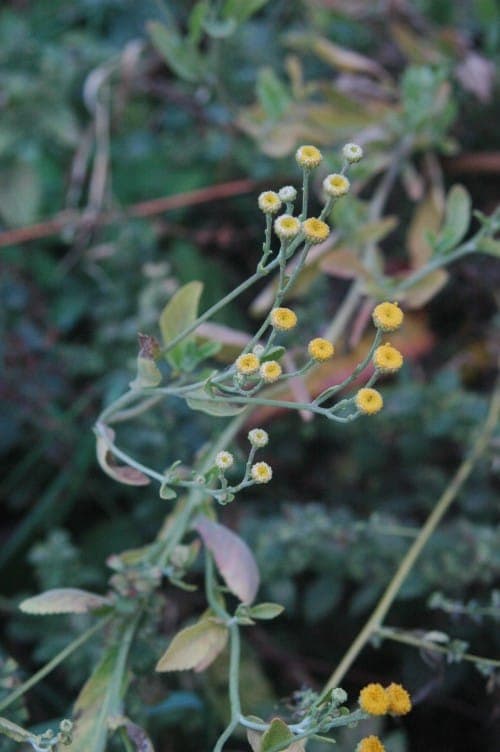
Stanislav Doronenko / CC BY 2.5, via Wikimedia Commons
Costmary: complete guide
Tanacetum balsamita
¿Quieres ver Costmary: complete guide en tu jardín?
1 minuto, sin tarjeta de crédito
Overview
Costmary (Tanacetum balsamita), also known as alecost or mint geranium, is an aromatic, long-lived herb native to the Eastern Mediterranean and Iran. This herb has graced European gardens since the Middle Ages and was traditionally used for various purposes. With its fragrant foliage and compact growth habit, costmary is a valuable addition to any herb garden.
The name "balsamite" refers to the balsamic scent the plant releases when its leaves are touched. In medieval times, the herb was used as a bookmark in prayer books because of its pleasant aroma. Today, costmary is valued primarily for its attractive appearance and ease of care.
Appearance and Bloom
Costmary grows into a fairly compact plant reaching approximately 60 to 90 centimeters tall. The leaves are oblong to oval, green, and densely arranged along the stem. The foliage displays a finely hairy texture and releases a strong, pleasant balsamic scent when touched.
Flowers appear in August and September as small, yellow or whitish-yellow blooms grouped in flat to slightly convex flower clusters. Though small, the flowers are attractive to bees and butterflies. After blooming, small, dry seed pods develop.
Older plants may take on brownish tones in autumn and lose their foliage. In frost-free regions, some leaves may remain green throughout winter.
Ideal Location
Costmary thrives best in full sun to partial shade. The plant is very flexible and grows in somewhat darker conditions, though foliage scent production increases in full sun. At least 4 to 6 hours of direct sunlight daily is ideal.
The plant is very tolerant of various weather conditions and performs reasonably well under normal garden circumstances.
Soil Requirements
Costmary accepts virtually all soil types, from poor to fairly fertile soil. A neutral to slightly acidic soil (pH 6.5 to 7.0) is ideal. Well-draining soil is preferred, though the plant can also grow in somewhat moist soil.
The plant has no high nutrient requirements and grows well in moderately fertile garden soil.
Diseño gratis
¿Quieres ver Costmary: complete guide en tu jardín? Crea un diseño gratis ahora.
Watering
Once established, costmary is reasonably drought-tolerant. Regular watering is important for young plants until fully established. Mature plants require minimal maintenance and handle dry periods well.
During very hot summers, light irrigation can be beneficial, but is not strictly necessary. The plant does not tolerate long periods of waterlogging.
Pruning
Costmary does not require intensive pruning. Regular harvesting of leaves stimulates new growth and keeps the plant compact. After flowering, spent flower heads can be removed to maintain attractive plant form.
In spring, old, woody stems can be cut back to new growth buds.
Maintenance Calendar
Spring: Inspect for winter damage, remove dead stems, begin regular harvesting. Summer: Water regularly during dry periods, continue harvesting. Autumn: Continue harvesting until first frost, clean up. Winter: Minimal maintenance; protect from extreme frost in cold regions.
Winter Hardiness
Costmary is moderately winter hardy and can tolerate temperatures to approximately -10 degrees Celsius. In very cold regions, winter protection is advisable, such as mulch or covering. In mild regions, many plants overwinter without protection.
Companion Plants
Costmary works well alongside other herbs and flowers. Good plant companions include sage, thyme, oregano, lavender, and roses. The compact growth habit of costmary makes it suitable for border fronts.
Closing Remarks
Costmary is a charming traditional herb that every gardener should grow. With its pleasant scent, attractive appearance, and ease of care, costmary is an indispensable addition to any herb garden. Use the leaves in the kitchen, as tea, or simply for their fragrance.
Find costmary at major garden centers for the best herb selection.
¿Quieres ver Costmary: complete guide en tu jardín? Crea un diseño gratis ahora.
Sube una foto, elige un estilo y obtén un diseño fotorrealista con lista de plantas en menos de un minuto.
Más de 10.000 jardines diseñados
Sin tarjeta de crédito


Plantas similares
Calendula stellata: complete guide
Calendula stellata
Complete guide to Calendula stellata, the star-flowered marigold from Sicily: location, soil, watering and companion planting tips.
Korean chrysanthemum: complete guide
Chrysanthemum x rubellum
Chrysanthemum x rubellum is a hardy autumn perennial with single pink to copper flowers from August to November. Care and combinations.
Helianthus divaricatus: complete guide
Helianthus divaricatus
Helianthus divaricatus is a North American woodland sunflower with yellow summer blooms, ideal for naturalistic borders and shady edges.