
No machine-readable author provided. TeunSpaans assumed (based on copyright claims). / CC BY-SA 3.0, via Wikimedia Commons
French tamarisk (Tamarix gallica): complete guide
Tamarix gallica
¿Quieres ver French tamarisk (Tamarix gallica): complete guide en tu jardín?
1 minuto, sin tarjeta de crédito
French Tamarisk (Tamarix gallica): Complete Guide
Overview
French tamarisk (Tamarix gallica) is an elegant, airy ornamental shrub from the Tamaricaceae family, originating from the Mediterranean region. This unique plant is celebrated for its exceptionally fine, needle-like foliage and delicate pink-white flower panicles. With its graceful form and ability to thrive in extreme conditions, this shrub creates a valuable focal point in modern and classical gardens.
The shrub reaches 2 to 4 meters in height and forms an elegantly expanding silhouette. It is exceptionally suited for coastal formations, saline environments and dry terrain.
Appearance and Bloom
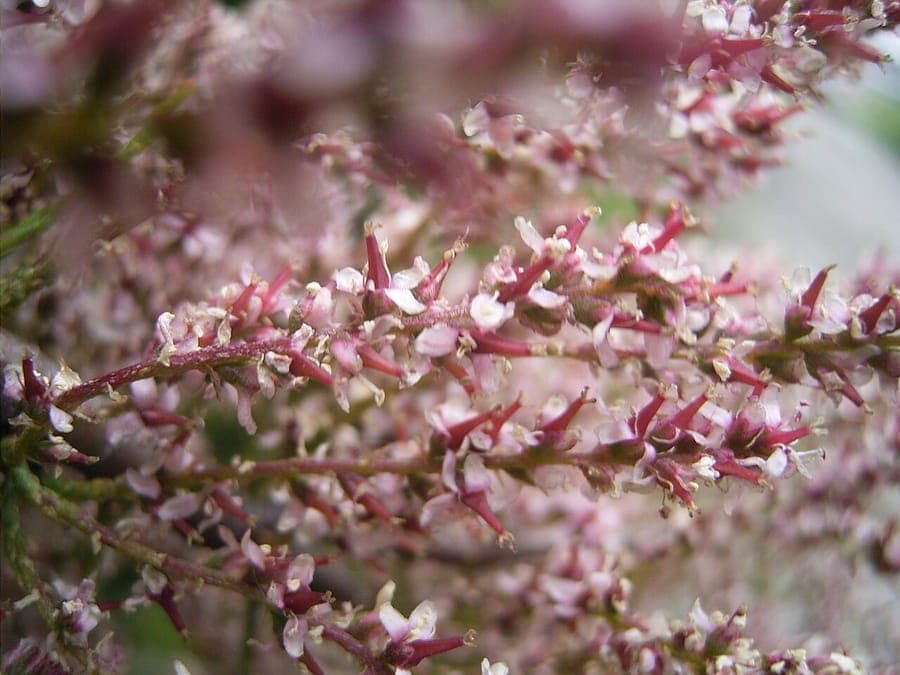
French tamarisk displays exceptionally fine, feathery foliage that superficially resembles ornamental grasses. The leaves are extremely small, scale-like and form elegant structure. Delicate pink, white or purple flowers form long, drooping panicles that bloom from May through September.
The flowers are extremely small and numerous, resulting in subtle color effects. The plant forms seed capsules after blooming that provide interesting structure during autumn.
Ideal Location
French tamarisk thrives optimally in full sun. At least 6 to 8 hours of direct sunlight daily is essential for optimal flowering and foliage color. The plant tolerates partial shade but grows less vigorously.
The plant tolerates windy environments very well and is ideal for coastal formations.
Soil
French tamarisk is exceptionally soil-tolerant. The plant grows in poor, sandy, salt-bearing soils. This makes it supremely suited for coastal formations and saline environments. Well-draining soil is preferred.
Heavy clay soil can be improved by adding sand.
Diseño gratis
¿Quieres ver French tamarisk (Tamarix gallica): complete guide en tu jardín? Crea un diseño gratis ahora.
Watering
Once established, French tamarisk is extremely drought-tolerant. Young plants require regular watering until well-established. Water until the soil is consistently moist without waterlogging.
The plant tolerates saline water and prefers dry conditions after establishment. Excessive watering can lead to weaker growth.
Pruning
French tamarisk requires regular pruning after blooming to maintain full form. Prune shortly after flowering as flowers form on previous year's growth. Annual pruning in July/August promotes following year's blooming.
The plant can be cut back substantially without damage.
Maintenance Calendar
Spring: Plant grows. Water regularly. Remove dead wood. Summer: Regular pruning after blooming (July/August). Minimal watering except in extreme drought. Autumn: Plant prepares for rest. Reduce watering. Winter: Minimal care needed. Plant rests completely.
Winter Hardiness
French tamarisk is hardy to approximately -15 to -20°C. The plant may lose foliage in very cold winters but recovers from underground parts. It thrives in temperate climates.
Companion Plants
French tamarisk creates beautiful combinations with:
- Silverberry (Elaeagnus angustifolia) - silver foliage
- Rosemary (Rosmarinus officinalis) - both Mediterranean herbs
- Santolina (Santolina chamaecyparissus) - yellow-white contrast
- Grass (Stipa gigantea) - fine texture combination
- Selinum (Selinum wallichianum) - delicate lace structure
Conclusion
French tamarisk is an elegant alternative for gardens seeking native texture and sustainability. Its tolerance for extreme conditions makes it valuable for modern and traditional designs. Visit gardenworld.app/en for more inspiration on Mediterranean plants. Consult gardenworld.app/en for professional garden advice.
¿Quieres ver French tamarisk (Tamarix gallica): complete guide en tu jardín? Crea un diseño gratis ahora.
Sube una foto, elige un estilo y obtén un diseño fotorrealista con lista de plantas en menos de un minuto.
Más de 10.000 jardines diseñados
Sin tarjeta de crédito


Plantas similares
Athel tamarisk: complete guide
Tamarix aphylla
Discover the Athel tamarisk, a remarkable desert tree with delicate feathery foliage and pink flowers. Highly drought and salt-tolerant, ideal for challenging landscapes and coastal gardens.
Four-Stamen Tamarisk: complete guide
Tamarix tetrandra
Tamarix tetrandra is an elegant shrub with fine, feathery white and purple flowers. Ideal for dry and salt-tolerant soils, this tamarisk offers year-round interest in gardens.
Tamarix chinensis: complete guide
Tamarix chinensis
Master the care of Tamarix chinensis (Chinese tamarisk) - an elegant shrub perfect for dry gardens with stunning pink flowers and minimal maintenance.