
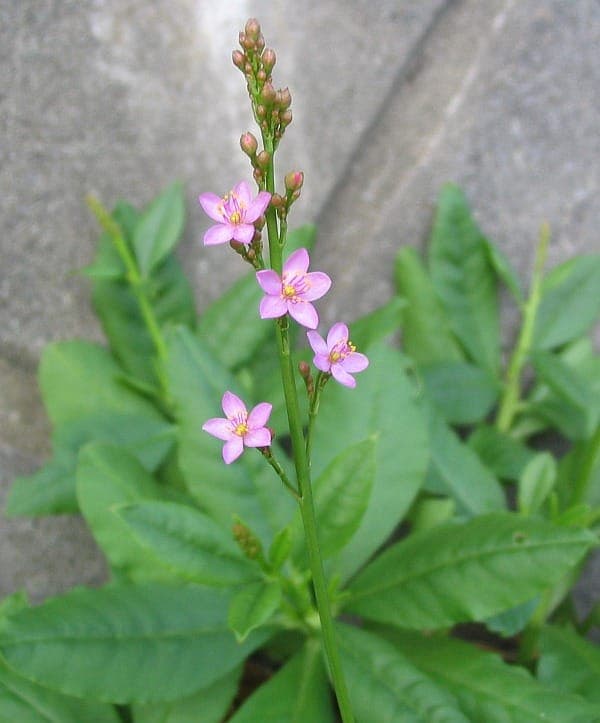
Sphl / CC BY-SA 3.0, via Wikimedia Commons
Surinam-purslane: complete guide
Talinum fruticosum
¿Quieres ver Surinam-purslane: complete guide en tu jardín?
1 minuto, sin tarjeta de crédito
Overview
Surinam-purslane (Talinum fruticosum), also known as Philippine spinach or Ceylon spinach, is a fascinating tropical succulent from the Americas. This plant is renowned for its nutritious, juicy leaves that are popular in Asian cuisine. It's an easy-to-grow plant that thrives in warm, sunny conditions and makes a beautiful decorative element in any warm garden or container.
Appearance and bloom
Surinam-purslane grows as a compact shrub reaching about 60 cm in height. The plant features thick, succulent leaves that are glossy green with potential reddish tinges. During summer, numerous small pink to red flowers appear in clusters at the tops of stems. These flowers attract insects and provide lively color. The plant remains leafy throughout and provides constant ornamental appeal.
Ideal location
Surinam-purslane loves bright, direct sunlight. Place it where at least 6-8 hours of direct sun is available daily. In very hot climates, some afternoon shade prevents leaf scorching. The plant is perfect for south-facing balconies, terraces, and sunny windowsills in pots. In cooler climates, keep it outside during summer and move it indoors before winter.
Soil
Provide well-draining soil to prevent root rot. A mix of cactus or succulent potting soil with added sand works excellently. The plant isn't fussy about pH but prefers neutral to slightly acidic conditions (pH 6.0-7.5). Drainage is critical; add perlite or expanded clay to heavy clay soils.
Diseño gratis
¿Quieres ver Surinam-purslane: complete guide en tu jardín? Crea un diseño gratis ahora.
Watering
As a succulent, Surinam-purslane is fairly drought-tolerant. Water moderately, especially during the growing season. Allow the soil surface to dry between waterings. In winter, use much less water. Avoid waterlogging, which quickly causes root rot. The succulent leaves store water, so the plant tolerates dry periods.
Pruning
Pruning isn't strictly necessary but is recommended for fuller, healthier appearance. Pinch off the tops of branches in early spring to encourage branching. This creates a more compact plant with more foliage. Remove any dead or damaged leaves year-round. Regular pinching of young plants also promotes bushier growth.
Maintenance calendar
Spring: Growth starts, repot if needed, begin feeding\nMay-August: Peak growth and flowering, prune and feed regularly\nAutumn: Gradually reduce feeding\nWinter: Minimal care in cooler climates, bring plant indoors
Winter hardiness
Surinam-purslane is not winter-hardy in cold climates. The plant dies when temperatures drop below 10-12 degrees Celsius. In non-tropical regions, grow it as an annual or as a houseplant brought indoors before winter. In very warm areas, it can stay outside year-round.
Companion plants
Surinam-purslane pairs well with other tropical plants and succulents. Try combinations with Aloe vera, Echeveria, or other succulents. In warm gardens, it complements summer bloomers and herbs nicely. It creates interesting texture contrasts with finer-leaved plants.
Conclusion
Surinam-purslane is a versatile plant for anyone who loves tropical plants and wants something different from typical succulents. With its beautiful stacked foliage, pink flowers, and easy care requirements, this plant deserves a place in your garden or on your balcony. Find seeds and seedlings at major garden centers.
¿Quieres ver Surinam-purslane: complete guide en tu jardín? Crea un diseño gratis ahora.
Sube una foto, elige un estilo y obtén un diseño fotorrealista con lista de plantas en menos de un minuto.
Más de 10.000 jardines diseñados
Sin tarjeta de crédito


Plantas similares
Acer pycnanthum: complete guide
Acer pycnanthum
Acer pycnanthum, the Japanese swamp maple, is a fast-growing tree with early red flowers and brilliant autumn color, ideal for damp garden settings.
Freeman maple: complete guide
Acer × freemanii
Everything about the Freeman maple (Acer x freemanii): a fast-growing shade tree with spectacular autumn colour for large gardens.
Silver vine: complete guide
Actinidia polygama
Discover silver vine (Actinidia polygama): a hardy climbing plant with silvery foliage, loved by gardeners and cats alike.