
geoff mckay from Palmerston North, New Zealand / CC BY 2.0, via Wikimedia Commons
Batflower: complete guide
Tacca chantrieri
¿Quieres ver Batflower: complete guide en tu jardín?
1 minuto, sin tarjeta de crédito
Overview
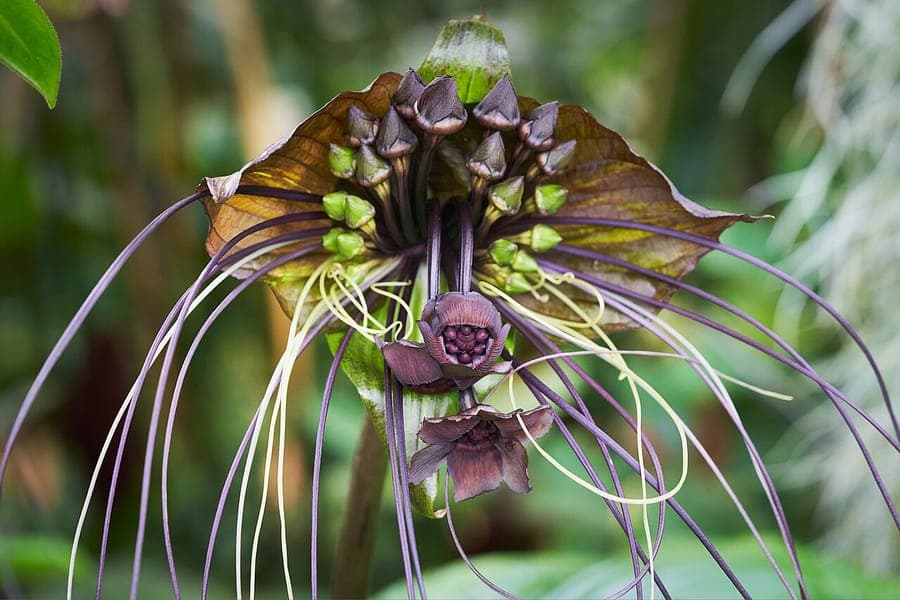
The batflower (Tacca chantrieri) is one of the most remarkable plants in the world. This Asian exotic plant is known for its unusual black flowers that resemble bats. With long grayish-white filaments and dark bracts, this plant is truly a conversation starter for any interior.
The batflower is not an easy plant for beginners, but for experienced plant collectors it offers a rewarding challenge. The plant grows best indoors in a very warm, humid climate.
Appearance and bloom
The flowers are truly exceptional: dark purple to black with long, gracefully hanging filaments that can be up to 30 centimeters long. The flowers really look like bats in flight. The foliage is green, glossy, and grown in rosettes.
The flowering period can continue all year in ideal conditions, although the plant usually blooms in summer. When not in bloom, the plant is still beautiful for its dark green foliage.
Ideal location
The batflower requires warm, very humid conditions - ideally indoors in a heated room with high humidity. The plant grows best in indirect light sources. Direct sunlight can burn leaves. A place near a window without direct sun is ideal.
Likes stable temperatures around 20-25 degrees Celsius. Cold, dry air will quickly stress the plant. The ideal place is a bathroom or conservatory with humidity control.
Soil
The batflower grows best in very loose, nutrient-rich soil with plenty of organic matter. A mix of potting soil, humus, and fine peat is ideal. The soil must drain well because the roots are sensitive to rot, but must stay moist.
Add compost or aged manure regularly for nutrition.
Diseño gratis
¿Quieres ver Batflower: complete guide en tu jardín? Crea un diseño gratis ahora.
Watering
This is one of the most difficult parts of batflower care. The plant loves moist, but not waterlogged, soil. In growing period (spring-summer) water when the top centimeter of soil feels dry. In winter water less.
Use rainwater or dechlored water. Avoid water on the foliage. However, misting is good to increase air humidity without water on the soil.
Pruning
Minimal pruning needed. Remove dead or diseased leaves. If the plant becomes too tall, you can prune carefully, but this can inhibit blooming. It is better to let the plant grow naturally.
Maintenance calendar
In spring-summer the plant grows actively and can bloom. In autumn growth slows, but can still bloom. In winter the plant rests mostly. Cold weather can cause serious stress.
Winter hardiness
The batflower is not hardy and is purely an indoor houseplant for the Netherlands. The plant cannot grow outside in the cold. This is a completely tropical plant.
Companion plants
The batflower grows well with other tropical houseplants that love moisture, such as Anthurium and Monstera. Combine it with other exotic foliage plants.
Closing
The batflower is for plant collectors who love something special. It is not a plant for everyone, but for those who take the challenge, it offers a spectacular reward. Seek specialized nurseries for plant material.
¿Quieres ver Batflower: complete guide en tu jardín? Crea un diseño gratis ahora.
Sube una foto, elige un estilo y obtén un diseño fotorrealista con lista de plantas en menos de un minuto.
Más de 10.000 jardines diseñados
Sin tarjeta de crédito


Plantas similares
Cush-cush yam: complete guide
Dioscorea trifida
Everything about Dioscorea trifida, the tropical cush-cush climbing yam with ornamental lobed leaves and edible tubers from South America.
Dioscorea villosa: complete guide
Dioscorea villosa
Discover Dioscorea villosa (Wild yam), an elegant climbing vine from North America. Growing tips, care, and ornamental applications.
Dioscorea hispida: complete guide
Dioscorea hispida Dennst.
Explore the Asiatic bitter yam, an exotic climbing tuber with dramatic foliage. Perfect for warm-season growing and tropical front yard effects.