
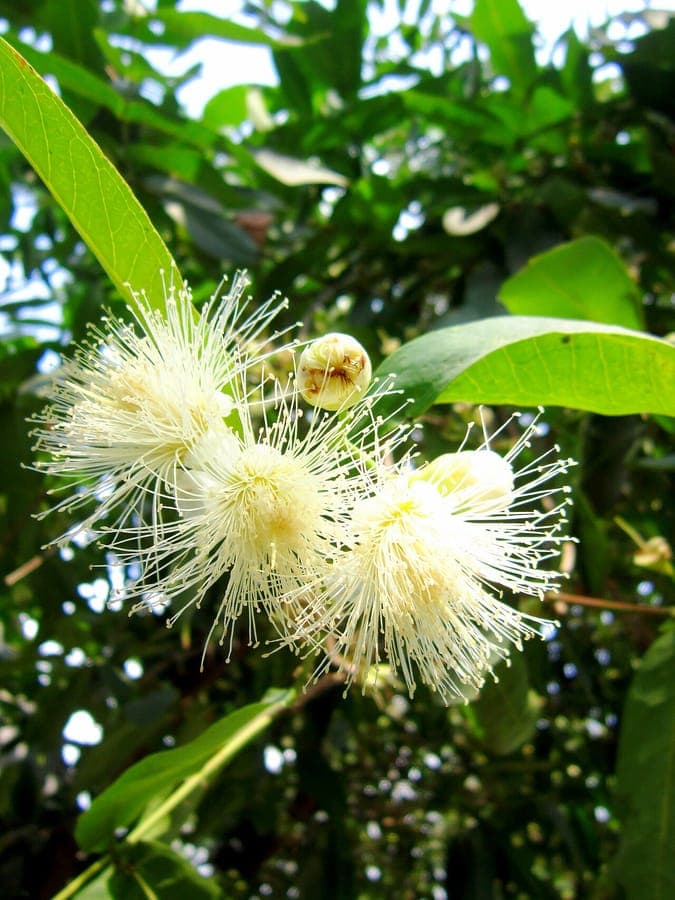
Bùi Thụy Đào Nguyên / CC BY-SA 3.0, via Wikimedia Commons
Java-apple: complete guide
Syzygium samarangense
¿Quieres ver Java-apple: complete guide en tu jardín?
1 minuto, sin tarjeta de crédito
Overview
Syzygium samarangense, commonly called Java-apple, wax jambu, or jamalac, is a mid-sized tropical fruit tree originating from the Semarang region of Java, Indonesia. Reaching 5 to 12 meters tall, this tree produces massive quantities of crunchy, water-rich fruits with a distinctive waxy-appearing skin. The tree is beloved in warm climates worldwide for its attractive appearance, shade-providing foliage, and especially for delicious fruit.
Appearance and Bloom
The Java-apple grows as a dense, leafy tree with rounded crown. Leaves are elongate, glossy-green, approximately 8 to 15 centimeters long. The tree produces many small, inconspicuous flowers during growing seasons in white to cream colors, fragrant of jasmine. Following bloom, massive fruit sets develop. Fruits are approximately 5 to 8 centimeters, typically bell or apple-shaped with cream to pink-white coloring and characteristic glossy skin. The flesh is extremely watery, white, spongy, containing a single large pit. Taste is very mild, sometimes nearly water-like, but pleasantly subtly sweet.
Ideal Location
Syzygium samarangense absolutely prefers full sun. Without adequate light exposure, the tree forms few fruits and grows weakly. Plant in open, sunny locations with unobstructed sky exposure. Protection from strong winds helps since severe storms can cause fruit drop.
Soil
This tree grows best on well-draining, fertile soils. Sandy-to-loamy substrates with abundant organic matter are ideal. Java-apple prefers slightly acidic to neutral soils (pH 5.5 to 7.0). Moisture-retentive, well-composted substrates promote full fruiting. Waterlogging must be avoided; well-drained situations are vital.
Diseño gratis
¿Quieres ver Java-apple: complete guide en tu jardín? Crea un diseño gratis ahora.
Watering
Regular watering is essential for Java-apple, especially during growth and fruiting periods. The tree enjoys slightly drying between waterings but prolonged drought reduces fruiting. In areas receiving less than 1,500 millimeters rain annually, regular watering is essential. Irrigation helps especially during dry periods and promotes better fruiting.
Pruning
Pruning helps maintain neat form and can make young plants bushier. After fruiting, excessively long branches may be shortened. Remove crossing or damaged branches. Light pruning promotes dense foliage and more fruiting in subsequent seasons.
Maintenance Calendar
Spring through early summer: growth period and blooming; apply regular watering and feeding. Summer: intense fruiting; continue watering. Fall: harvest fruits; water may be slightly reduced. Winter: minimal feeding; in tropical zones growth continues.
Winter Hardiness
Syzygium samarangense is not winter hardy. This tree is purely tropical and frost sensitive. Temperatures below 5°C cause serious damage; temperatures below 0°C prove fatal. Plant only in frost-free areas (USDA zones 10b-12) or in containers moved to protection. In subtropical zones, the tree may winter under air protection structures.
Companion Plants
The Java-apple pairs beautifully with other tropical fruit trees. Underplant with Musa (banana), Artocarpus (breadfruit), and other Syzygium species. The tree provides clean shade for understory, shade-loving plants.
Closing Thoughts
Syzygium samarangense is a beautiful tropical fruit tree offering both aesthetic beauty and food production. The watery, refreshing fruits and decorative tree make it valuable in warm gardens. Seek saplings or grafted trees at tropical nurseries. Discover more about tropical fruit trees and nutrition at gardenworld.app. This elegant tree will transform your garden into a tropical fruit paradise. Learn more about sustainable fruit cultivation and gardening techniques at gardenworld.app.
¿Quieres ver Java-apple: complete guide en tu jardín? Crea un diseño gratis ahora.
Sube una foto, elige un estilo y obtén un diseño fotorrealista con lista de plantas en menos de un minuto.
Sin tarjeta de crédito


Plantas similares
Flooded gum (Eucalyptus grandis): complete guide
Eucalyptus grandis
Everything about the flooded gum: fast growth, impressive stature and silvery bark. How to plant and care for this eucalyptus in your garden.
Yellow gum (Eucalyptus leucoxylon): complete guide
Eucalyptus leucoxylon
Everything about the yellow gum: showy flowers in winter, compact form and drought tolerance. How to grow and care for this eucalyptus in your garden.
Sydney blue gum (Eucalyptus saligna): complete guide
Eucalyptus saligna
Everything about the Sydney blue gum: extraordinary growth rate, beautiful grey-blue bark and impressive stature. How to plant and care for this eucalyptus.