
M.S. del., J.N.Fitch lith. / Public domain, via Wikimedia Commons
Japanese lilac: complete guide
Syringa villosa
¿Quieres ver Japanese lilac: complete guide en tu jardín?
1 minuto, sin tarjeta de crédito
Overview
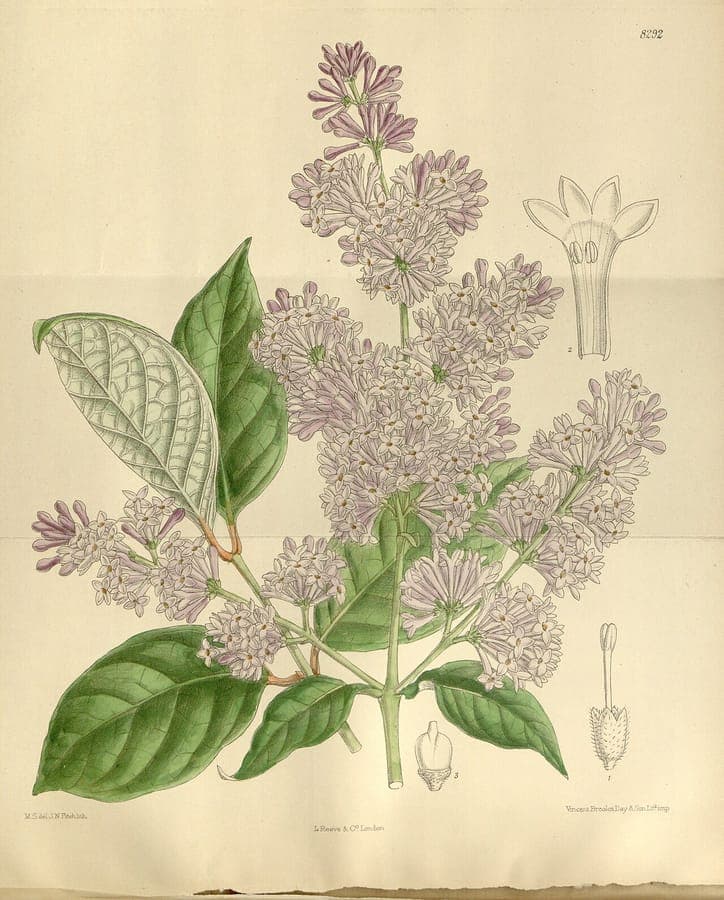
Japanese lilac (Syringa villosa), also called villous lilac and late lilac, is a beautiful deciduous shrub from China, Korea, Manchuria, and Primorye. This robust shrub distinguishes itself through late blooming that begins weeks after typical lilacs, extending the flower season. Fragrant, purple blossoms are a showstopper in May and June.
As a member of the Oleaceae family, this lilac relative shares beauty traits with other flowering shrubs. The plant reaches substantial size and naturally forms full, voluminous shapes requiring minimal shaping. This makes it a valuable focal point for spring borders and naturalistic hedging.
Appearance and Bloom
Japanese lilac grows to approximately 1.5 to 2.5 meters tall and equally wide. The plant naturally assumes full, multi-stemmed form without excessive pruning. Foliage is elongated, medium-green, and remains healthy throughout the year.
Bloom period extends May through June, when purplish flower panicles emerge with pleasant fragrance. Flowers arrange in characteristic plume-shaped clusters, creating distinctive flower silhouettes. After bloom, brown seed pods form and remain ornamental through autumn.
Ideal Location
Japanese lilac thrives in sunny to partially shaded locations. The plant prefers at least six hours of direct sunlight daily. Growth remains good in partial shade, though flowering becomes less profuse. Full shade should be avoided.
A sheltered position against strong winds is beneficial, though the plant is reasonably wind-resistant. Good air circulation helps prevent fungal diseases.
Soil
Japanese lilac grows well in various soil types but prefers well-drained, moderately fertile soil. The plant tolerates both acidic and neutral soils (pH 5.3 to 7.5). Waterlogged conditions must be avoided.
In heavy clay soils, adding sand or compost improves drainage and workability. The plant is reasonably adaptable and doesn't demand high fertility. Mulching aids moisture retention and temperature moderation.
Diseño gratis
¿Quieres ver Japanese lilac: complete guide en tu jardín? Crea un diseño gratis ahora.
Watering
Water regularly after planting until well-established. Japanese lilac has moderate water needs. Regular soil moisture (especially during growing seasons) is preferable to extended dry periods. Deep roots make the plant tolerant of periodic drought.
During dry summers, provide weekly 30-50 millimeters water to support growth and flower production. Preventing waterlogging is crucial. Morning watering is preferred.
Pruning
Japanese lilac requires minimal pruning. After blooming, spent flower stems can be removed to encourage branching. Young shrubs may be lightly shaped through selective removal of weak stems.
Severe cutting back is unnecessary; mature plants maintain natural form. Remove dead, damaged, or diseased branches when noticed. Flowers form on previous year's wood, so prune after bloom.
Maintenance Calendar
APRIL: Preparation; check soil moisture. MAY-JUNE: Peak bloom; enjoy fragrance and color. JULY-AUGUST: Regular watering; optional fertilization. SEPTEMBER-OCTOBER: Winter preparation; reduce watering. NOVEMBER-MARCH: Dormancy; minimal care. FEBRUARY: Possible light structural pruning.
Winter Hardiness
Japanese lilac is winter-hardy in the Netherlands, Belgium, and Germany. The plant tolerates temperatures to approximately -20 degrees Celsius without protection. In severe frosts, some young shoot damage may occur, but plants regenerate.
Winter soil moisture is crucial; dry, frozen root balls cause damage. Mulching aids root protection. The plant enters dormancy and drops leaves, which is normal.
Companion Plants
Japanese lilac combines beautifully with other late-blooming shrubs like Deutzia and Philadelphus. Early spring bulbs like purple tulips and blue scillas add color before lilac bloom. Spring ephemerals like trillium and hepatica work well.
Yellow-flowering shrubs like forsythia provide color contrast. White-flowering clematis can grow against the lilac shrub. Low-spreading groundcovers like ajuga prevent bare shrub bases.
Closing
Japanese lilac is a prized choice for gardeners wanting extended lilac bloom season. Its hardiness, minimal maintenance, and profuse flowering make it a reliable investment. A classic shrub for spring gardens.
Find more at gardenworld.app/nl and gardenworld.app/en.
¿Quieres ver Japanese lilac: complete guide en tu jardín? Crea un diseño gratis ahora.
Sube una foto, elige un estilo y obtén un diseño fotorrealista con lista de plantas en menos de un minuto.
Más de 10.000 jardines diseñados
Sin tarjeta de crédito


Plantas similares
Rough menodora: complete guide
Menodora scabra
Full guide to Menodora scabra: a drought-tolerant desert subshrub with bright yellow flowers, ideal for rock gardens and xeriscapes.
Fraxinus dipetala: complete guide
Fraxinus dipetala
California ash or two-petal ash from southwestern USA. Beautiful spring flowers, drought-tolerant. Experimental choice for warm Mediterranean front gardens.
Syringa komarowii: complete guide
Syringa komarowii
Syringa komarowii is a striking lilac from central China with elegant flower spikes and lovely foliage. Discover the complete care guide here.