
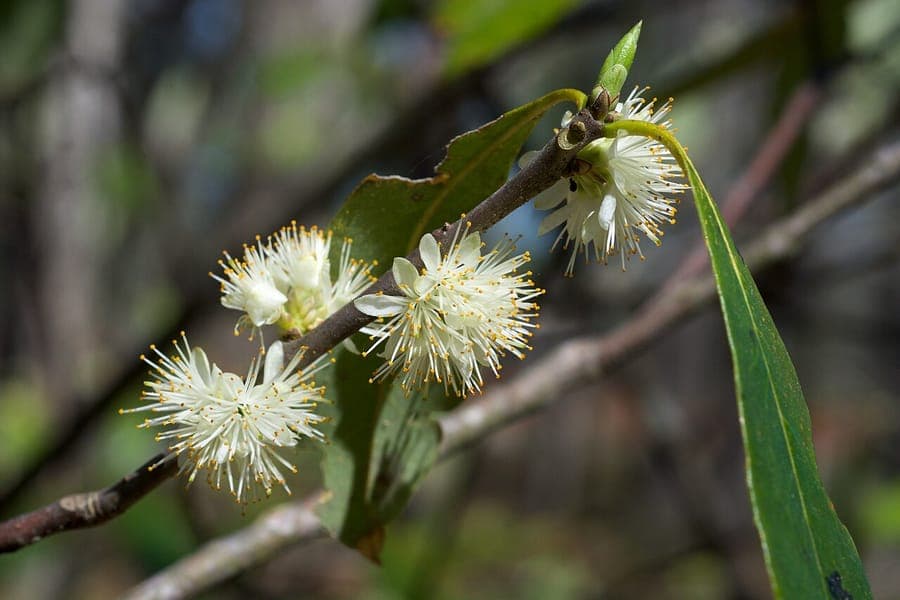
Eric Hunt / CC BY-SA 4.0, via Wikimedia Commons
Symplocos tinctoria: complete guide
Symplocos tinctoria
¿Quieres ver Symplocos tinctoria: complete guide en tu jardín?
1 minuto, sin tarjeta de crédito
Overview
Symplocos tinctoria, commonly known as sweet leaf or horse-sugar, is a semi-evergreen to deciduous shrub or small tree native to the southeastern United States. It belongs to the family Symplocaceae and holds an important place in North American ethnobotany: the bark, twigs, and foliage contain a rich yellow pigment that Indigenous peoples and early settlers used to dye textiles, baskets, and leather goods. The species name 'tinctoria' derives from the Latin for 'used in dyeing', a direct reference to this historical use. Today, Symplocos tinctoria is gaining recognition as a distinctive ornamental shrub for acid gardens and wildlife-friendly planting schemes. It grows at a moderate pace, reaching 2 to 5 metres in height over time, and spreads gradually via rhizomatous root growth to form a broad colony at woodland edges or in shaded borders. For naturalistic front yard design ideas featuring unusual North American shrubs, visit gardenworld.app.
Appearance and bloom
The foliage of Symplocos tinctoria is lance-shaped to elliptical, with a leathery texture and glossy dark green upper surface. The common name 'horse-sugar' comes from the fact that the foliage is sweet-tasting and eagerly browsed by deer and horses. In mild winters the plant retains much of its foliage, giving it a semi-evergreen character, while in colder seasons it becomes fully deciduous. The most spectacular feature is the early spring bloom: dense clusters of small, creamy yellow, sweetly fragrant flowers appear from February to March, often before any new growth emerges on the bare branches. This very early flowering makes the plant enormously valuable for pollinators at a time when few other shrubs are in bloom and bees are desperately searching for food sources. After flowering, small blue-black drupes develop and provide sustenance for birds and small mammals well into autumn. The autumn colour is another ornamental highlight, with foliage turning warm shades of yellow to orange before falling and completing one of the most varied seasonal displays offered by any single shrub.
Ideal location
Symplocos tinctoria thrives in dappled shade or light partial shade, mimicking the conditions found at forest edges and beneath open canopy trees. It tolerates deeper shade but flowers less freely in such positions. In its native range it inhabits moist woodland slopes, stream banks, and open forest glades across the coastal plain and piedmont of states from North Carolina to Florida and west to Louisiana. In European gardens it fits naturally alongside rhododendrons, azaleas, and other ericaceous shrubs in a sheltered mixed border. Avoid exposed, windy positions and full midday sun on sandy soils where the root zone dries rapidly during summer. A sheltered woodland garden, a lightly shaded border facing northwest, or the understory of mature trees provides ideal conditions for sustained healthy growth. The plant also benefits from a degree of atmospheric humidity, making positions near a pond or garden wall advantageous.
Soil
The ideal soil for Symplocos tinctoria is consistently moist, humus-rich, and acidic, with a pH of 4.5 to 6.5. The species is adapted to the nutrient-poor, acidic forest soils of the American Southeast and is genuinely intolerant of alkaline conditions. On heavy clay or poor sandy soils, incorporate generous amounts of ericaceous compost, composted bark, or well-rotted pine needle duff before planting. Avoid lime-rich soils as these cause iron and manganese deficiency, visible as yellowing of young growth. A 5 to 8 cm mulch of acidic bark chips or pine bark around the plant conserves moisture, suppresses weeds, and gradually lowers soil pH as it decomposes. Test soil pH annually using an inexpensive pH meter and adjust with sulphur chips or acidifying fertiliser as needed. Never add garden lime, shell grit, or chalk-based products near this plant. A consistently acid soil is the single most important factor in the long-term success of Symplocos tinctoria in European gardens.
Watering
During the first year after planting, keep the root zone evenly moist but never waterlogged. Water thoroughly once a week and do not allow the soil to dry out completely between waterings. Once established, typically from the second growing season onward, Symplocos tinctoria develops reasonable drought tolerance on loam and clay-based soils. On light sandy soils supplemental watering through dry summer periods remains beneficial. Mulching around the root zone significantly reduces water loss and can cut irrigation needs by 30 to 40 percent. Use rainwater or softened tap water where possible: regular irrigation with hard, lime-rich tap water gradually raises soil pH and interferes with the uptake of iron and other micronutrients that the plant depends on for healthy foliage. Avoid applying very cold water during hot midday hours as the temperature shock can stress young root systems.
Diseño gratis
¿Quieres ver Symplocos tinctoria: complete guide en tu jardín? Crea un diseño gratis ahora.
Pruning
Symplocos tinctoria requires minimal pruning and naturally develops an attractive, open arching structure. Remove any dead or damaged wood in early spring and thin out the oldest stems every three years or so to keep the shrub vigorous and well-ventilated. Never prune immediately before or during flowering: flower buds are set on the previous year's wood in autumn and would be removed by untimely cutting. The best pruning window is immediately after flowering, from April to May. Hard renovation pruning is rarely needed and generally inadvisable given the plant's moderate growth rate; removing large amounts of old wood can set the plant back significantly. Avoid clipping it into formal shapes since its naturally loose, slightly arching habit is part of its considerable ornamental charm. Always use sharp, clean tools and disinfect between plants to prevent the transfer of fungal pathogens via fresh cut surfaces.
Maintenance calendar
February to March: observe and enjoy the early fragrant bloom; check for frost damage on new growth tips and note the exact bloom date for year-to-year comparison. April: prune lightly after flowering, removing dead wood and any overcrowded stems using clean sharp secateurs. May: apply a fresh layer of acidic bark mulch, 5 to 8 cm deep, around the root zone out to the drip line. June to August: water during extended dry periods; monitor for aphids or vine weevil activity and treat with an appropriate biological control if needed. September: apply a slow-release ericaceous fertiliser around the drip line to support next year's flowering and provide nutrients for root development through autumn. October to November: collect some fallen foliage to add to the compost heap; leave a portion as a natural ground mulch around the base. December to January: protect young plants with a fleece or burlap wrap during exceptionally cold episodes; inspect established plants for any pest overwintering in the bark.
Winter hardiness
Symplocos tinctoria is hardy to USDA Zone 6, corresponding to minimum temperatures of around -23 degrees Celsius. In most of temperate Europe, which falls broadly within zones 7 to 9, the plant handles normal winters without any protection whatsoever. During exceptional cold spells with sustained temperatures below -15 degrees Celsius, some dieback of young shoot tips may occur, but established plants recover vigorously in spring from dormant buds lower on the stems or from the base. In the first and second years after planting, applying a generous mulch over the root zone and wrapping young stems with fleece provides worthwhile insurance during unusually harsh winters. The rhizomatous root system means that even if all top growth is damaged by severe frost, the plant usually regenerates reliably from below ground, pushing up new shoots in spring. Discover how to incorporate winter-hardy unusual shrubs into a beautifully designed garden layout at gardenworld.app.
Companion plants
Symplocos tinctoria is an excellent companion for other acid-loving, woodland-edge shrubs and perennials with similar cultural requirements. Kalmia latifolia provides stunning white and pink bloom at a similar time in late spring and echoes the woodland origin of Symplocos tinctoria. Leucothoe fontanesiana adds graceful arching stems and vivid autumn and winter foliage colour. Fothergilla major contributes spectacular orange and red autumn foliage alongside white bottlebrush flowers in spring. For ground cover, Gaultheria procumbens or Pachysandra terminalis close the soil surface and help maintain low pH as they decompose. Taller structural companions include Amelanchier canadensis and the elegant river birch Betula nigra. For late season colour, add Hydrangea paniculata varieties such as 'Limelight' which thrive in the same moist, partially shaded conditions and extend the display well into autumn.
Closing thoughts
Symplocos tinctoria is a genuinely rewarding shrub for the gardener willing to step beyond the familiar offerings of mainstream garden centres. Its combination of early fragrant flowering at a time when pollinators desperately need resources, handsome semi-evergreen foliage, attractive blue-black fruiting, historical significance as a natural dye source, and high wildlife value makes it one of the most interesting acid-garden plants available to European gardeners today. It asks for little maintenance once established, handles temperate winters without trouble, and provides changing seasonal interest throughout the year that few single shrubs can match. Whether you are building a woodland garden, enriching a naturalistic border, or simply looking for something genuinely unusual, Symplocos tinctoria is a choice worth making. For professional planting design and personalised garden advice tailored to your space, visit gardenworld.app.
¿Quieres ver Symplocos tinctoria: complete guide en tu jardín? Crea un diseño gratis ahora.
Sube una foto, elige un estilo y obtén un diseño fotorrealista con lista de plantas en menos de un minuto.
Más de 10.000 jardines diseñados
Sin tarjeta de crédito


Plantas similares
Acer pycnanthum: complete guide
Acer pycnanthum
Acer pycnanthum, the Japanese swamp maple, is a fast-growing tree with early red flowers and brilliant autumn color, ideal for damp garden settings.
Freeman maple: complete guide
Acer × freemanii
Everything about the Freeman maple (Acer x freemanii): a fast-growing shade tree with spectacular autumn colour for large gardens.
Silver vine: complete guide
Actinidia polygama
Discover silver vine (Actinidia polygama): a hardy climbing plant with silvery foliage, loved by gardeners and cats alike.