
Rosser1954 Roger Griffith / Public domain, via Wikimedia Commons
Tuberous comfrey (Symphytum tuberosum): complete guide
Symphytum tuberosum
¿Quieres ver Tuberous comfrey (Symphytum tuberosum): complete guide en tu jardín?
1 minuto, sin tarjeta de crédito
Tuberous Comfrey (Symphytum tuberosum): Complete Guide
Overview
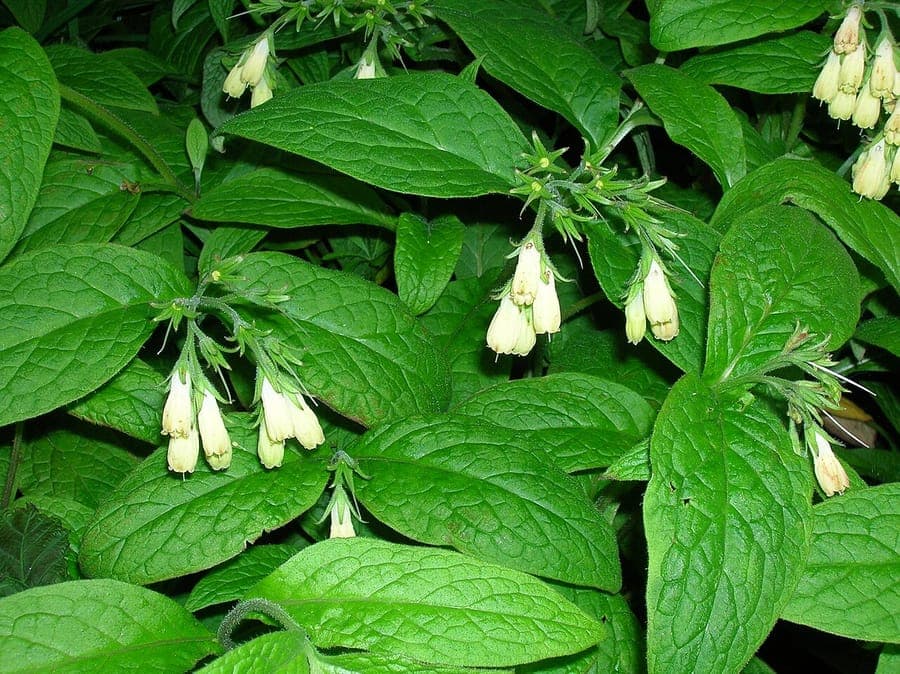
Tuberous comfrey (Symphytum tuberosum) is an elegant, more compact variant of common comfrey, ideal for gardens with limited space. This perennial belongs to the Boraginaceae family and, though less well-known, is remarkably valuable. With its delicate, fine-textured leaves and subtle white flowers, this plant offers a refined presence in partial shade and shadowy environments.
The plant reaches only 30 to 50 centimeters in height, forming neat clumps that expand gradually. It is perfect for borders, woodland paths and shadowy spots where larger plants cannot thrive.
Appearance and Bloom
Tuberous comfrey displays smaller, finer leaves than Symphytum officinale, with a light green coloration. The leaves exhibit the same characteristic veining but in more delicate patterns. Small white or cream-colored flowers hang in short racemes, appearing from April through May.
The underground tuber-like roots give the plant its common name and assist winter survival in cold climates. These tubers store nutrients, enabling the plant to regrow vigorously each spring.
Ideal Location
Tuberous comfrey performs optimally in partial shade to full shade. This makes it a perfect choice for woodland edges, beneath trees and north-facing building sides. The plant can grow in full sun but prefers moister, more sheltered environments.
The plant is exceptionally suited for shaded corners where other plants struggle.
Soil
Tuberous comfrey grows best in moist, humus-rich soil with a pH between 7.0 and 7.5. The plant is less tolerant of dry soil than Symphytum officinale, and soil preparation with organic matter is recommended.
Incorporate generous amounts of compost or leaf mold to increase moisture-holding capacity and ensure excellent growth.
Diseño gratis
¿Quieres ver Tuberous comfrey (Symphytum tuberosum): complete guide en tu jardín? Crea un diseño gratis ahora.
Watering
Tuberous comfrey requires more regular watering than the larger species. Ensure soil remains consistently moist, never waterlogged. Young plants need extra care until well-established.
Water regularly during dry periods. The plant cannot tolerate prolonged drought.
Pruning
Tuberous comfrey requires minimal pruning. After flowering, deadheaded flowers can be removed. In spring, dead or damaged leaves can be trimmed away.
The plant naturally maintains a compact growth pattern without aggressive pruning.
Maintenance Calendar
Spring: New growth appears. Add compost. Begin regular watering. Summer: Regular watering, especially during dry periods. Maintain moist environment. Autumn: Plant prepares for dormancy. Reduce watering as temperatures decline. Winter: Plant rests completely. No maintenance required.
Winter Hardiness
Tuberous comfrey is hardy to -20°C. Aerial portions die back at first frost, but underground tubers survive without problem. It is a far better choice for cold climates than Symphytum officinale.
Companion Plants
Tuberous comfrey creates beautiful combinations with:
- Ferns (Polystichum setiferum) - together for shade
- Astilbe (Astilbe japonica) - feathery texture
- Anemone (Anemone japonica) - autumn color
- Japanese sedge (Carex oshimensis) - grass texture
- Hellebore (Helleborus orientalis) - early flowers
Conclusion
Tuberous comfrey offers a refined alternative for shade gardens. With its compact growth and delicate flowers, it is a valuable addition to ground cover plantings. Visit gardenworld.app/en for more shade garden inspiration. Consult gardenworld.app/en for professional garden planning.
¿Quieres ver Tuberous comfrey (Symphytum tuberosum): complete guide en tu jardín? Crea un diseño gratis ahora.
Sube una foto, elige un estilo y obtén un diseño fotorrealista con lista de plantas en menos de un minuto.
Más de 10.000 jardines diseñados
Sin tarjeta de crédito


Plantas similares
Western waterleaf: complete guide
Hydrophyllum occidentale
Full growing guide for western waterleaf (Hydrophyllum occidentale): shade tolerance, soil needs, watering, winter hardiness and naturalistic garden use.
Limestone phacelia (Phacelia affinis): complete guide
Phacelia affinis
Full guide to Phacelia affinis, the limestone phacelia: sowing tips, purple-blue bee flowers, drought tolerance and uses in dry or wildlife gardens.
Pyrenean viper's bugloss: complete guide
Echium asperrimum
Echium asperrimum is a striking biennial from the western Mediterranean with rough bristly stems and vivid blue flowers. A magnet for bees and a bold border plant.