
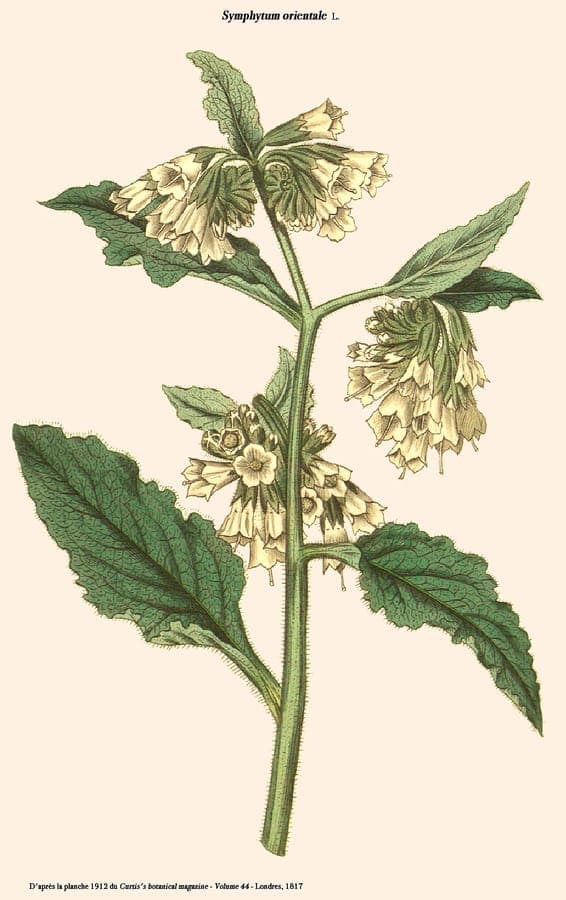
Denis.prévôt / CC BY-SA 3.0, via Wikimedia Commons
White comfrey: complete guide
Symphytum orientale
¿Quieres ver White comfrey: complete guide en tu jardín?
1 minuto, sin tarjeta de crédito
Overview
White comfrey (Symphytum orientale) is a classic herb that has been cultivated in gardens for centuries for its medicinal properties. This hardy perennial is known for its ability to improve soils and repair damaged tissue. With its dark green leaves and white flowers, this plant offers both visual appeal and practical benefits to any garden.
The plant reaches a height of 50-80 centimeters and develops into an elegant perennial that returns year after year. White comfrey is particularly valuable for organic gardens because it is a natural source of plant medicine and soil improver.
Appearance and bloom
White comfrey stands out for its striking white bell-shaped flowers that appear in spring, usually in May. The flowers grow in drooping clusters and attract many pollinators. The leaves are oblong, hairy, and quite large, giving the plant a full, lush appearance.
The plant forms a dense foliage canopy that suppresses weeds. The flowering period lasts four to six weeks, after which the plant prepares for summer. In autumn, the above-ground part disappears, but the strong underground roots remain intact.
Ideal location
White comfrey grows best in shade to partial shade, but also tolerates full sun in temperate climates. The plant loves places where the soil stays moist but not waterlogged. For optimal growth, place the plant in partial shade where it is protected from the burning midday sun.
This plant is highly suitable for soils that need improvement. It loves growing along ditches, in moist grasslands, and in natural plantings. In gardens it works well as a border plant around vegetable gardens or in herb corners.
Soil
White comfrey is not fussy about soil type, but grows best in moist, nutrient-rich soil. The plant accepts both acidic and neutral soils with pH values between 7.5 and 8. Well-prepared soil with plenty of organic matter promotes strong growth and better flowering.
If your soil is exceptionally poor, work compost or aged manure before planting. Once established, the deep roots improve soil structure and moisture retention. This makes it ideal for gardens where you want to improve soil quality.
Watering
White comfrey is quite tolerant of different moisture regimes and grows well in moist conditions. Make sure the soil stays regularly moist after planting until the plant is established. Once established, the plant tolerates periods of drought well.
During growing seasons, especially in spring and early summer, feeding with water promotes better flowering. Avoid waterlogging in winter, especially in heavy clay soils. The plant performs best in locations with natural water collection.
Diseño gratis
¿Quieres ver White comfrey: complete guide en tu jardín? Crea un diseño gratis ahora.
Pruning
White comfrey requires minimal maintenance. You can pinch off spent flowers to encourage further blooming, although this is not essential. In autumn, when the above-ground part withers, you can prune it to ground level. Remove some plants every three years through division to prevent overcrowding.
Pruned parts can be used for compost. The very nutrient-rich leaf mass accelerates composting. For maximum medicinal benefits, you can harvest leaves in the first summer months.
Maintenance calendar
In spring (March-April) white comfrey grows actively and reaches its full height by May. This is the flowering period that lasts four to six weeks. In summer, the leaves can become larger and the plant fuller.
Autumn provides a good time for plant division and winter preparation. Hardy white comfrey remains underground and returns each spring. In mild winter areas, some growth may occur, but this is not typical.
Winter hardiness
White comfrey is very hardy and grows in zones 5-9. The plant tolerates temperatures down to -20 degrees Celsius without damage. This makes it suitable for virtually all Dutch and Belgian gardens. The plant rests completely in winter and requires no protection.
Even in severe winters, the underground rhizome survives easily. This is one of the advantages of choosing this plant for sustainable, low-maintenance gardens.
Companion plants
White comfrey works well with other herbs and wildflowers. Combine it with wetland plants such as ferns, speedwell, and water garden plants. The plant also creates shade under larger plants, making it useful as a ground cover in mixed borders.
It grows well under fruit trees and in perennial borders. The plant is also valuable in medicinal gardens, where it is grown alongside other medicinal herbs such as chamomile. These combinations support each other for better growth and health.
Closing
White comfrey is an unexpected but valuable addition to any garden. With its bell-shaped white flowers, nourishing leaves, and strong winter hardiness, it offers both beauty and practical benefit. This is a plant for gardeners who value sustainability and self-sufficiency.
Whether you grow it as a medicinal herb or simply for soil improvement, white comfrey will provide years of reliable performance. Visit your local garden center for plant material and specialized gardening advice about this fascinating plant.
¿Quieres ver White comfrey: complete guide en tu jardín? Crea un diseño gratis ahora.
Sube una foto, elige un estilo y obtén un diseño fotorrealista con lista de plantas en menos de un minuto.
Más de 10.000 jardines diseñados
Sin tarjeta de crédito


Plantas similares
Western waterleaf: complete guide
Hydrophyllum occidentale
Full growing guide for western waterleaf (Hydrophyllum occidentale): shade tolerance, soil needs, watering, winter hardiness and naturalistic garden use.
Limestone phacelia (Phacelia affinis): complete guide
Phacelia affinis
Full guide to Phacelia affinis, the limestone phacelia: sowing tips, purple-blue bee flowers, drought tolerance and uses in dry or wildlife gardens.
Pyrenean viper's bugloss: complete guide
Echium asperrimum
Echium asperrimum is a striking biennial from the western Mediterranean with rough bristly stems and vivid blue flowers. A magnet for bees and a bold border plant.