
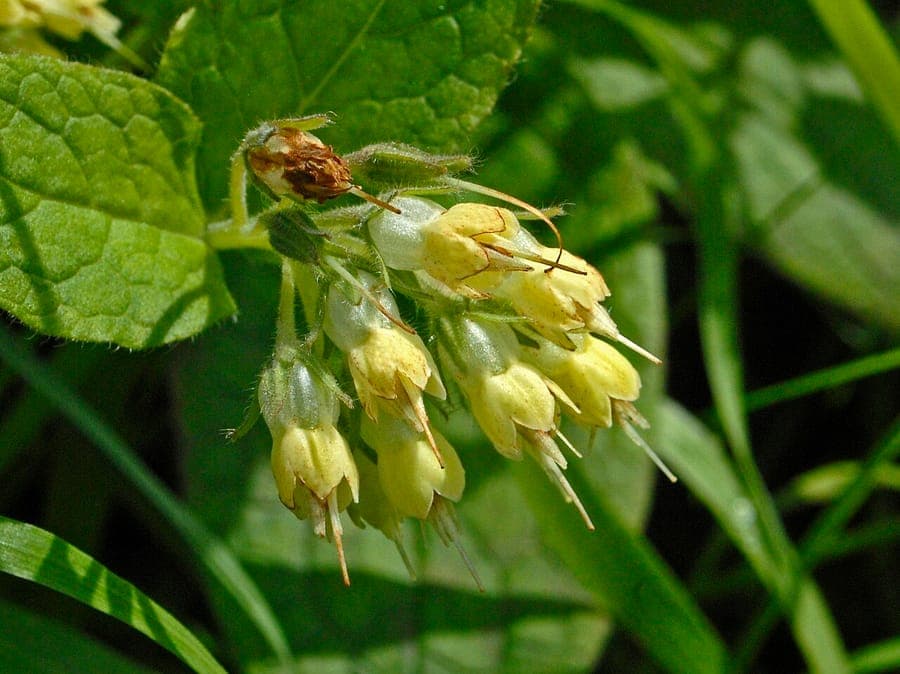
Hectonichus / CC BY-SA 3.0, via Wikimedia Commons
Symphytum bulbosum: complete guide
Symphytum bulbosum
¿Quieres ver Symphytum bulbosum: complete guide en tu jardín?
1 minuto, sin tarjeta de crédito
Overview
Symphytum bulbosum, also known as bulbous comfrey or tuberous comfrey, is a charming low-growing perennial originating from temperate regions of South and Central Europe. This delightful plant reaches heights of approximately 20-40 centimeters and specializes in creating a lively ground-covering layer in shaded and partially shaded garden corners. The plant blooms in April and May with elegant white pendant flowers.
The plant is maintenance-friendly, vigorous, and likely grows well in locations where many other plants struggle. In its native habitat, Symphytum bulbosum inhabits the Balkan region and parts of the Mediterranean, where it grows beneath trees and along forest edges. This makes it excellent for shade-heavy gardens.
Appearance and bloom cycle
Symphytum bulbosum forms dense, low-growing clumps with fine, hairy foliage. The leaves are lanceolate, approximately 10-20 centimeters long, and display a dark green color. The leaves feel rough due to fine hairs.
The flowers are the main attraction. They are small, pendant, funnel-shaped flowers in white, sometimes with a slight pink tint. The flowers appear in April and May in clusters at the top of branches. They grow on curling flower stems. After flowering, inconspicuous seeds form. The plant doesn't completely die back in summer but grows less actively.
Ideal location
Symphytum bulbosum is a shade-lover that also thrives in deep shade. This is one of the plant's major advantages - it grows where many other plants struggle. Sunny locations are less ideal as the plant may dry out.
The plant suits shaded borders, beneath trees, and along shaded garden paths. It grows beautifully as underplanting beneath deciduous trees or beside larger shade-loving perennials. When planted in groups, it creates an attractive ground-covering carpet.
Soil requirements
Symphytum bulbosum is not particularly fussy about soil composition. It grows well in virtually all soil types, provided drainage is reasonable. It thrives best in moisture-retentive, humus-rich soil. Heavy clay soils are acceptable if not waterlogged.
The plant prefers neutral to slightly acidic soil (pH 6.5-7.5) but also accepts slightly more acidic conditions. Adding compost or leaf mold when planting aids growth. The plant is not particular about fertility.
Diseño gratis
¿Quieres ver Symphytum bulbosum: complete guide en tu jardín? Crea un diseño gratis ahora.
Watering
Once established, Symphytum bulbosum is moderately drought-tolerant. During the growing season (April-June), water regularly, especially during dry periods. The plant prefers moist soil, not waterlogged soil.
After flowering (July-September), watering can be significantly reduced. In winter, when the plant rests, hardly any water is needed. Regularly monitor soil moisture, especially with newly planted specimens.
Pruning
Symphytum bulbosum requires very little pruning work. After flowering (May-June), spent flowers can be removed. This sometimes promotes a second, weaker flush later in the season.
Remove dead leaves and damaged stems in spring (March). The plant grows low and compact, so drastic shaping is unnecessary. Let the plant naturally die back in autumn - this protects the bulbs.
Maintenance calendar
March: First shoots appear; monitor moisture. April-May: Flowering; water regularly. June: Post-bloom, remove spent flowers. July-September: Reduce water; plant grows more slowly. October-January: Foliage disappears; minimal care needed. February: Spring preparation; optionally add compost.
Winter hardiness
Symphytum bulbosum is well winter-hardy (USDA zones 5-9) and survives all Dutch winters without problems. The bulbs are completely frost-resistant. In severe winters, foliage may die back, but the bulbs remain intact and re-sprout in spring.
If the plant doesn't return in winter, check whether the bulbs are rotting (usually from waterlogged soil). Healthy bulbs must be firm and not black or soft.
Companion plants
Symphytum bulbosum works beautifully with other spring ephemerals like snowdrops, crocuses, and wild tulips. Combine with shade-loving perennials such as heuchera, brunnera, or astilbe. In woodland gardens it grows nicely beneath woodland plants.
The white flowers contrast beautifully with the dark foliage of heucheras. It also works well combined with ferns, which add grey-green texture to the composition. The low growth makes it suitable for edging along paths.
Closing
Symphytum bulbosum is a useful plant for shaded garden corners. It offers early spring interest with charming white flowers, grows maintenance-free, and requires minimal care. Because it reproduces vigorously, it soon provides a dense ground-covering layer. For those with shade-heavy gardens, this is an essential plant. Find it at Intratuin or Gamma. Read more on gardenworld.app about ground covers and spring bloomers.
This plant proves you don't need only sunny locations for an interesting garden. Via gardenworld.app, discover how to fill all garden corners - even the most shaded ones - with flowers and greenery.
¿Quieres ver Symphytum bulbosum: complete guide en tu jardín? Crea un diseño gratis ahora.
Sube una foto, elige un estilo y obtén un diseño fotorrealista con lista de plantas en menos de un minuto.
Más de 10.000 jardines diseñados
Sin tarjeta de crédito


Plantas similares
Western waterleaf: complete guide
Hydrophyllum occidentale
Full growing guide for western waterleaf (Hydrophyllum occidentale): shade tolerance, soil needs, watering, winter hardiness and naturalistic garden use.
Limestone phacelia (Phacelia affinis): complete guide
Phacelia affinis
Full guide to Phacelia affinis, the limestone phacelia: sowing tips, purple-blue bee flowers, drought tolerance and uses in dry or wildlife gardens.
Pyrenean viper's bugloss: complete guide
Echium asperrimum
Echium asperrimum is a striking biennial from the western Mediterranean with rough bristly stems and vivid blue flowers. A magnet for bees and a bold border plant.