
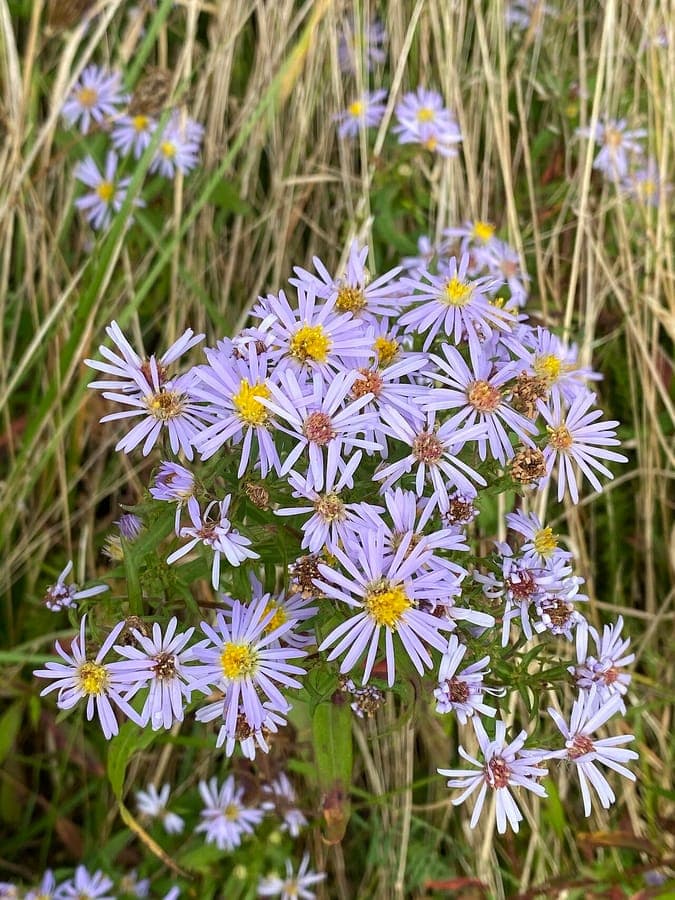
maureen_c-m / CC BY 4.0, via Wikimedia Commons
Michaelmas daisy: complete guide
Symphyotrichum novi-belgii
¿Quieres ver Michaelmas daisy: complete guide en tu jardín?
1 minuto, sin tarjeta de crédito
Overview
Michaeimas daisy (Symphyotrichum novi-belgii), also known as New York aster and New Belgium aster, is a magnificent autumn bloomer native from Eastern Canada to the northeastern United States. This reliable plant is celebrated for its prolific flowering during autumn months when many garden plants have passed their peak. With compact growth habit and cheerful blooms, this is an essential choice for autumn color and cut arrangements.
As a member of the Asteraceae family, Michaelmas daisy shares characteristics with chrysanthemums and other daisy relations. The plant forms full mounds completely covered in star-shaped flowers that develop fuller each year. This makes it a valuable investment for gardeners seeking dependable autumn color.
Appearance and Bloom
Michaeimas daisy grows to approximately 50 to 80 centimeters tall, depending on cultivar. The plant forms compact mounds with numerous thin stems completely clothed in narrow, lanceolate foliage. This foliage is strong green and remains attractive throughout the season.
Bloom period falls primarily in September and October, when Michaelmas daisy flowers so profusely the foliage becomes nearly invisible beneath the flower display. Flowers are small, round asterisk shapes in purple, pink, white, or lilac tones, each with a golden center. These blooms attract butterflies and bees until late in the year.
Ideal Location
Michaeimas daisy thrives best in locations receiving at least six to eight hours of direct sunlight. The plant tolerates light shade and grows adequately even in half-shade, though flowering becomes less abundant. Full sun encourages spectacular bloom production.
The plant is wind-tolerant and withstands moderate wind exposure. This makes it suitable for exposed gardens and windbreak situations. Good air circulation helps prevent powdery mildew.
Soil
Michaeimas daisy grows well in various soil types but prefers moderately fertile soil with pH between 7.0 and 7.5. Good drainage is essential; waterlogged conditions cause root rot and fungal diseases.
Incorporating compost or organic matter at planting improves soil structure and moisture retention. Heavy clay soils can be lightened with sand or perlite. The plant tolerates less fertile soils and doesn't demand rich fertility.
Diseño gratis
¿Quieres ver Michaelmas daisy: complete guide en tu jardín? Crea un diseño gratis ahora.
Watering
Water regularly after planting until the plant becomes well-established. Michaelmas daisy has moderate water needs; preventing drought stress is more important than avoiding excess. Mulching around the plant aids moisture retention.
Prefer watering at ground level, not on foliage, to prevent fungal diseases. Regular moisture during dry periods (weekly 20-25 millimeters) supports healthy growth. In rainy summers, supplemental water is usually unnecessary.
Pruning
Michaeimas daisy benefits from light pruning in two stages. In May, when plants reach 20 centimeters height, cut back lightly to promote compact, branched growth. A second pinching in June ensures full, dense mounds.
Deadhead regularly to encourage continuous flowering. After blooming, cut the plant back to about 10 centimeters above ground. This promotes regeneration and preparation for next season.
Maintenance Calendar
MAY: First light pruning for compact form. JUNE: Second pinching for full growth. JULY-AUGUST: Regular watering and feeding. SEPTEMBER-OCTOBER: Peak flowering; deadhead spent blooms. NOVEMBER: Final watering before winter. DECEMBER-MARCH: Winter protection in severe freezes; minimal care.
Winter Hardiness
Michaeimas daisy is reasonably hardy in the Netherlands, Belgium, and southern Germany. In regions with extreme frost (-15 degrees and colder), mulch or horticultural fleece protection is beneficial. The plant can remain green through mild winters.
In severe winters, above-ground growth may retreat, but roots usually survive and re-emerge. Winter drainage is crucial; waterlogged soils cause more damage than frost.
Companion Plants
Michaeimas daisy combines beautifully with autumn transition plants like Euonymus, golden conifers, and silver-foliage shrubs. Late-blooming sunflowers (Heliopsis) create lovely color contrast. Autumn-blooming crocus and colchicum pair well.
Growing companions like Rudbeckia and Echinacea create warm yellow-to-orange schemes. Ornamental grasses like Stipa and Miscanthus add textural interest. These combinations extend garden appeal deep into autumn.
Closing
Michaeimas daisy is the perfect plant for gardeners wanting color and life extending through October. With attentive care and proper placement, this aster becomes a faithful seasonal highlight. Available at major garden centers and retailers.
Find more at gardenworld.app/nl and gardenworld.app/en.
¿Quieres ver Michaelmas daisy: complete guide en tu jardín? Crea un diseño gratis ahora.
Sube una foto, elige un estilo y obtén un diseño fotorrealista con lista de plantas en menos de un minuto.
Más de 10.000 jardines diseñados
Sin tarjeta de crédito


Plantas similares
Calendula stellata: complete guide
Calendula stellata
Complete guide to Calendula stellata, the star-flowered marigold from Sicily: location, soil, watering and companion planting tips.
Korean chrysanthemum: complete guide
Chrysanthemum x rubellum
Chrysanthemum x rubellum is a hardy autumn perennial with single pink to copper flowers from August to November. Care and combinations.
Helianthus divaricatus: complete guide
Helianthus divaricatus
Helianthus divaricatus is a North American woodland sunflower with yellow summer blooms, ideal for naturalistic borders and shady edges.