
The Cosmonaut / CC BY-SA 2.5 ca, via Wikimedia Commons
New England aster: complete guide
Symphyotrichum novae-angliae
¿Quieres ver New England aster: complete guide en tu jardín?
1 minuto, sin tarjeta de crédito
New England Aster: Complete Guide
Overview
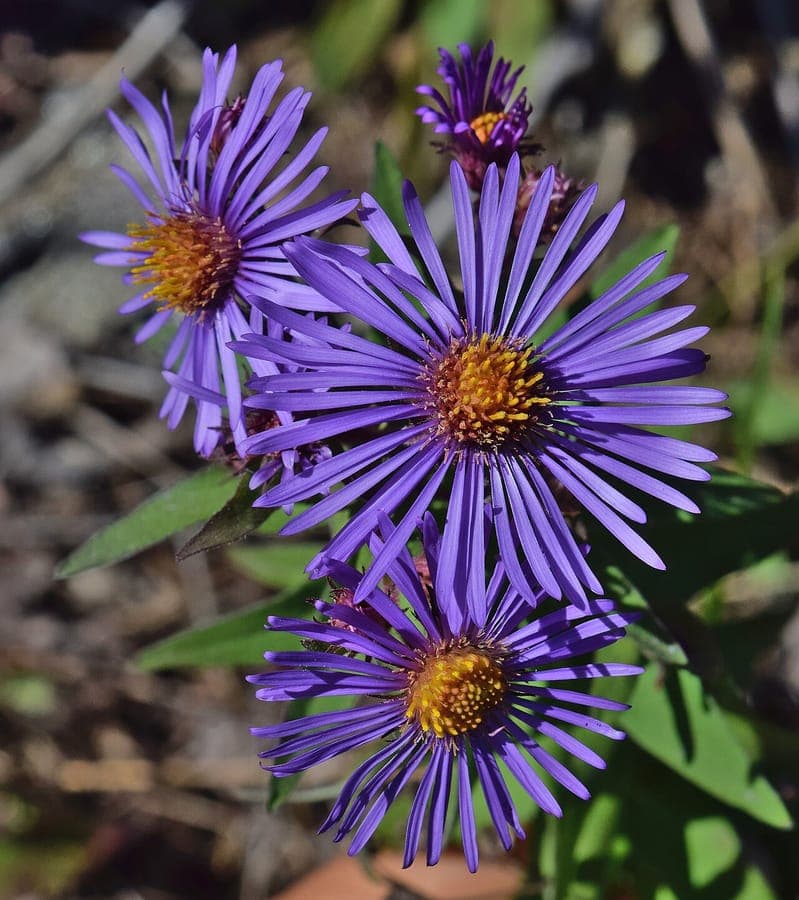
New England aster (Symphyotrichum novae-angliae) is a spectacular fall-blooming perennial from the Asteraceae family. This North American plant is known for blooming abundantly in September and October with small, star-shaped flowers in various shades of purple, pink, and white. With its long blooming period and attraction to butterflies and bees, New England aster is an essential part of every autumn garden.
The plant reaches a height of 90 centimeters to 1.5 meters and develops into a full, upright plant with numerous branches covered in flowers. In full bloom, this plant offers a visual spectacle that is difficult to match.
Appearance and Bloom
New England aster has an upright growth habit with strong stems and slender, linear leaves. The stems are dark green and can have a reddish tint. The leaves are elongated and grow along the entire length of the stem.
The flowers are the most striking feature of this plant: they are small, star-shaped composites with yellow centers and outer petals in purple, pink, or white tones. The flowers grow in numerous clusters at the top of the plant. This plant blooms from September through October, meaning it brings color to the garden when many other plants are fading.
After blooming, seed heads form that remain attractive through winter.
Ideal Location
New England aster thrives best in full sun to light shade. The ideal location is:
- At least 6 hours of direct sunlight
- Open, well-ventilated spot
- Protection from strong winds (plant can topple)
- Visible location for maximum impact
In shade, the plant becomes weak and blooms less abundantly.
Soil
New England aster grows well on various soil types but prefers well-draining, moderately nutrient-rich soil. The optimal composition is:
- Well-draining soil
- Moderately nutrient-rich
- pH 6.0 to 7.5
- Not too dry
- Not strongly alkaline
When planting, add fertilizer to support strong growth.
Diseño gratis
¿Quieres ver New England aster: complete guide en tu jardín? Crea un diseño gratis ahora.
Watering
New England aster requires regular watering, especially during the growing season. Ensure the soil remains moist but not waterlogged.
Watering guidelines:
- Regular watering during growing period
- Less water in winter
- Water especially during dry spells
- Avoid waterlogging
During the growing season (April-October), water usually twice per week.
Pruning
New England aster requires pinching for optimal blooming. In May, you can pinch the tops of the plant to encourage bushier growth and more flowers.
Pruning tips:
- Pinch in May (remove upper 5-10 cm)
- This stimulates more branching
- Results in more, smaller flowers
- Remove spent flowers for continued blooming
After the plant has bloomed, you can cut the stems down.
Maintenance Calendar
Below you'll find a monthly maintenance guide:
- April: Growth start, regular watering
- May: Pinching for bushy growth
- June-August: Regular watering, feeding
- September-October: Blooming period, minimal care
- November-March: Resting period, prep for spring
Winter Hardiness
New England aster is winter-hardy to USDA Hardiness Zone 3-8. The plant tolerates temperatures down to approximately -30 degrees Celsius. The plant is completely winter-hardy in most European climates.
After the above-ground parts die back in winter, the plant re-emerges in spring from the roots.
Companion Plants
New England aster combines well with:
- Golden rudbeckia (Rudbeckia)
- Sunflower varieties
- Oregano and lavender
- Grass-like plants
- Other fall-blooming plants
Closing Thoughts
New England aster is a must-have for every autumn garden. With its rich blooming and insect-friendly character, this plant adds real value. Find quality specimens from garden centers.
Want to learn more about fall bloomers and insect plants? Visit gardenworld.app/nl and gardenworld.app/en.
¿Quieres ver New England aster: complete guide en tu jardín? Crea un diseño gratis ahora.
Sube una foto, elige un estilo y obtén un diseño fotorrealista con lista de plantas en menos de un minuto.
Más de 10.000 jardines diseñados
Sin tarjeta de crédito


Plantas similares
Calendula stellata: complete guide
Calendula stellata
Complete guide to Calendula stellata, the star-flowered marigold from Sicily: location, soil, watering and companion planting tips.
Korean chrysanthemum: complete guide
Chrysanthemum x rubellum
Chrysanthemum x rubellum is a hardy autumn perennial with single pink to copper flowers from August to November. Care and combinations.
Helianthus divaricatus: complete guide
Helianthus divaricatus
Helianthus divaricatus is a North American woodland sunflower with yellow summer blooms, ideal for naturalistic borders and shady edges.