
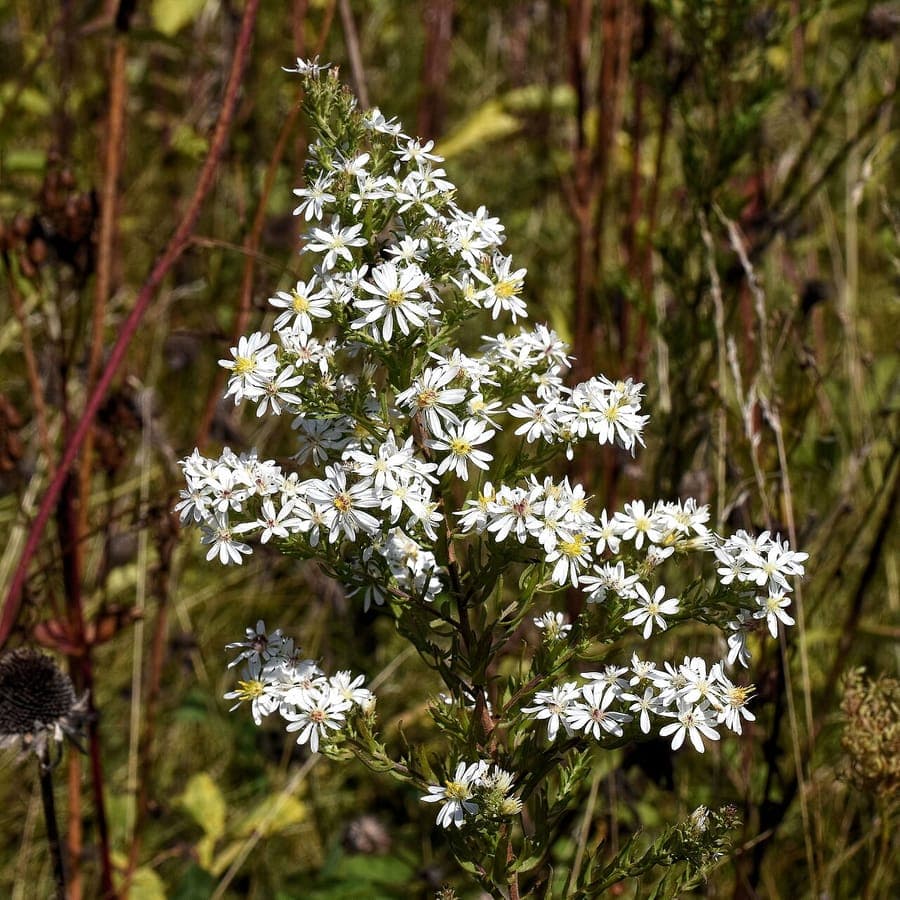
davecz2 / CC BY-SA 4.0, via Wikimedia Commons
Symphyotrichum ericoides: complete guide
Symphyotrichum ericoides
¿Quieres ver Symphyotrichum ericoides: complete guide en tu jardín?
1 minuto, sin tarjeta de crédito
Overview
Symphyotrichum ericoides, commonly known as white heath aster, is a perennial native plant from North America. This hardy perennial grows wild from Canada to Mexico and has perfectly adapted to dry, sunny conditions. With fine, needle-like foliage and countless small white blooms, Symphyotrichum ericoides creates an airy, elegant accent adding value throughout the season.
The plant belongs to the Asteraceae family, the same family as sunflowers and dahlias. Its extended blooming period from August to November makes it essential for fall gardens.
Appearance and Bloom
Symphyotrichum ericoides reaches heights of 60 to 100 centimeters, depending on water availability. The plant has very fine, needle-like leaves growing elegantly along slender, branching stems. Flowers are small, white to pale pink, approximately 5-8 millimeters in diameter, and grow in numerous, lightly scattered clusters.
The flowering period extends from August through October, and in mild climates, blooms continue into November. After flowering, downy seed heads remain ornamental and provide winter bird food.
Ideal Location
Symphyotrichum ericoides thrives best in full sun locations receiving at least 6-8 hours of direct sunlight daily. Partial shade results in fewer blooms and weaker, less compact forms. Ensure good air circulation to prevent fungal diseases.
The plant is excellent for gravel gardens, prairie gardens, dry borders, and slope groundcovers. It also grows well in containers, making it flexible for garden design.
Soil Requirements
Ideal soil for Symphyotrichum ericoides is dry to moderately dry and well-draining. The plant accepts even poor, sandy, or gravelly soil. A pH between 6.5 and 8.0 is acceptable. Heavy clay can be improved by adding sand and gravel.
Be cautious with feeding-excess nutrition leads to lush growth at the expense of blooming. Light spring feeding is usually sufficient.
Diseño gratis
¿Quieres ver Symphyotrichum ericoides: complete guide en tu jardín? Crea un diseño gratis ahora.
Watering
Once established, Symphyotrichum ericoides is extremely drought-tolerant. Regular watering during the first growing season helps establish roots. After that, water can be reduced, and regular rainfall usually suffices.
During very dry periods, light watering helps support best blooms, but overwatering must be absolutely avoided. The plant is very susceptible to root rot if soil stays constantly moist.
Maintenance
Symphyotrichum ericoides is very low-maintenance. No pruning is necessary, though you can remove dead or damaged stems in spring. Some gardeners enjoy cutting back to about three-quarters height in May or June, which promotes more compact, bushy growth.
The plant is extremely frost-hardy and handles cold winters without problems. Remove dead foliage in early spring for better air circulation.
Maintenance Calendar
FEBRUARY-MARCH: Spring cleanup, remove dead stems. APRIL-MAY: Growing period, optional pruning for compact form. JUNE-JULY: Full growth, minimal watering except extreme drought. AUGUST-OCTOBER: Blooming period, no maintenance needed, water only in extreme drought. NOVEMBER-JANUARY: Rest period, seed heads can remain for birds.
Winter Hardiness
Symphyotrichum ericoides is fully hardy throughout all northern European regions. The plant tolerates temperatures to -30 degrees Celsius without problems. In very cold areas, some above-ground tissue may suffer frost damage, but roots survive and reshoot in spring.
No special frost protection is needed. Even snow-laden branches recover quickly.
Companion Plants
Symphyotrichum ericoides combines beautifully with other drought-tolerant perennials. Suitable companions are sedum species, lychnis, salvia, and ornamental grasses like stipa. These combinations create harmonious, nature-inspired gardens.
In prairie gardens, it combines well with echinacea, rudbeckia, and liatris for dramatic fall colors.
Closing Thoughts
Symphyotrichum ericoides is an excellent choice for gardeners wanting elegance, low maintenance, and fall blooms. With minimal care, this plant rewards you with months of delicate white flowers. Discover gardenworld.app for more inspiration on native plants.
¿Quieres ver Symphyotrichum ericoides: complete guide en tu jardín? Crea un diseño gratis ahora.
Sube una foto, elige un estilo y obtén un diseño fotorrealista con lista de plantas en menos de un minuto.
Más de 10.000 jardines diseñados
Sin tarjeta de crédito


Plantas similares
Calendula stellata: complete guide
Calendula stellata
Complete guide to Calendula stellata, the star-flowered marigold from Sicily: location, soil, watering and companion planting tips.
Korean chrysanthemum: complete guide
Chrysanthemum x rubellum
Chrysanthemum x rubellum is a hardy autumn perennial with single pink to copper flowers from August to November. Care and combinations.
Helianthus divaricatus: complete guide
Helianthus divaricatus
Helianthus divaricatus is a North American woodland sunflower with yellow summer blooms, ideal for naturalistic borders and shady edges.