
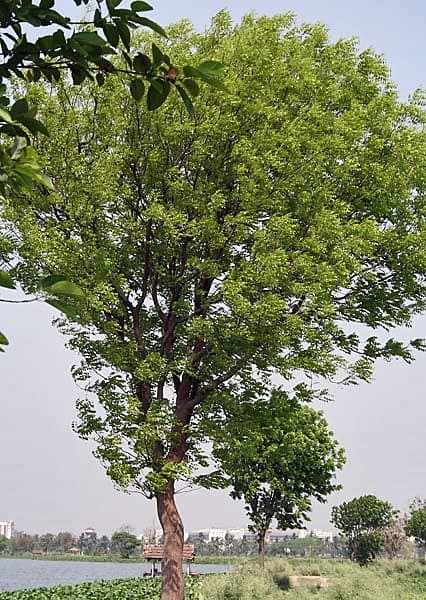
J.M.Garg / CC BY-SA 3.0, via Wikimedia Commons
Cuban Mahogany: complete guide
Swietenia mahagoni
¿Quieres ver Cuban Mahogany: complete guide en tu jardín?
1 minuto, sin tarjeta de crédito
Cuban Mahogany: complete guide
Overview
Cuban Mahogany (Swietenia mahagoni), also known as West Indian Mahogany or Spanish Mahogany, is a magnificent, valuable tropical tree from the Meliaceae family. Native to South Florida, the Caribbean, and Central America, this tree is famous for its deep reddish-brown, extremely dense wood that has been used for centuries for fine furniture, shipbuilding, and ornamental work. The tree grows to 15-20 meters tall and provides an elegant, compact crown. Unfortunately, this species is seriously threatened by overexploitation and is listed on the CITES list of endangered species.
Appearance and growth pattern
Cuban Mahogany grows to approximately 15-20 meters tall with a straight trunk and compact, rounded canopy. The bark is dark brown to gray. The leaves are pinnately compound with 4-5 pairs of leaflets and an odd terminal leaflet. Each leaf is approximately 4-6 centimeters long and shiny green. In May-June, small, yellow-white flowers appear in panicles. The fruits are woody capsules approximately 4-5 centimeters long, initially green, then brown, containing 30-50 seeds.
Ideal location
Cuban Mahogany grows best in full sun with at least 6-8 hours of direct sunlight daily. This tree requires warmth and feels at home in tropical to subtropical climates (zones 10-11). Plant in locations protected from strong winds. The tree is very suitable for large gardens and landscape projects in warm regions.
Soil
Cuban Mahogany grows on well-draining soil with a pH of 6-7. Sandy, loamy soil is most appreciated. Add organic material to improve moisture retention, but ensure water stagnation is prevented. The tree tolerates somewhat poor soil but grows best on well-nourished soil.
Diseño gratis
¿Quieres ver Cuban Mahogany: complete guide en tu jardín? Crea un diseño gratis ahora.
Watering
Once established, Cuban Mahogany is moderately drought-tolerant. Water regularly in the first 2-3 years, especially in dry seasons. Mature trees require less frequent watering, depending on local rainfall. Ensure the soil dries slightly between waterings to prevent root rot.
Pruning
Pruning is not always necessary, but you can remove dead, damaged, or diseased branches. Prune during the growing season to maintain compact form. Avoid excessive pruning, as this disrupts the tree's natural shape.
Maintenance calendar
Feb-Mar: Plant young trees in warm season. Apr-Jun: Flowering period; minimal care, regular watering. Jul-Sep: Growing period; water regularly. Oct-Jan: Resting period; limited watering.
Winter hardiness
Cuban Mahogany is frost-sensitive and grows only in tropical to subtropical climates (zones 10-11). In zone 9, protection may be necessary. This tree is not recommended for temperate climates.
Companion plants
Cuban Mahogany combines well with:
- Palms (Phoenix, Cocos)
- Plumeria (Plumeria)
- Tamarind (Tamarindus)
- Ceiba tree (Ceiba pentandra)
- Tropical herbaceous plants
This composition creates an authentic tropical garden feel.
Closing
Cuban Mahogany is a regal, valuable tropical jewel with a rich heritage. Unfortunately, this species is threatened by overexploitation and is listed on the CITES list. Purchase only from recognized, sustainable growers who conduct seed propagation. This tree is ideal for large tropical gardens where space is not a concern. Plant with respect for environmental impact. For more gardening tips and sustainable options, visit gardenworld.app.
Gardenworld.app is committed to sustainable garden planning and ecological responsibility.
¿Quieres ver Cuban Mahogany: complete guide en tu jardín? Crea un diseño gratis ahora.
Sube una foto, elige un estilo y obtén un diseño fotorrealista con lista de plantas en menos de un minuto.
Más de 10.000 jardines diseñados
Sin tarjeta de crédito


Plantas similares
Muskwood: complete guide
Guarea guidonia
Everything about muskwood (Guarea guidonia): tropical origins, appearance, cultivation in conservatories and warm gardens, care and companions.
Trichilia dregeana: complete guide
Trichilia dregeana
Trichilia dregeana is an African tree with beautiful foliage and striking flowers. Learn how to care for this exotic plant in your garden.
Swietenia macrophylla: complete guide
Swietenia macrophylla
Discover Honduran mahogany - a tropical timber tree with architectural beauty. Growing requirements, care guide and sustainability for warm climates.