
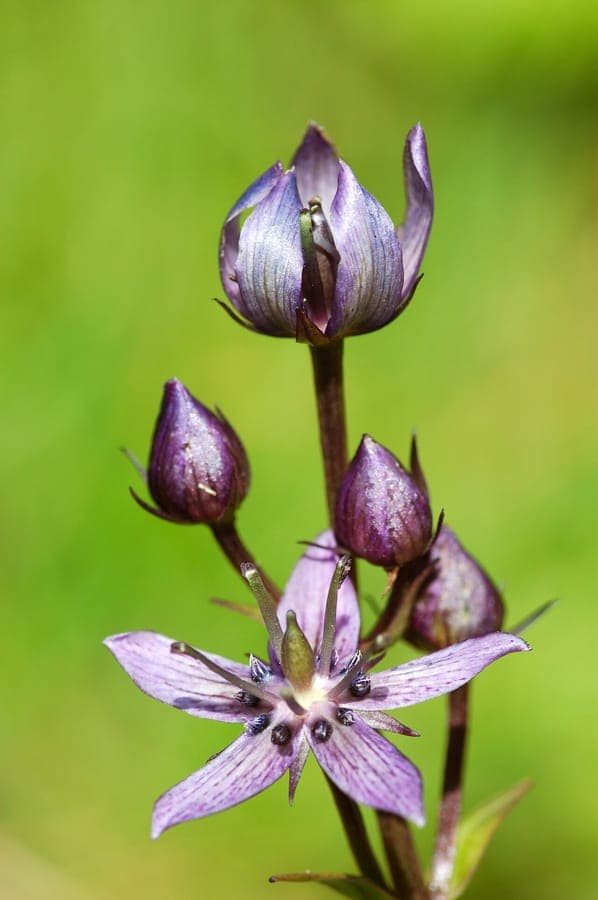
Simon Koopmann / CC BY-SA 2.0 de, via Wikimedia Commons
Alpine bog swertia: complete guide
Swertia perennis
¿Quieres ver Alpine bog swertia: complete guide en tu jardín?
1 minuto, sin tarjeta de crédito
Alpine Bog Swertia: Complete Guide
Overview
The alpine bog swertia (Swertia perennis) is an elegant perennial plant from the Gentianaceae family. This mountain plant is known for growing in high-altitude bogs and alpine meadows across Europe and Asia. With its delicate blue flowers and slender growth habit, this plant brings subtle beauty to gardens suited for shady, moisture-loving conditions.
The swertia is a long-lived perennial specifically suited to alpine and rock garden enthusiasts. This plant can reach heights of approximately 30 to 60 centimeters and blooms during summer with small, star-shaped flowers.
Appearance and Bloom
The alpine bog swertia has a distinctive appearance with fine, thin stems and elongated leaves. The flowers are the most striking feature: they are sky-blue to purple and have a characteristic star-shaped form with four to six petals.
The plant blooms from July to September, which is an important time in alpine seasonal flowering patterns. The flowers are small but numerous, and they grow in clusters at the tops of stems. After flowering, the plant produces seed pods that later open to release seeds.
The leaves are linear and group themselves around the base of the plant, creating a compact rosette. This pattern helps the plant retain water better in mountain environments with strong winds.
Ideal Location
The alpine bog swertia thrives best in mountainous environments with full sun to partial shade. In warm climates, this plant needs shade to prevent excessive heat. The ideal location features:
- Ample morning sunlight penetration
- Protection from strong afternoon sun
- Good air circulation to prevent moisture-related problems
- No direct proximity to other large plants that cast shadow
In alpine or rock gardens, this is the best place for this plant. You can also grow her at elevation in containers or raised beds, where she performs equally well.
Soil
The alpine bog swertia requires well-draining, nutrient-rich soil with a pH between 7.0 and 7.5. This plant thrives best in slightly acidic to neutral soils with low salt content. Soil composition should consist of:
- 50% universal garden soil
- 25% coarse sand or perlite for drainage
- 25% organic material (compost or leaf mold)
The soil must drain well to prevent waterlogging, especially in areas with regular rainfall. For container cultivation, well-draining potting mix is essential.
Diseño gratis
¿Quieres ver Alpine bog swertia: complete guide en tu jardín? Crea un diseño gratis ahora.
Watering
The alpine bog swertia should be watered moderately. Ensure the soil stays moist but not waterlogged. During the growth and blooming period (spring through summer), water regularly, especially in dry spells.
Watering guidelines:
- Regular watering during growing season
- Less water in winter or during dormancy
- Ensure water doesn't splash on leaves or flowers
- Avoid waterlogging and stagnation
With container cultivation, check moisture more frequently. For the swertia: less is more when it comes to water. This plant tolerates short dry periods better than wet feet.
Pruning
The alpine bog swertia requires minimal pruning. Remove browned or dead parts to keep the plant healthy. After the blooming period ends, you can cut off spent flower stems to keep the plant shaped and encourage further blooms.
Ensure clean pruning shears and cut just above a healthy leaf or bud. This helps the plant recover faster. Also always remove diseased or damaged leaves to prevent disease spread.
Maintenance Calendar
Below you'll find a monthly maintenance guide for the alpine bog swertia:
- March: Soil preparation and planting time
- April-May: Regular watering and feeding
- June: Weed prevention, water application
- July-September: Blooming, minimal pruning
- October: Preparing for dormancy, reduce watering
- November-February: Resting period, minimal care
Winter Hardiness
The alpine bog swertia is winter-hardy to USDA Hardiness Zone 3-7, meaning it can tolerate temperatures as low as approximately -34 to -6 degrees Celsius. This plant originates from mountainous regions, so it's adapted to cold winters.
Ensure the plant is well-established before winter arrives. Cover the base of the plant with mulch to give the roots extra protection. In very cold climates, container cultivation can be advantageous to overwinter the plant indoors.
Companion Plants
The alpine bog swertia grows well beside other alpine and rocky plants such as:
- Mountain sedums and other alpine species
- Small Astilbe varieties
- Dwarf birches and conifers
- Low-growing grasses
- Other delicate alpine flowers
Avoid large growers that could overshadow the swertia.
Closing Thoughts
The alpine bog swertia offers garden enthusiasts a refreshing opportunity to bring the alpine world into the garden. With its delicate blue flowers and compact growth habit, it's a jewel for any rock or alpine border. Visit specialized garden retailers for quality specimens and advice on proper care.
Want to learn more about similar alpine plants? Visit gardenworld.app/nl and gardenworld.app/en for more inspiration and garden advice.
¿Quieres ver Alpine bog swertia: complete guide en tu jardín? Crea un diseño gratis ahora.
Sube una foto, elige un estilo y obtén un diseño fotorrealista con lista de plantas en menos de un minuto.
Más de 10.000 jardines diseñados
Sin tarjeta de crédito


Plantas similares
Branched gentianella: complete guide
Gentianella ramosa
Full growing guide for Gentianella ramosa, the branched Alpine gentianella of the SW Alps - location, soil, watering, winter care and companion plants.
Spiked centaury: complete guide
Schenkia spicata
Full growing guide for Schenkia spicata (spiked centaury): sunny position, dry soil, bloom season and garden companions.
Narrow-leaf gentian: complete guide
Gentiana angustifolia
Narrow-leaf gentian growing guide: intense blue trumpet flowers in May-July on well-drained limestone. Full cultivation tips.