
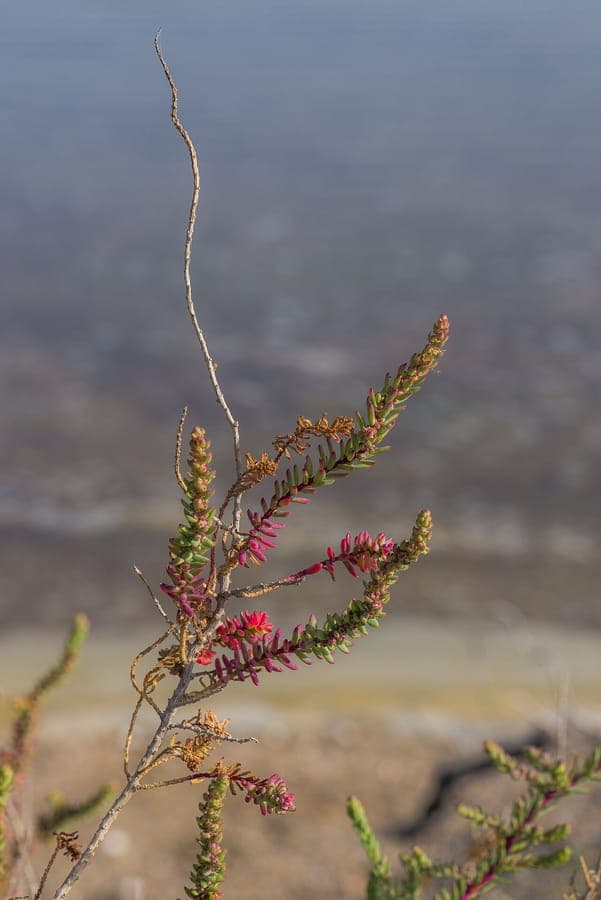
Christian Ferrer / CC BY-SA 3.0, via Wikimedia Commons
Alkali seepweed: complete guide
Suaeda vera
¿Quieres ver Alkali seepweed: complete guide en tu jardín?
1 minuto, sin tarjeta de crédito
Alkali seepweed (Suaeda vera), also called shrubby sea-blite, is a robust woody plant that has specialized in the most extreme salt environments of Mediterranean regions and coastlines. This shrub represents a remarkable example of plant adaptation and resilience, with the ability to thrive in soils with extremely high salt concentrations. With its distinctive gray-green foliage and compact formation, alkali seepweed is an excellent choice for gardeners dealing with challenging salt-rich soil conditions. In this guide, we explore how to cultivate this exceptional plant.
Overview
Alkali seepweed is a persistent, woody shrub native to salt-rich habitats around the Mediterranean and coasts of North Africa. This plant is more than merely tolerant of salt it actually depends on salt for maintaining its physiological processes. The plant plays a crucial role in salt marsh ecosystems and proves valuable for erosion control in saline areas.
Appearance & Bloom
Alkali seepweed forms a compact, branching shrub reaching 30 to 60 centimeters in height. The leaves are small, flat, and exhibit a characteristic gray-green color, an adaptation to the salt-rich environment. The plant produces masses of small, inconspicuous flowers during summer months, followed by minuscule seeds. What distinguishes this plant is its persistent growth pattern: unlike annual salt plants, alkali seepweed persists through multiple growing seasons.
Ideal Location
Alkali seepweed thrives best in full sun locations, preferably directly beside the sea or in coastal modifications. Plant this shrub where it receives at least 6 to 8 hours of direct sunlight daily. The plant tolerates windy coastal conditions very well. In inland salt-rich zones, the plant can also grow, provided the soil contains sufficient salt.
Soil
Alkali seepweed grows in saline, brackish, and salt-crystalline soils that would be completely unusable for most plants. This is the heart of this plant: it actually performs better on very salt-rich, sparse soils. No effort is needed to add nutrients. The plant can even be planted directly in salt crystals.
Watering
Once established, alkali seepweed requires very minimal supplemental watering. In culinary salt environments with available soil moisture, you scarcely need to irrigate. The plant can use water during growth stages in very dry conditions. Excessive water can prove harmful; it is important to maintain good drainage.
Pruning
Alkali seepweed requires minimal pruning. You can lightly prune the plant in early spring to maintain shape, but this is not essential. The plant naturally forms a compact, attractive structure. Heavy pruning can damage the plant's framework.
Maintenance Calendar
Mar-Apr: Light pruning for shaping. May-Jun: Flowering with minimal care. Jul-Sep: Seed development and heat management. Oct-Feb: Winter dormancy; minimal maintenance.
Winter Hardiness
Alkali seepweed is reasonably hardy in mild coastal regions (zones 8-9). In northern regions, frost damage may occur. In very cold environments, frost protection may be necessary, or the plant can be better cultivated in containers.
Companion Plants
Alkali seepweed combines well with other salt-hardy plants in coastal modifications. Adapted plant combinations including saltbush, dune grasses, and other salt-tolerant species create authentic salt marsh compositions.
Closing
Alkali seepweed is a robust, salt-tolerant plant offering unique possibilities for challenging growth environments. With its distinctive gray-green foliage, compact form, and exceptional salt tolerance, it is an innovative choice for gardeners with very salt-rich soils. Visit gardenworld.app/en for more plant recommendations for difficult growing conditions.
¿Quieres ver Alkali seepweed: complete guide en tu jardín? Crea un diseño gratis ahora.
Sube una foto, elige un estilo y obtén un diseño fotorrealista con lista de plantas en menos de un minuto.
Más de 10.000 jardines diseñados
Sin tarjeta de crédito


Plantas similares
Bassia laniflora (woolly summer-cypress): complete guide
Bassia laniflora
Full guide to Bassia laniflora: origin, appearance, ideal location, soil, watering and care for this drought-tolerant annual.
Suaeda spicata: complete guide
Suaeda spicata
Everything about Suaeda spicata (spiked seablite): a rare salt-tolerant coastal succulent from the western Mediterranean and Macaronesia.
California amaranth: complete guide
Amaranthus californicus
Full guide to California amaranth (Amaranthus californicus): growing tips, ideal location, soil needs, watering, and garden design ideas.