
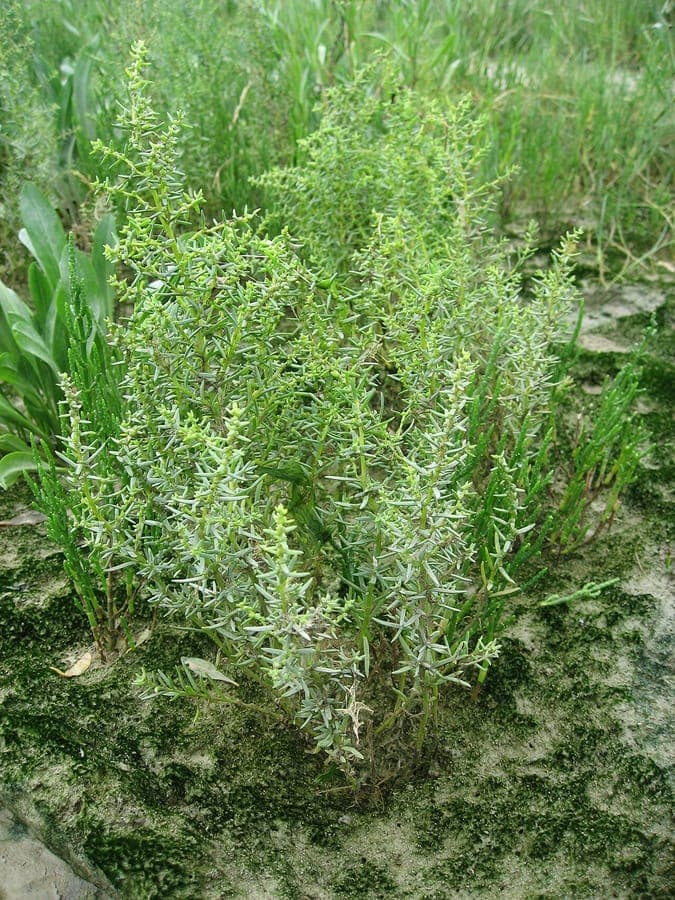
Liné1 / CC BY-SA 3.0, via Wikimedia Commons
Herbaceous seepweed: complete guide
Suaeda maritima
¿Quieres ver Herbaceous seepweed: complete guide en tu jardín?
1 minuto, sin tarjeta de crédito
Herbaceous seepweed (Suaeda maritima), commonly called the annual seablite or marsh seepweed, is a fascinating plant specialized in extreme saline environments. This annual or short-lived plant thrives along coastlines, salt marshes, and salt-degraded areas across North America and Europe. With its stunning red autumn coloration and exceptional salt tolerance, herbaceous seepweed offers a unique solution for gardeners facing challenging growing conditions. In this comprehensive guide, we explore everything you need to know about cultivating this extraordinary plant.
Overview
Herbaceous seepweed is an annual plant characterized by its remarkable ability to tolerate very high soil salt concentrations that would prove fatal to most plants. This extreme adaptation makes it a living testament to plant evolution and resilience. The plant is native to coastal marshes and salty habitats throughout the temperate regions of North America and Europe, where it has become an essential part of specialized ecosystems.
Appearance & Bloom
Herbaceous seepweed forms an upright, branching shrub typically reaching 20 to 40 centimeters in height. The leaves are small, flattened, and initially green, but the most dramatic feature is the spectacular color transformation in autumn. As temperatures drop, the foliage gradually shifts through brilliant shades of red and purple, creating a stunning visual display. The flowers are small and inconspicuous, appearing during summer and early autumn, followed by tiny seeds. This autumn color show is truly mesmerizing and makes herbaceous seepweed a focal point in coastal and experimental gardens.
Ideal Location
Herbaceous seepweed thrives in full sun locations. Plant this species where it receives at least 6 to 8 hours of direct sunlight daily. The plant is frost-tender and suitable only for annual cultivation in temperate climates. It performs excellently in windy coastal conditions, actually thriving in environments where most plants would struggle.
Soil
Herbaceous seepweed exhibits remarkable tolerance for saline and brackish soils. The plant grows through nearly everything, provided the environment contains significant salt concentrations. For garden cultivation, use well-draining, salt-rich soil. This plant can even thrive in pure salt-crystalline soils. Do not attempt to enrich the soil with nutrients; saline, sparse soils are actually preferable. The saltier the conditions, the better this plant performs.
Watering
Herbaceous seepweed requires minimal additional watering, especially in salt-rich soils that retain moisture effectively. In very dry, non-saline conditions, occasional watering may be necessary. Since this plant naturally inhabits salt marshes, avoid freshwater irrigation. Excess water can prove harmful. Ensure good drainage and prevent muddy conditions.
Pruning
Herbaceous seepweed requires no special pruning. The plant naturally forms a compact, branching structure. Pinch back growing tips in early season if you desire a more compact form. Being an annual plant, it completely disappears following the first frost.
Maintenance Calendar
Apr-May: Sow seeds directly in the garden on saline, sunny locations. Jun-Aug: Growth and periodic watering under arid conditions. Sep-Oct: Peak red autumn coloration display; no maintenance needed. Nov-Jan: Plant senescence period; remove dead plant material.
Winter Hardiness
Herbaceous seepweed is not winter-hardy. This annual plant dies completely after the first frost. In warm climates, self-seeding may occur. It is not suitable for permanent winter cultivation in cold regions.
Companion Plants
Herbaceous seepweed thrives in salt-rich soils alongside other salt-tolerant plants. In coastal gardens, combine it with dune grasses, salt marshmarigold, and other strand and wetland plants. These combinations create authentic coastal landscapes and specialized habitat gardens.
Closing
Herbaceous seepweed is a unique, salt-tolerant plant that fills specialized niches in innovative gardens. With its stunning red autumn foliage and ability to thrive in extreme saline environments, it offers an interesting solution for gardeners dealing with salt-rich soil conditions. Visit gardenworld.app/en for more plant recommendations for challenging growing conditions. Create your dream garden with gardenworld.app/en.
¿Quieres ver Herbaceous seepweed: complete guide en tu jardín? Crea un diseño gratis ahora.
Sube una foto, elige un estilo y obtén un diseño fotorrealista con lista de plantas en menos de un minuto.
Más de 10.000 jardines diseñados
Sin tarjeta de crédito


Plantas similares
Bassia laniflora (woolly summer-cypress): complete guide
Bassia laniflora
Full guide to Bassia laniflora: origin, appearance, ideal location, soil, watering and care for this drought-tolerant annual.
Suaeda spicata: complete guide
Suaeda spicata
Everything about Suaeda spicata (spiked seablite): a rare salt-tolerant coastal succulent from the western Mediterranean and Macaronesia.
California amaranth: complete guide
Amaranthus californicus
Full guide to California amaranth (Amaranthus californicus): growing tips, ideal location, soil needs, watering, and garden design ideas.