
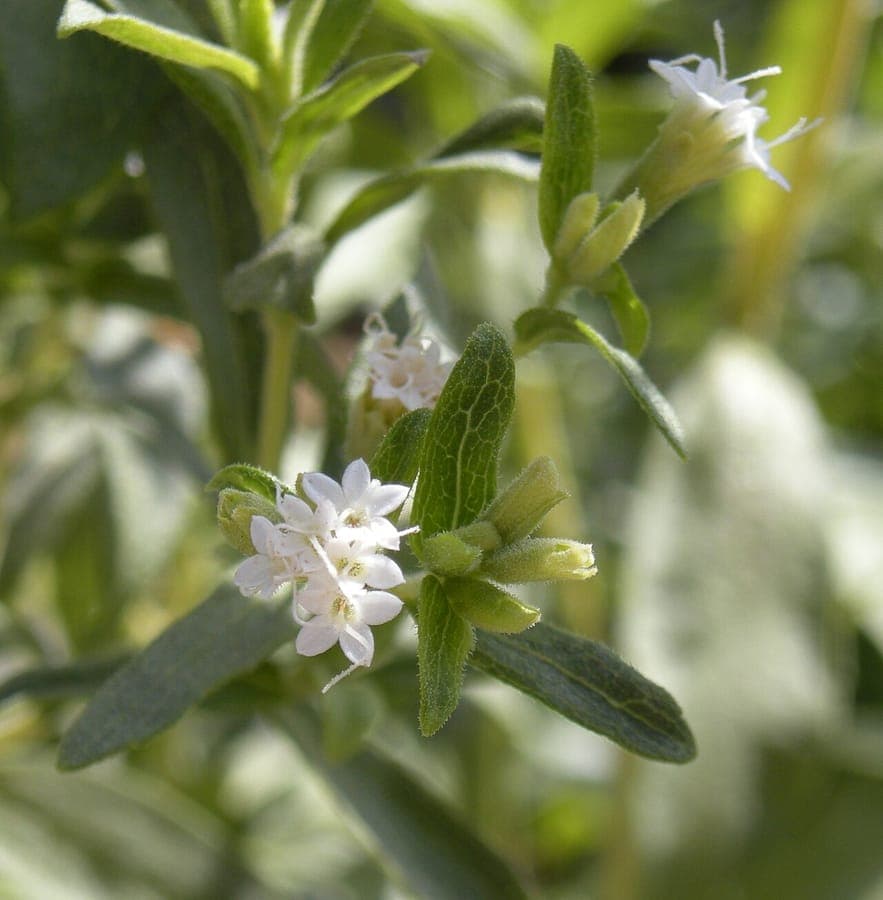
Ethel Aardvark / CC BY 3.0, via Wikimedia Commons
Stevia: complete guide
Stevia rebaudiana
¿Quieres ver Stevia: complete guide en tu jardín?
1 minuto, sin tarjeta de crédito
Overview
Stevia (Stevia rebaudiana), also known as sweet leaf herb or candy leaf, is an underrated medicinal herb with an astonishing sweet property. Native to Brazil and Paraguay in South America, stevia leaves are up to 250 times sweeter than sugar, without calories.
While standard sweetener plants can be challenging to grow, stevia is relatively easy and requires little more care than other herbs. The plant offers nutritional value and can be easily grown at home for traditional use or for making your own sweetener.
Appearance and Bloom
Stevia grows as a low-maintenance shrubby herb plant, usually between 45-75 centimeters high, though under ideal conditions it can grow taller. The stems are slender and upright, slightly hairy and lighter in color than many other plants.
The leaves are the key component. These are linear-lanceolate, approximately 2-3 centimeters long, with an oily texture and fragrant aroma. In sunlight, the leaves have a bright green appearance. Fine, compound flowers appear in August and September with white or light purple flower crowns.
After cutting flowers, you can expect rapid regrowth because the plant grows upright and recovers quickly.
Ideal Location
Stevia thrives best in a sunny location with at least 6-8 hours of direct sunlight per day. Full sun promotes the most vigorous growth and highest sweetness content in the leaves. Sheltered locations where the plant receives some wind and frost protection are ideal.
In tropical and subtropical areas, stevia can grow outdoors year-round. In temperate climates, the plant must be moved indoors for winter or is treated as an annual crop.
Soil
Stevia grows in various soils, but feels at home in well-draining, fertile soil. The plant prefers neutral to slightly acidic soil (pH 6.0 to 7.0). Heavy clay soils should be improved with sand and organic matter for better drainage.
Add compost or decomposed leaf mold before planting. This provides nutrients and improves water retention without causing waterlogging. For pot cultivation, standard potting soil works well, although adding some sand is helpful.
Diseño gratis
¿Quieres ver Stevia: complete guide en tu jardín? Crea un diseño gratis ahora.
Watering
Stevia requires regular watering, especially during growing periods. The soil should be moister than dry, but not saturated. During dry periods, water when the top centimeter of soil feels dry.
Overwatering can damage roots, so ensure good drainage. During rainy periods, natural rainfall may be sufficient. Monitor the plant regularly for signs of drought stress (wilting leaves) or excessive moisture (decay and discoloration).
Pruning and Harvesting
To obtain leaves, you can pick leaves as needed. For larger yields, trim or cut back the top third of the plant when it is approximately 30 centimeters tall. This encourages bushy growth with more leaves.
The best time to harvest leaves for dried sweetener is just before flowering, when sweetness content is highest. Hang the stems in bundles to dry, which takes approximately 1-2 weeks. After they are dry, remove the leaves from the stems.
Maintenance Calendar
Spring: plant seeds or seedlings, water regularly. Summer: water carefully, prune for bushy growth, monitor for pests. Fall: harvest leaves for use, move indoors if needed. Winter: minimal water, keep in warmth or under grow lights.
Winter Hardiness
Stevia is frost-sensitive and cannot tolerate temperatures below 7-10 degrees Celsius. In cold areas, stevia grows best in pots and is moved indoors for winter. In tropical and temperate climates, it can overwinter outdoors if protected.
Companion Plants
Perfect planting partners for stevia in the herb garden are:
- Mint (grows carefully separated by roots)
- Chamomile (complementary benefit)
- Basil (herb garden complement)
- Oregano (medicinal combination)
Conclusion
Stevia is a fascinating and useful herb plant that can be easily grown at home. With its natural sweetening properties and elegant growth, it offers years of benefits. Provide sunlight, well-draining soil and regular watering, and you can grow your own natural sweetener for tea, desserts and more. Available via seeds or seedlings online. For more garden inspiration visit gardenworld.app.
¿Quieres ver Stevia: complete guide en tu jardín? Crea un diseño gratis ahora.
Sube una foto, elige un estilo y obtén un diseño fotorrealista con lista de plantas en menos de un minuto.
Más de 10.000 jardines diseñados
Sin tarjeta de crédito


Plantas similares
Calendula stellata: complete guide
Calendula stellata
Complete guide to Calendula stellata, the star-flowered marigold from Sicily: location, soil, watering and companion planting tips.
Korean chrysanthemum: complete guide
Chrysanthemum x rubellum
Chrysanthemum x rubellum is a hardy autumn perennial with single pink to copper flowers from August to November. Care and combinations.
Helianthus divaricatus: complete guide
Helianthus divaricatus
Helianthus divaricatus is a North American woodland sunflower with yellow summer blooms, ideal for naturalistic borders and shady edges.