
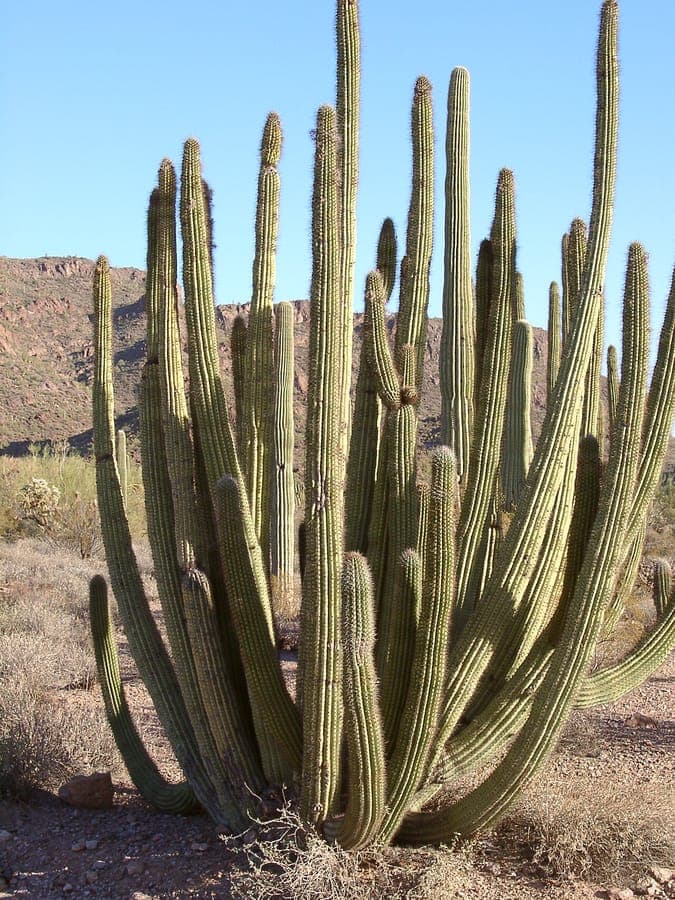
The original uploader was Pretzelpaws at English Wikipedia. / CC BY-SA 3.0, via Wikimedia Commons
Stenocereus thurberi: complete guide
Stenocereus thurberi
¿Quieres ver Stenocereus thurberi: complete guide en tu jardín?
1 minuto, sin tarjeta de crédito
Overview
Stenocereus thurberi, commonly known as the organ-pipe cactus, is a fascinating columnar cactus from the Cactaceae family. This impressive plant is native to the deserts of southern Arizona and northern Mexico, where it thrives in arid mountainous regions and desert valleys. The organ-pipe cactus is renowned for its striking growth in clusters of vertical columns that resemble organ pipes, hence its popular name.
While not common in temperate gardens, this cactus is exceptionally interesting for enthusiasts of desert vegetation. In warmer climates or cultivated in large containers indoors, it can survive for years with minimal maintenance. The plant also produces edible pink fruits that provide wildlife food.
Appearance and Bloom
The organ-pipe cactus is a slow-growing plant that in its natural habitat can reach up to 7 meters, though it usually stays between 4 to 5 meters tall. The distinguishing feature is its cluster growth form of narrow columns about 5 to 10 centimeters in diameter.
The stems are light green to grayish green, with regularly spaced areoles (bumps from which spines grow). The spines are yellow to brown, small, and not particularly dangerous compared to other cactus varieties.
Flowers appear in spring (March to April) and are large, tubular in shape, approximately 5 centimeters long, with white to light pink color. These flowers are night-blooming, so they open at night and close during the day. The flowers are followed by pink to red-colored fruits about 2.5 centimeters in diameter, dry on the outside and fleshy inside.
Ideal Location
The organ-pipe cactus thrives best in zones with very warm and dry climates. In temperate regions, this plant is only suitable for greenhouse cultivation or indoor growth in large containers. In warmer countries such as southern Spain and southern France, it can grow outdoors in very protected locations.
The plant prefers full sun and very well-draining terrain. In containers in temperate regions, place it in the sunniest spot available, ideally a south-facing window or greenhouse.
The plant tolerates frost-free winters well, but preference lies above 10 degrees Celsius. Protect against frost risk until May.
Soil
Drainage is critical for Stenocereus thurberi. Use a specialized cactus soil mix with this composition:
- 50% coarse-grained cactus/succulent potting mix
- 30% sand or perlite for extra drainage
- 20% small gravel or stones for weight and drainage
A pH of 6.5 to 7.5 is ideal. Ensure water doesn't pool in the pot. If planting above-ground in warmer climates, dig deeply into the soil and add sand.
Provide drainage holes in containers - this is non-negotiable. Waterlogging will almost certainly lead to rot.
Diseño gratis
¿Quieres ver Stenocereus thurberi: complete guide en tu jardín? Crea un diseño gratis ahora.
Watering
This is where Stenocereus thurberi requires specific caution. It is a desert plant and accepts far less water than many houseplants.
Growing season (April to October): Water moderately when the soil feels completely dry. This may only be needed once every two weeks. Ensure water drains from drainage holes and doesn't pool.
Winter dormancy (November to March): Almost no water. Give only enough water to prevent the cactus from completely drying out, perhaps once a month.
Overwatering is the greatest killer of this plant. When in doubt, don't water.
Pruning
Pruning is not needed for normal maintenance. The plant forms its characteristic columnar shapes naturally. However, you can carefully remove damaged or diseased columns with sharp, clean tools.
Remove dead flowers or fruits to keep the plant clean. This also helps prevent pests.
Maintenance Calendar
January to March: Minimal maintenance. Check for damage. Water very sparingly. April to May: Begin spring watering as temperatures rise. Check for pests. June to July: Regular watering (once every two weeks). Enjoy bird visits to flowers. August to September: Continue watering. Monitor moisture. October: Reduce watering as growing season ends. November to December: Dry. Water only minimally.
Winter Hardiness
Stenocereus thurberi is a frost-sensitive plant. The plant tolerates light frost to about -5 degrees Celsius for short periods, but is not winter hardy in temperate regions.
In containers in temperate regions, the plant must be brought indoors in November and kept in a cool, dry place (minimum 5-10 degrees Celsius). Preference is 10-15 degrees Celsius.
In warmer countries such as southern Spain, it can remain outdoors in very protected microclimates with well-engineered drainage.
Companion Plants
In a greenhouse/container environment, combine with other desert plants:
- Echeveria: Rosette-shaped forms
- Aloe vera: Useful medicinal properties
- Ferocactus: Other large cactus varieties
- Justicia brandegeeana (Jacobinia): Ornamental value with flowers
- Sansevieria: Robustness and texture
- Agave: Size contrast
Avoid plants that require much water or humidity in the same environment.
Conclusion
Stenocereus thurberi is a truly unique plant that will fascinate wildlife enthusiasts and cactus lovers. While it can be challenging in temperate regions without a greenhouse or cold frame, it is in warmer climates and with proper care a reliable, long-lived plant.
The organ-pipe cactus requires patience, minimal attention, and great caution with water. For those willing to accept these demands, it brings exotic desert beauty to any conservatory or greenhouse.
Seek young plants or seeds from specialized cactus suppliers. Many online seed catalogs carry Stenocereus thurberi seeds. Read more about desert gardens on gardenworld.app.
Perfect for gardeners in warm climates, greenhouse gardeners, and dry indoor gardens where drainage is guaranteed.
¿Quieres ver Stenocereus thurberi: complete guide en tu jardín? Crea un diseño gratis ahora.
Sube una foto, elige un estilo y obtén un diseño fotorrealista con lista de plantas en menos de un minuto.
Más de 10.000 jardines diseñados
Sin tarjeta de crédito


Plantas similares
Plains prickly pear: complete guide
Opuntia polyacantha
All about plains prickly pear cactus: hardiness, soil, placement and care. One of the most cold-tolerant cacti for temperate gardens.
Saguaro: complete guide
Carnegiea gigantea
Everything about growing saguaro cactus: container care, watering, overwintering, and companion plants for this iconic desert giant.
Cylindropuntia imbricata: complete guide
Cylindropuntia imbricata
The Tree Cholla offers distinctive segmented stems and vibrant red flowers. A unique ornamental succulent perfect for sunny, dry gardens and large containers.