
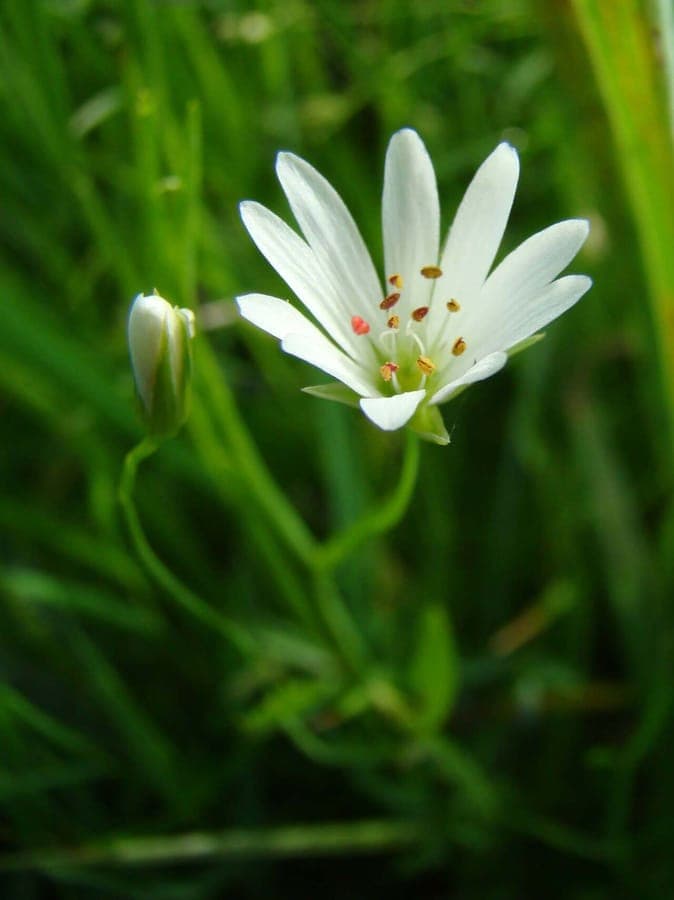
User:G.canar / CC BY-SA 3.0, via Wikimedia Commons
Marsh stitchwort: complete guide
Stellaria palustris
¿Quieres ver Marsh stitchwort: complete guide en tu jardín?
1 minuto, sin tarjeta de crédito
Marsh Stitchwort: Complete Guide
Marsh stitchwort (Stellaria palustris) is an elegant, moisture-loving plant from temperate Eurasian regions. This member of the Caryophyllaceae family is known for its slender structure and charming white flowers. In this complete guide, we explore the subtle beauty of this moisture lover.
Overview
Stellaria palustris is a slender, upright herb naturally found in moist and wet habitats. The plant is ideal for pond edges, reed beds, and wetland areas. With its elegant growth pattern and fine foliage, it adds texture to moist garden areas.
Appearance and Bloom
The plant grows upright and typically reaches heights of 30 to 60 centimeters. Thin, square stems are smooth or very slightly hairy and bear opposite, linear leaves. Small white flowers appear from April to May in branched flower clusters at the branch tips. These delicate blooms consist of four split petals.
Ideal Location
Marsh stitchwort loves full sun to semi-shade and very moist or wet soils. It is perfect for water features, wet banks, and wetlands. The plant can even grow in shallow water, making it suitable for pond edges.
Soil
The plant prefers heavy, moist to wet soil. Ensure soil remains nearly constantly wet. The plant is not very particular about nutrients but thrives in nutrient-rich, loamy soil. Heavy clay soils are ideal.
Diseño gratis
¿Quieres ver Marsh stitchwort: complete guide en tu jardín? Crea un diseño gratis ahora.
Watering
Ensure plant material remains constantly wet. This can even be grown underwater (5 to 10 cm deep) in ponds or water features. Regular watering is absolutely necessary; drought is poorly tolerated.
Pruning
Remove faded flower clusters for a tidier appearance. After flowering, you can prune the plant to remove dead stems and maintain shape.
Maintenance Calendar
In spring, prune and remove any old stems. During the growing season, regularly check soil moisture. After flowering in June, continue watering. In autumn and winter, maintain cleanliness by removing dead plant material.
Winter Hardiness
Marsh stitchwort is fully hardy in temperate climates. The plant can withstand severe frost without protection. Above-ground parts may die back, but the root system will survive.
Companion Plants
Marsh stitchwort grows well with other wetland inhabitants such as Kalmia, Rhinanthus, Lysichiton, and various reed and grass species. Moisture-loving ferns are also good neighbors.
Conclusion
Marsh stitchwort is an elegant choice for wet and moist garden areas. With its fine structure and delicate flowers, it brings elegance to wetland regions. For more inspiration and garden advice, visit gardenworld.app/en.
¿Quieres ver Marsh stitchwort: complete guide en tu jardín? Crea un diseño gratis ahora.
Sube una foto, elige un estilo y obtén un diseño fotorrealista con lista de plantas en menos de un minuto.
Más de 10.000 jardines diseñados
Sin tarjeta de crédito


Plantas similares
Dianthus karami: complete guide
Dianthus karami
Dianthus karami is a rare Lebanese mountain pink with fringed pink blooms on limestone cliffs, ideal for rock gardens and troughs.
Sicilian pink: complete guide
Dianthus siculus
Discover Dianthus siculus, an elegant purple bloomer from Sicily. Cultivation, June-September flowering and garden combinations.
Alpine mouse-ear chickweed: complete guide
Cerastium pedunculatum
Full growing guide for Cerastium pedunculatum: ideal location, soil, watering, winter hardiness, and companion plants for rock gardens.