
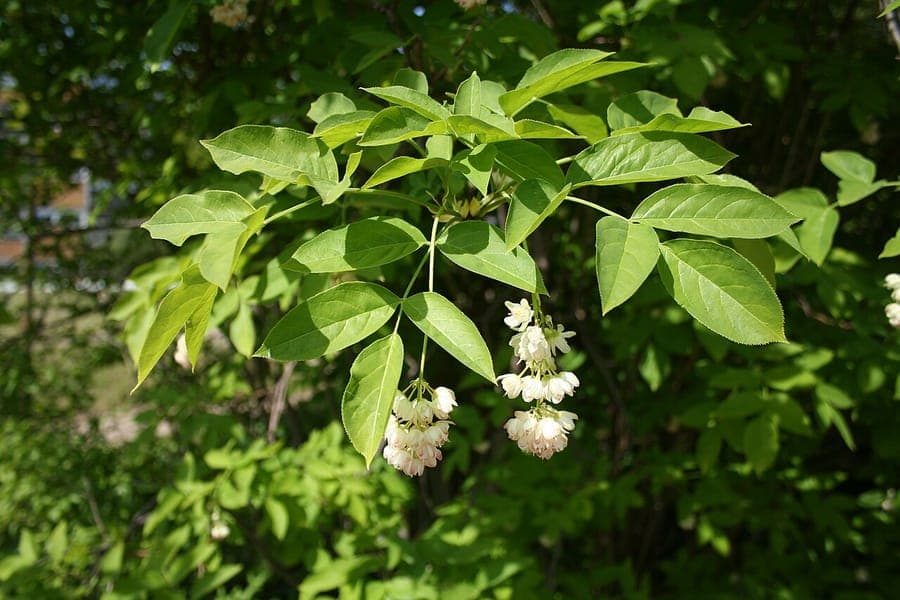
Marco Schmidt / CC BY 2.5, via Wikimedia Commons
Bladdernut: complete guide
Staphylea pinnata
¿Quieres ver Bladdernut: complete guide en tu jardín?
1 minuto, sin tarjeta de crédito
Overview
Bladdernut (Staphylea pinnata), also called European bladdernut or Pimpernuss, is a fascinating shrub from the Staphyleaceae family. This shrub is native to southeastern Europe and the Caucasus region and naturally grows in woodland environments. The plant reaches a height of 2-4 meters and is known for its spectacular seed pods that appear in summer.
Staphylea pinnata is a unique structural plant that offers interest throughout the season. The white flowers appear in spring in dense clusters, followed by large leaves and then very distinctive papery seed pods in summer. These seed capsules are paper-like and yellow, making them highly decorative.
Appearance and bloom time
Bladdernut is a deciduous shrub with compound leaves consisting of 5-11 small leaflets. The leaflets are bright green and asymmetrically arranged. As the growing season ends, they take on a yellow-green color.
Flowers appear in May in drooping clusters of snow-white blooms. Each flower has five petals and is approximately 1 centimeter across. They grow in hanging clusters (racemes) that can reach 15 centimeters long. The fragrance is subtle but pleasant.
After flowering, the characteristic bladder fruits form, which are triangular or round in shape. These seed capsules have a papery texture and turn yellow and brown in summer. They are light enough to be dispersed by wind.
Ideal location
Bladdernut grows best in locations with full sun to partial shade. The shrub can grow in heavy shade, but flowers less and forms fewer seed pods. At least 4-6 hours of direct sunshine per day is ideal.
The plant is suitable for use as a specimen, in hedges, or in mixed borders. The autumn color is not spectacular but pleasant. The plant is also suitable for larger beds where the seed pods are clearly visible.
Ensure the plant is placed in a wind-resistant location, especially when mature. A lightly sheltered spot is ideal, but excessive windbreaks can limit flowering and fruiting.
Soil requirements
Bladdernut grows best in well-draining, nutrient-rich soil. The plant tolerates both acidic and neutral soils. A pH between 6.0-7.5 is ideal. Heavy clay soils should be improved with sand and organic material.
When planting, you can fill the planting hole with a mixture of garden soil and matured compost (30-40 percent). This promotes strong growth in the early years. Drainage is essential, as the plant does not tolerate waterlogging.
The plant has moderate nutrient requirements. A mulch layer of 5-10 centimeters in early spring helps retain soil moisture and provides gradually weathering nutrients.
Watering
Newly planted shrubs should be watered regularly, especially in the first year. Water deeply but not daily. One thorough watering per week is better than daily shallow watering.
Once established, bladdernut is reasonably drought-tolerant, although regular water promotes better growth and more seed pods. In dry summers, watering during dry periods (every 10-14 days) yields better results.
In container culture, regular watering is necessary, especially during the growing period. Ensure the drainage hole does not become clogged.
Diseño gratis
¿Quieres ver Bladdernut: complete guide en tu jardín? Crea un diseño gratis ahora.
Pruning
Bladdernut requires little pruning when placed in the right location. Pruning is best done after flowering in May-June, or in late winter (February-March) before new growth begins.
Remove crossing branches, damaged wood, and weak-growing shoots. Try to maintain the natural form. If the shrub becomes too large, you can remove one-third to one-half of the wood in February-March.
Deadheading is not necessary and is not recommended, as the seed pods are decorative. However, you can remove wilted leaves.
Maintenance calendar
February-March: Inspect for frost damage. Perform light pruning if needed. Add compost around the base.
April-May: Plant new shrubs or relocate existing ones. Enjoy the blooms. Check watering needs.
June-July: Ensure regular watering in dry periods. Observe the young seed pods forming.
August-September: Water in dry periods. Observe the color change of seed pods from green to yellow.
October-November: Enjoy the full beauty of the seed pods. Remove wilted foliage.
December-January: Minimal maintenance. Prune only if needed for form.
Winter hardiness
Bladdernut is winter hardy to -20 degrees Celsius, making it suitable for northern Europe. In the UK and Northern Europe, the plant overwinters without problems. In very severe winters, branches may suffer frost damage, but the plant usually recovers.
The plant is completely bare in winter and may appear dead, but the wood is very durable and will produce new shoots in spring.
Young plants benefit from 5-10 centimeters of mulch in November for protection of roots during the first winter.
Companion plants
Bladdernut combines well with other shrubs that prefer similar growing conditions. Common elder (Sambucus) can be used alongside for added height. Snowballs (Viburnum opulus) provide good visual contrast.
Large-flowering perennials such as Delphiniums and Lupines can be planted underneath. Grasses such as Miscanthus offer interesting contrast with the leaf structure of bladdernut.
Rosemary and other Mediterranean herbs can be planted together if the location has full sun. The plant also grows well with yew and other shrubs.
Closing thoughts
Bladdernut is an underrated shrub that offers much decorative interest. From snow-white flowers to papery seed pods, this plant offers something to see throughout the season.
On gardenworld.app you can include bladdernut in mixed borders with other interesting shrubs. Also on gardenworld.app you will find inspiration for structural planting with attention to seasonal occurrences.
With well-draining soil and proper placement, bladdernut is a long-term addition to your garden.
¿Quieres ver Bladdernut: complete guide en tu jardín? Crea un diseño gratis ahora.
Sube una foto, elige un estilo y obtén un diseño fotorrealista con lista de plantas en menos de un minuto.
Más de 10.000 jardines diseñados
Sin tarjeta de crédito


Plantas similares
Acer pycnanthum: complete guide
Acer pycnanthum
Acer pycnanthum, the Japanese swamp maple, is a fast-growing tree with early red flowers and brilliant autumn color, ideal for damp garden settings.
Freeman maple: complete guide
Acer × freemanii
Everything about the Freeman maple (Acer x freemanii): a fast-growing shade tree with spectacular autumn colour for large gardens.
Silver vine: complete guide
Actinidia polygama
Discover silver vine (Actinidia polygama): a hardy climbing plant with silvery foliage, loved by gardeners and cats alike.