
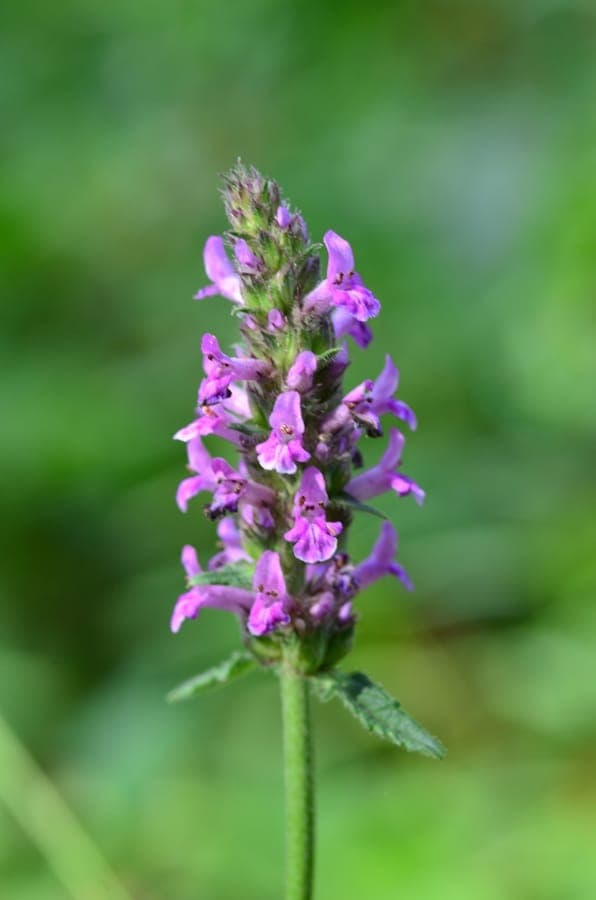
Radio Tonreg from Vienna, Austria / CC BY 2.0, via Wikimedia Commons
Betony: complete guide
Stachys officinalis
¿Quieres ver Betony: complete guide en tu jardín?
1 minuto, sin tarjeta de crédito
Overview
Betony, also known as Bishop's-wort, is an ancient medicinal herb from the Lamiaceae family (the same family as mint and sage). This herb is native to Europe and has been used in traditional medicine since medieval times. With its beautiful purple flowers and compact growth, it represents an excellent addition to organic or cottage-style gardens.
Appearance and Bloom
This plant reaches 30 to 60 centimeters in height, forming a compact, upright structure. The foliage is rough-textured, dark green, and distinctly veined. In July and August, dense, purple-red flower spikes appear at the stem tips. Each floret is small and tubular, giving Betony its characteristic appearance.
Ideal Location
Choose a spot with full sun to partial shade. Betony grows well in sunny borders but tolerates light shade. This plant is very flexible and grows in virtually any garden area, provided it drains well.
Soil
Betony grows in virtually any garden soil, but prefers well-draining, moderately fertile soil. Poor soil is not a problem. Acidic to neutral pH (6.0-7.5) is preferred. After establishment, excellent drainage is the only requirement.
Watering
Once established, Betony is extremely drought-tolerant. Water regularly during the first growing season until root systems establish. Thereafter, rain usually suffices. Excessive water is harmful and can cause root rot.
Diseño gratis
¿Quieres ver Betony: complete guide en tu jardín? Crea un diseño gratis ahora.
Pruning
Pruning is not strictly necessary, though removing spent flower spikes can prolong bloom. Cutting back to the base in late autumn or early spring promotes a neat, compact plant.
Maintenance Calendar
Spring: Cut back. Plant will grow quickly. Summer: Enjoy flowers and bees. Autumn: Collect seed for next season. Winter: Minimal maintenance; plant may appear dead but will regenerate in spring.
Winter Hardiness
Betony is completely hardy in zones down to -15 degrees Celsius and below. This is an extremely hardy plant requiring no protection in most European climates. In very extreme winters, leaf and stem may die, but the root will overwinter and regenerate.
Companion Plants
Combine with other bee plants and medicinal herbs such as sage, thyme, and lavender. Wild marjoram and oregano also make good companions. This grouping forms an authentic European medicinal herb garden.
Closing
Betony brings tangible history to your garden. With its beautiful purple flowers and centuries-old reputation for healing, it represents a valuable addition for nature lovers. This plant grows well in both traditional cottage gardens and modern naturalistic plantings. Find seeds or plants at garden centers. Visit gardenworld.app for more inspiration on growing medicinal herb gardens.
With its simple care requirements and high blooming value, Betony will enrich your garden for years and attract bees.
¿Quieres ver Betony: complete guide en tu jardín? Crea un diseño gratis ahora.
Sube una foto, elige un estilo y obtén un diseño fotorrealista con lista de plantas en menos de un minuto.
Más de 10.000 jardines diseñados
Sin tarjeta de crédito


Plantas similares
Apple mint (Mentha x villosa): complete guide
Mentha x villosa
Meet apple mint (Mentha x villosa): a fruity-scented kitchen herb with woolly leaves, perfect for tea and mojitos.
Salvia peyronii: complete guide
Salvia peyronii
Discover Salvia peyronii, a rare Lebanese mountain sage. Growing tips, hardiness, and companion planting for a Mediterranean gravel garden.
Bigleaf mint (Mentha x rotundifolia): complete guide
Mentha x rotundifolia
Discover bigleaf mint: cultivation, care tips, and garden uses. Learn how to grow this aromatic herb with soft, hairy leaves.