
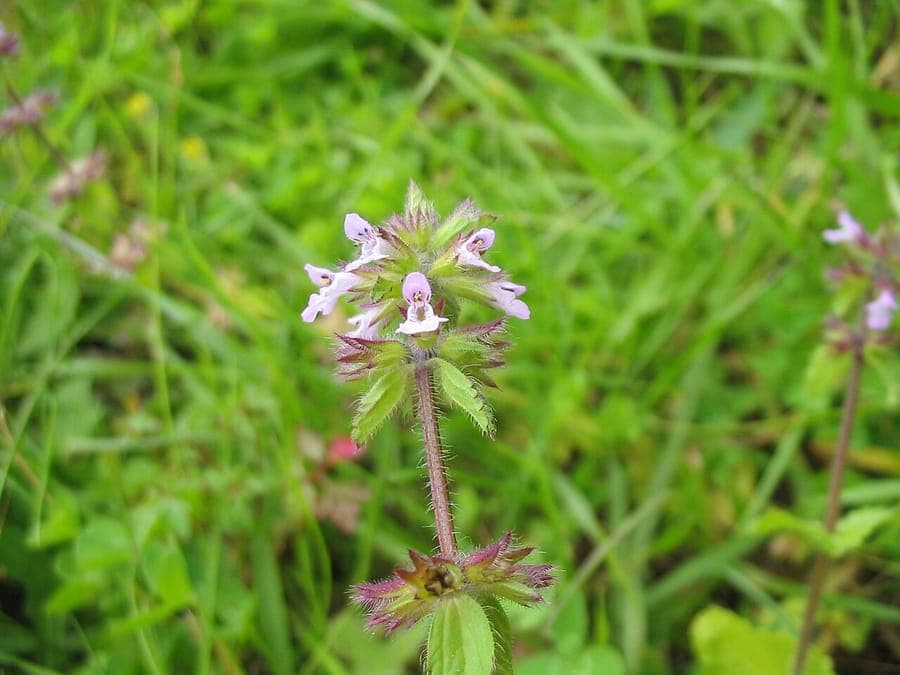
Christian Hummert (Ixitixel) / CC BY-SA 3.0, via Wikimedia Commons
Field stachys: complete guide
Stachys arvensis
¿Quieres ver Field stachys: complete guide en tu jardín?
1 minuto, sin tarjeta de crédito
Overview
Field stachys (Stachys arvensis) is a simple yet charming plant that naturally occurs on fields and wastelands throughout Europe, Asia, and North Africa. This annual plant belongs to the mint family (Lamiaceae) and is known for its white flower spikes and compact growth habit. The name 'field woundwort' refers to historical medicinal uses and its natural habitat in agricultural areas.
This plant is popular with gardeners seeking to create naturalistic or wild garden designs. It grows quickly and fits well in cottage gardens, ecological landscapes, and untamed corners of your garden space. Field stachys attracts insects and promotes biodiversity in your garden landscape.
Appearance and blooms
Field stachys typically reaches heights of 20 to 40 centimeters and grows in a rounded, compact form. The plant bears small, elliptical leaves arranged along the stem with a slightly hairy appearance. The leaves emit a minty scent when brushed, which is characteristic of the Lamiaceae family.
The flowers are small, white or pale pink, and appear in flower spikes formed at the top of stems. These spikes consist of numerous tiny florets that bloom sequentially from March to October. The flower display attracts honeybees, buzzing insects, and butterflies, making this a valuable plant for pollination in your garden.
Ideal location
Field stachys thrives in locations with full sun to partial shade. Ensure the plant receives at least 6 hours of direct sunlight daily for optimal blooms. In very warm regions, some afternoon shade can be beneficial to prevent leaf scorch.
The plant performs well in open, unprotected locations, indicating its tolerance for wind and weather conditions. Plant field stachys in open borders, grouped in flower beds, or along pathways where you can appreciate its delicate flowers.
Soil
Field stachys is very tolerant regarding soil conditions and can grow in heavy clay to light sandy soil. The ideal pH range is between 4.5 and 5, though the plant also tolerates slightly acidic to neutral soils. Good drainage is essential to prevent root rot.
Ensure the soil is enriched with organic material such as compost or mulch for moisture retention. While this plant is tolerant, it prefers nutrient-rich soils. Add a slow-release fertilizer at planting time to promote healthy growth.
Diseño gratis
¿Quieres ver Field stachys: complete guide en tu jardín? Crea un diseño gratis ahora.
Watering
Field stachys has moderate moisture requirements and needs regular water, especially during the growing season and bloom period. Water deeply but less frequently than shallow watering. This encourages deeper root penetration and a stronger plant system.
During dry periods, you may need to water daily until the soil is moist. After established plants mature, they can tolerate drought reasonably well. Avoid wetting foliage and water at the plant base to prevent fungal diseases.
Pruning
Field stachys grows naturally compact, so minimal pruning is needed. However, pinch off faded flower spikes once they pass their bloom to encourage more flowers. This extends the blooming period and keeps the plant tidier.
At season's end, you can cut the plant back to about 15 centimeters high. This promotes bushy growth for the next season. Remove any dead or damaged stems whenever you notice them.
Maintenance calendar
Spring: Sow seeds directly outdoors once frost danger has passed. Plant young plants after the last frost. Begin regular watering and apply fertilizer.
Summer: Monitor moisture levels and deadhead spent flowers. Watch for diseases or pest insects.
Fall: Blooming continues through October. Collect seedheads if you want to save seeds for next season.
Winter: This annual plant will be killed by frost. Clear dead material and prepare beds for next season.
Winter hardiness
Field stachys is an annual plant that is not frost-resistant. In climates with frost-free winters, it may self-seed and reappear in the next season. In colder regions, the plant dies when temperatures drop below freezing.
If you expect frost, collect seeds at season's end for replanting next spring. Store seeds in a dry, cool location during winter.
Companion plants
Field stachys grows well alongside other frost-hardy, sun-loving plants such as cornflower, dandelion, red poppy, field thistle, and other wildflowers. Plant it together with herbs like dill and parsley for a practical and beautiful combination.
In formal gardens, this plant can be used well in borders with other Lamiaceae species like sage and lavender for interesting contrast.
Conclusion
Field stachys offers a simple yet satisfying garden experience. With minimal care and light maintenance, this compact plant provides extended blooms and attracts beneficial insects. Your garden will flourish with this remarkable plant.
Visit gardenworld.app/en for more plant tips and garden inspiration on your gardening journey. Discover more about plants and garden design at gardenworld.app/en.
¿Quieres ver Field stachys: complete guide en tu jardín? Crea un diseño gratis ahora.
Sube una foto, elige un estilo y obtén un diseño fotorrealista con lista de plantas en menos de un minuto.
Sin tarjeta de crédito


Plantas similares
Apple mint (Mentha x villosa): complete guide
Mentha x villosa
Meet apple mint (Mentha x villosa): a fruity-scented kitchen herb with woolly leaves, perfect for tea and mojitos.
Salvia peyronii: complete guide
Salvia peyronii
Discover Salvia peyronii, a rare Lebanese mountain sage. Growing tips, hardiness, and companion planting for a Mediterranean gravel garden.
Bigleaf mint (Mentha x rotundifolia): complete guide
Mentha x rotundifolia
Discover bigleaf mint: cultivation, care tips, and garden uses. Learn how to grow this aromatic herb with soft, hairy leaves.