
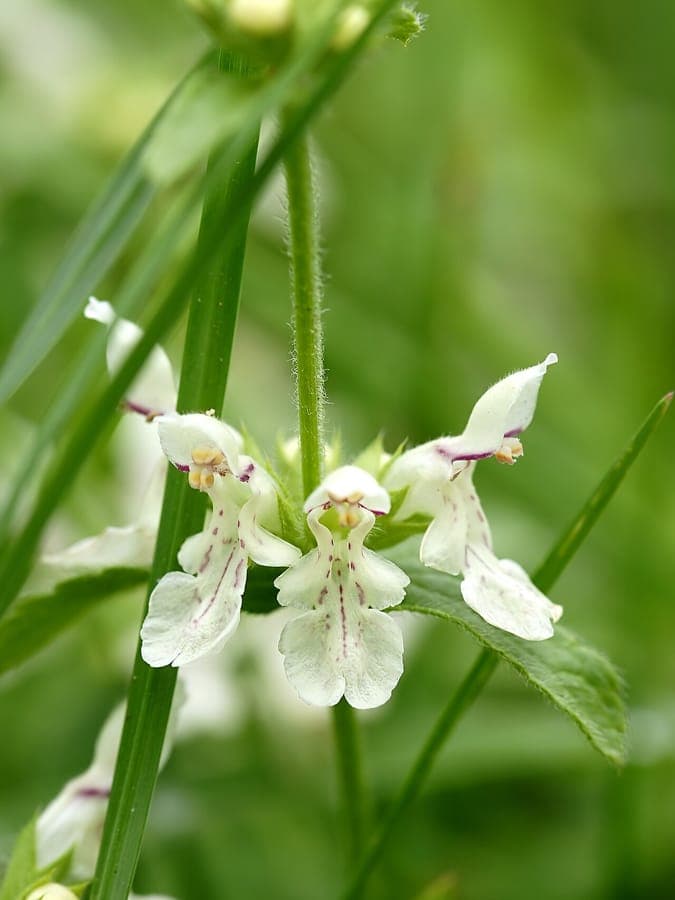
Hans Hillewaert / CC BY-SA 3.0, via Wikimedia Commons
Stachys annua: complete guide
Stachys annua
¿Quieres ver Stachys annua: complete guide en tu jardín?
1 minuto, sin tarjeta de crédito
Stachys annua: Complete Guide
Overview
Stachys annua, commonly known as annual yellow woundwort or field woundwort, is an elegant herbaceous plant belonging to the Lamiaceae family. Native to Europe extending through Siberia to Iran, this species thrives on weedy cultivated fields, disturbed ground, and semi-improved grasslands. Despite its modest reputation, this delicate plant offers valuable contributions to herb gardens and wildflower landscapes. With its subtle pale flowers and aromatic foliage, it provides both ecological and culinary value. For gardeners interested in wild flora and medicinal plants, Stachys annua represents a fascinating discovery.
Appearance and Bloom
Stachys annua is a slender, upright plant reaching 15-40 centimeters in height. The stems are distinctly square, hairy, and branched, typical of the Lamiaceae family. The leaves are lance-shaped, hairy, and aromatic, releasing a pleasant herbaceous scent when brushed. The delicate flowers are small, cream-white to pale yellow-tinged, and grouped in dense, stacked flower spikes along the upper stems. Blooming from June through October depending on location and climate, the flowers attract butterflies and other pollinators.
Ideal Location
Annual yellow woundwort thrives in full sun, where it achieves full flowering. A minimum of five to six hours of direct daily sunlight is ideal. The plant tolerates light shade but growth and flowering intensity may decrease. Position in open areas with good air circulation for moisture drainage. Avoid wet, dark corners. It also appreciates wind-exposed locations where it flexes gracefully with the breeze.
Soil Requirements
Stachys annua prefers well-drained soils and is not fussy about nutrient levels. A pH of 6.5 to 7.5 is ideal, though the plant remains quite tolerant of slightly acidic to weakly alkaline soils. Sandy and gravelly soils perform better than heavy clays. The plant also thrives in nutrient-poor soils; excessive fertility causes excessive foliage growth at the expense of flowering. In strong clay areas, incorporate sand and gravel into planting beds.
Diseño gratis
¿Quieres ver Stachys annua: complete guide en tu jardín? Crea un diseño gratis ahora.
Watering
Stachys annua is reasonably drought-tolerant once established. Regular watering during the first growing season helps root establishment. Once well-rooted, the plant thrives in rainy seasons with minimal supplemental water. During very dry periods, light watering maintains optimal appearance, but excessive moisture must be avoided. The plant prefers moderately moist soils, neither waterlogged nor desiccated.
Pruning and Maintenance
Pruning is simple for Stachys annua. Pinch back blooming tips to promote bushier growth. Remove spent flower spikes after blooming for neater appearance. This also stimulates secondary flowering later in the season. The plant naturally grows compact, so extensive pruning is unnecessary. Damaged foliage may be removed when observed.
Maintenance Calendar
April-May: Plant during good weather. May-June: Plant begins flowering. June-October: Full flowering period. October: Collect seed if desired. November-December: Remove plant residue as plant declines. Monitor for fungal issues caused by overwatering in wet conditions.
Winter Hardiness
Stachys annua is an annual plant that normally does not survive winter. In Mediterranean climates with very mild winters, it may occasionally overwinter and regrow the following spring. In most European climates, it dies after first frost. This is not problematic, as you can collect seed and resow the following season.
Companion Plants
Annual yellow woundwort combines beautifully with other herbaceous material. Accompany with lavender, thyme, and other Mediterranean herbs. Low wildflowers such as creeping marjoram and good-King-Henry provide nice contrast. Taller flowers such as larkspur and mallow offer background height. In wildflower garden settings, this creates ecologically valuable habitat for pollinators and other insects.
Conclusion
Stachys annua is a valuable plant for gardeners interested in wild flora and medicinal herbs. With simple care requirements and maximum ecological benefit, this elegant plant enriches your garden. Harvest seed for future years or allow the plant to self-seed throughout your garden. Discover more at gardenworld.app/en.
Stachys annua brings subtle beauty and practical value to your garden. With this guide, you are fully equipped to successfully cultivate this fascinating herbal plant and enjoy its many benefits on gardenworld.app/en.
¿Quieres ver Stachys annua: complete guide en tu jardín? Crea un diseño gratis ahora.
Sube una foto, elige un estilo y obtén un diseño fotorrealista con lista de plantas en menos de un minuto.
Sin tarjeta de crédito


Plantas similares
Apple mint (Mentha x villosa): complete guide
Mentha x villosa
Meet apple mint (Mentha x villosa): a fruity-scented kitchen herb with woolly leaves, perfect for tea and mojitos.
Salvia peyronii: complete guide
Salvia peyronii
Discover Salvia peyronii, a rare Lebanese mountain sage. Growing tips, hardiness, and companion planting for a Mediterranean gravel garden.
Bigleaf mint (Mentha x rotundifolia): complete guide
Mentha x rotundifolia
Discover bigleaf mint: cultivation, care tips, and garden uses. Learn how to grow this aromatic herb with soft, hairy leaves.