
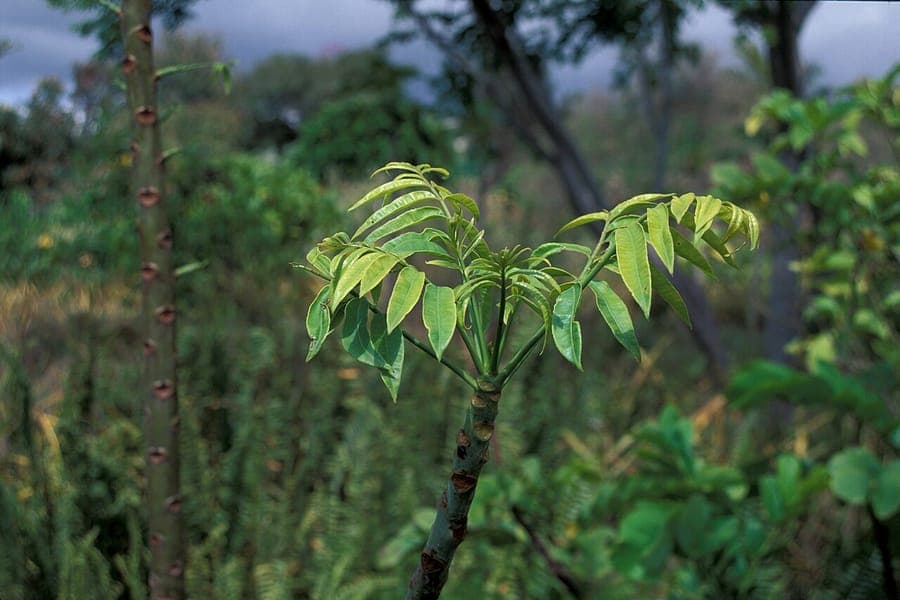
Forest & Kim Starr / CC BY 3.0, via Wikimedia Commons
Ambarella: complete guide
Spondias dulcis
¿Quieres ver Ambarella: complete guide en tu jardín?
1 minuto, sin tarjeta de crédito
Overview
Ambarella (Spondias dulcis), also known as golden apple or Jewish plum, is a tropical fruit tree from the Anacardiaceae family. Native to the Indo-Pacific region, this tree reaches 30-80 feet tall and produces abundant golden-yellow fruits. The tree grows rapidly in warm climates and produces fruit in 3-4 years.
The fruit is sweet with soft, juicy flesh and is eaten fresh, cooked, or processed into juices and jams.
Appearance and Fruiting
Ambarella is a large tree with a broad, spreading canopy. The trunk is straight and the bark smooth to ridged. Leaves are compound with numerous long, narrow leaflets along a central vein. The foliage is bright green and elegant.
Flowers appear in small clusters, white to yellow. Fruits form during warm months and ripen from green to golden-yellow. Ripe fruits are approximately 2-3 inches long with smooth, golden-yellow skin.
Ideal Location
Ambarella thrives in full sunlight. The tree prefers warm, humid tropical and subtropical climates. Plant in sheltered locations protected from strong winds.
The tree suits large gardens in warm regions. Fortunately, the plant can grow in containers if you live in a cooler climate (for summer outdoor placement).
Soil
Ambarella grows on virtually any soil but prefers moist, fertile soils. Acidic to neutral pH is preferred (6.0-7.0). The tree does not tolerate waterlogged conditions.
Add generous organic matter and ensure good drainage. Mulch around the tree with compost.
Diseño gratis
¿Quieres ver Ambarella: complete guide en tu jardín? Crea un diseño gratis ahora.
Watering
Regular watering is essential for young trees during the first 2-3 years. Water deeply and regularly, especially during dry periods. Once established (after 3-4 years), the tree tolerates drought better but performs better with consistent moisture.
Direct water away from the trunk to prevent fungal issues.
Pruning
Minimal pruning is needed. Remove only dead, damaged, or storm-broken branches. The tree grows naturally in an attractive form. You may remove low-hanging branches to improve clearance beneath the tree.
Maintenance Calendar
Spring: Optimize watering, support young trees. Summer: Water regularly, monitor fruiting. Fall: Harvest ripe fruits. Winter: Minimal activity in warmer regions.
Winter Hardiness
Ambarella is not frost-hardy and grows only in USDA zones 10b-12 (minimum 40 degrees Fahrenheit). In colder climates, grow in containers and move indoors for winter.
Companion Plants
In tropical and subtropical settings, plant alongside other fruit trees such as mango, papaya, and guava. Coconut and banana trees also make good companions.
Conclusion
Ambarella is an interesting, productive fruit tree for warm climates. With proper care, it produces food for many years. Available through tropical tree specialists.
Ideal for gardenworld.app users in warm regions seeking to transform their gardens into tropical oases.
¿Quieres ver Ambarella: complete guide en tu jardín? Crea un diseño gratis ahora.
Sube una foto, elige un estilo y obtén un diseño fotorrealista con lista de plantas en menos de un minuto.
Más de 10.000 jardines diseñados
Sin tarjeta de crédito


Plantas similares
Skunkbush sumac: complete guide
Rhus trilobata
Everything about Rhus trilobata: siting, soil, autumn colour, pruning, and how this tough ornamental shrub earns a place in any garden.
Winged sumac: complete guide
Rhus copallinum
Everything about Rhus copallinum, the winged sumac with spectacular autumn colour. Location, pruning and garden value in full detail.
Aromatic sumac: complete guide
Rhus aromatica
Full guide to aromatic sumac (Rhus aromatica): planting, soil, care, pruning and companion plants for dry, sunny gardens and slope stabilisation.