
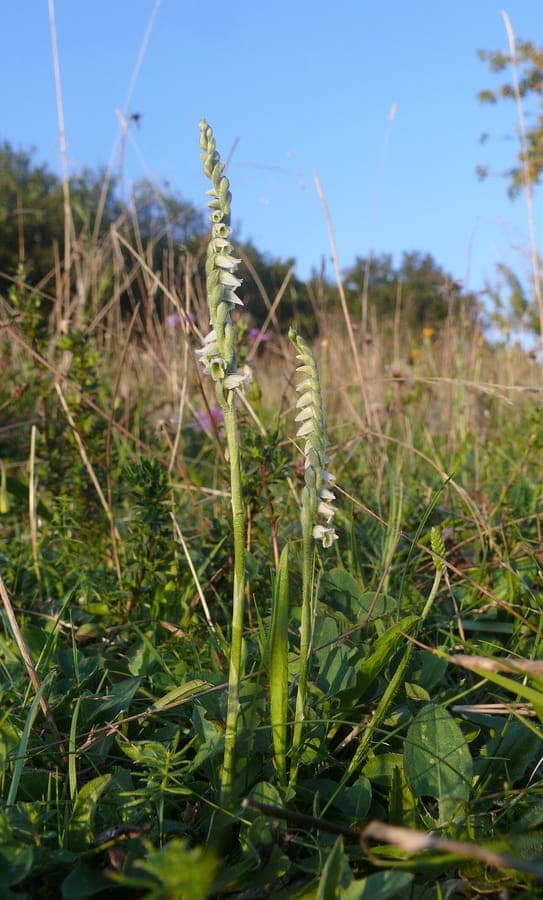
Bernd Haynold / CC BY-SA 3.0, via Wikimedia Commons
Spiranthes spiralis: complete guide
Spiranthes spiralis
¿Quieres ver Spiranthes spiralis: complete guide en tu jardín?
1 minuto, sin tarjeta de crédito
Spiranthes spiralis: Complete Guide
Overview
The Spiranthes spiralis, commonly known as autumn lady's-tresses, is a slender terrestrial orchid belonging to the Orchidaceae family. Widely distributed throughout Europe from Scandinavia to the Mediterranean and extending to Central Asia, this wild orchid is recognized for its distinctive spiral flower arrangements and ecological importance in natural grasslands and heaths. As a protected species in many countries, this delicate orchid represents an essential component of wild biodiversity. For gardeners interested in wild flora and habitat restoration, it is a valuable addition.
Appearance and Bloom
Spiranthes spiralis is a graceful plant reaching 10-30 centimeters in height. Leaves form a dense rosette at the base and often emerge during summer before the flowering stem develops. The characteristic spiral flowers are tiny, white to pale pink, and densely cover the central flower axis in remarkable mathematical precision. Blooming from August through October depending on location and weather, the nocturnally fragrant flowers attract insects and provide crucial late-season forage where other food sources are scarce.
Ideal Location
Autumn lady's-tresses thrives in open, full-sun meadows and grasslands where it naturally competes with other flora. In gardens, plant in locations receiving at least six hours of direct sunlight. The species prefers more natural, less managed environments, making wild or semi-wild gardens perfect settings. It does not tolerate heavy plant competition, so surrounding grasses and meadow flowers require regular cutting to prevent overshadowing of the orchid.
Soil Requirements
Spiranthes spiralis prefers well-drained, nutrient-poor to moderately fertile soils. A pH range of 5.5 to 7.5 is ideal. The plant does not thrive in overly nutrient-rich soils where competing weed growth overwhelms it. Sandy and gravelly soils work exceptionally well. In gardens, attempt to simulate appropriate habitat by avoiding fertilization and using lean soil. Careful weeding is essential to minimize competition.
Watering
Spiranthes spiralis requires less water than many orchids, especially once established. The plant prefers moist conditions during growing seasons (summer and autumn). In dry weeks, water moderately, ensuring soil does not become permanently wet. In container culture, use a well-draining mix of sand and peat. Once established, the plant is relatively self-sufficient and tolerates extended dry periods.
Diseño gratis
¿Quieres ver Spiranthes spiralis: complete guide en tu jardín? Crea un diseño gratis ahora.
Pruning
Pruning is virtually unnecessary for Spiranthes spiralis. The plant grows naturally compact. Remove only dead leaves and spent flower stems after blooming. These may remain ornamentally interesting while helping insects. Leave seed residue in place; it disperses naturally and facilitates plant propagation.
Maintenance Calendar
May-June: Basal leaf rosette growth. July-August: Flower stem preparation. August-October: Peak flowering period; maintain moisture. November: Leaf senescence; reduce watering. December-April: Winter dormancy; minimal water. Monitor year-round for disease and pests. In wild settings, these orchids often grow in grasslands that are annually mowed; simulate this in your garden.
Winter Hardiness
Spiranthes spiralis is extremely winter hardy and thrives in all European climates, including areas with severe winters. The plant survives temperatures as low as -15 to -20 degrees Celsius without difficulty. It is a true winter-hardy species. Roots are well-protected underground and require no supplemental protection. The plant grows readily outdoors year-round.
Companion Plants
Autumn lady's-tresses creates beautiful combinations with other heath and grassland flowers. Accompany with sedges, heather species, and various grasses. Low-growing flowers such as gentian and other heath herbs pair well. In wildflower meadow simulations, combine with field pansy, bird's-foot trefoil, and other grassland flora. This creates an ecologically valuable ensemble supporting pollinators throughout autumn.
Conclusion
Spiranthes spiralis is a fascinating plant for those valuing wild flora and habitat restoration. With minimal care requirements and maximum ecological value, this orchid transforms your garden into valuable wildlife habitat. Ensure purchased material originates from recognized cultivators; this orchid is protected in many countries and must be carefully preserved in wild populations. Discover more at gardenworld.app/en.
Spiranthes spiralis brings wild autumn charm to your garden while genuinely supporting biodiversity. With this guide, you are fully equipped to successfully integrate this elegant orchid into your landscape design on gardenworld.app/en.
¿Quieres ver Spiranthes spiralis: complete guide en tu jardín? Crea un diseño gratis ahora.
Sube una foto, elige un estilo y obtén un diseño fotorrealista con lista de plantas en menos de un minuto.
Más de 10.000 jardines diseñados
Sin tarjeta de crédito


Plantas similares
Ram's-head lady's slipper: complete guide
Cypripedium arietinum
Everything you need to know about growing Cypripedium arietinum, a rare woodland orchid for cool, moist garden settings. Soil, care and planting tips.
Sparrow's-egg lady's slipper: complete guide
Cypripedium passerinum
Everything about growing Cypripedium passerinum, a cold-hardy subarctic orchid suited to cool, moist, shaded garden spots. Soil, care and companion plants.
Algerian Butterfly-orchid: complete guide
Platanthera algeriensis
Everything about Platanthera algeriensis, the rare Mediterranean orchid with greenish flowers native to Algeria, Morocco, Corsica and Spain.