
Eric Hunt / CC BY-SA 3.0, via Wikimedia Commons
Nodding ladies' tresses: complete guide
Spiranthes cernua
¿Quieres ver Nodding ladies' tresses: complete guide en tu jardín?
1 minuto, sin tarjeta de crédito
Overview
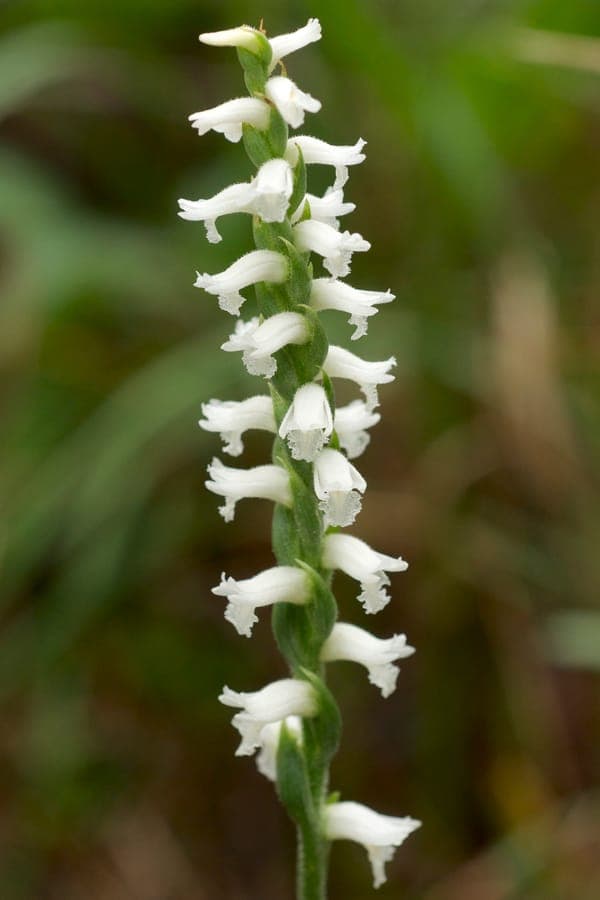
Nodding ladies' tresses (Spiranthes cernua), also called corkscrew orchis, is a delicate orchid from North America. This elegant plant is known for its characteristic spiral-wound flowers that resemble a corkscrew motion. The plant grows wild in moist meadows, swampy areas and along water channels in the eastern and central parts of North America.
Spiranthes cernua is a fall-blooming orchid that stands out for its compact growth and beautifully arranged small flowers. For garden enthusiasts who want to add a piece of wild nature, this is a fascinating alternative to typical garden plants.
Appearance and Bloom
Nodding ladies' tresses is a small, delicate plant that grows approximately 20-60 centimeters high. The plant grows from a rosette of long, narrow leaves that grow at the base. These leaves are green and have distinctive venation.
The flowers are the most characteristic feature. These small, white to cream-colored flowers are only a few millimeters in size and are spirally arranged around a central axis. This spiral pattern gives the plant its English name "ladies' tresses." The flowers appear from August through October, making this plant unique as a late summer-blooming orchid.
The flower fragrance is subtle and pleasant, usually with a light vanilla or vanilla-like scent.
Ideal Location
Nodding ladies' tresses thrives best in locations where it receives partial shade, although it can also grow in full sun when the soil is sufficiently moist. In warmer areas, however, partial shade is better.
Plant the orchid in a moist, non-draining location where it can maintain natural moisture. Along the edges of ponds, in swampy garden areas or in special orchid beds are ideal places.
Soil
Nodding ladies' tresses has very specific soil requirements. The plant thrives best in acidic, sandy or clayey soils that are moist without being completely waterlogged. The pH should be between 4.5 and 6.5.
The soil should contain plenty of organic matter, such as bog compost or finely shredded leaves. For pot cultivation, you can use a mixture of orchid substrate, sand and bog compost. Drainage is important, but the soil should remain moister than for typical garden plants.
Diseño gratis
¿Quieres ver Nodding ladies' tresses: complete guide en tu jardín? Crea un diseño gratis ahora.
Watering
Nodding ladies' tresses requires consistently moist soils, especially during the growing season from spring through fall. Ensure the soil is always somewhat moist, but not completely waterlogged.
During dry periods, water carefully, usually several times per week or more if needed. Rainwater is preferred over tap water due to the freshwater requirement. Water the plant at soil level, not on the leaves, to prevent fungal growth.
Pruning
Nodding ladies' tresses does not require typical pruning. After blooming in October or November, you can remove dried flower stalks. The leaves die back in winter, which is normal.
Carefully remove dead leaves in spring before the plant awakens from dormancy. Be careful not to damage the delicate roots during maintenance.
Maintenance Calendar
Spring: plant new specimens, check for pests, water regularly. Summer: ensure sufficient moisture, observe growth. Fall: enjoy the blooms, water through late season. Winter: minimal care, dry material remains on plant for protection.
Winter Hardiness
Nodding ladies' tresses is completely winter hardy in temperature zones where temperatures can drop to -20 degrees Celsius or lower. The plant is a perennial that returns each year from its underground tubers.
Companion Plants
Perfect planting partners for nodding ladies' tresses are:
- Sphagnum moss (growing medium)
- Solomon's seal (complementary blooming period)
- Adder's tongue fern (similar habitat)
- Dwarf fireweed (similar moisture requirements)
Conclusion
Nodding ladies' tresses is a fascinating addition to moisture-loving gardens. With its elegant spiral flowers and unique fall blooms, it offers a subtle beauty that adds considerable value. Provide moist, acidic soil, regular watering and patience, and this wild orchid will reward you with flowers year after year. For advice, contact specialized garden centers or visit gardenworld.app.
¿Quieres ver Nodding ladies' tresses: complete guide en tu jardín? Crea un diseño gratis ahora.
Sube una foto, elige un estilo y obtén un diseño fotorrealista con lista de plantas en menos de un minuto.
Más de 10.000 jardines diseñados
Sin tarjeta de crédito


Plantas similares
Ram's-head lady's slipper: complete guide
Cypripedium arietinum
Everything you need to know about growing Cypripedium arietinum, a rare woodland orchid for cool, moist garden settings. Soil, care and planting tips.
Sparrow's-egg lady's slipper: complete guide
Cypripedium passerinum
Everything about growing Cypripedium passerinum, a cold-hardy subarctic orchid suited to cool, moist, shaded garden spots. Soil, care and companion plants.
Algerian Butterfly-orchid: complete guide
Platanthera algeriensis
Everything about Platanthera algeriensis, the rare Mediterranean orchid with greenish flowers native to Algeria, Morocco, Corsica and Spain.