
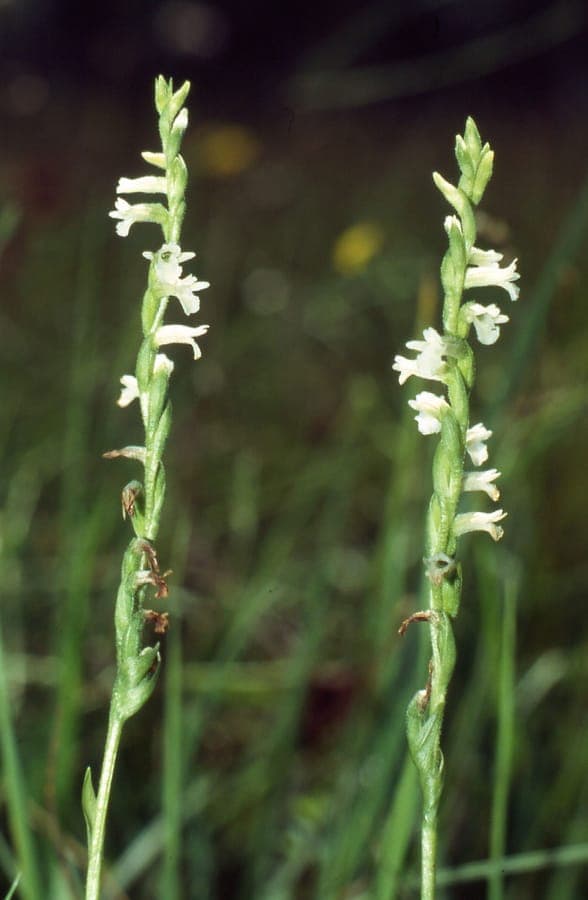
Wikimedia Commons / CC BY-SA 3.0, via Wikimedia Commons
Spiranthes aestivalis: complete guide
Spiranthes aestivalis
¿Quieres ver Spiranthes aestivalis: complete guide en tu jardín?
1 minuto, sin tarjeta de crédito
Spiranthes aestivalis: Complete Guide
Overview
The Spiranthes aestivalis, commonly known as summer lady's-tresses, is a delicate terrestrial orchid from the Orchidaceae family. Distributed from Western and Central Europe through the Mediterranean region to Northwest Africa, this elegant species is recognized for its distinctive spiral flower arrangement and ecological significance. This protected species is highly valued by orchid enthusiasts and conservationists alike. With its subtle beauty and specific habitat requirements, summer lady's-tresses represents a rewarding challenge for dedicated orchid cultivators.
Appearance and Bloom
Spiranthes aestivalis is a slender, upright plant reaching 20-50 centimeters in height. Linear basal leaves form a compact rosette around the base. The most distinctive feature is its tiny cream-white flowers arranged in tight spirals along a central flowering axis. Blooming from June through September depending on location, the nocturnally fragrant flowers release a sweet, subtle aroma that attracts night-pollinating insects. Despite their diminutive size, the numerous flowers create an elegant and distinctive floral display.
Ideal Location
Summer lady's-tresses thrives in wet, open meadows with full sun to light shade conditions. In gardens, a location receiving at least four hours of direct sunlight performs well. The plant prefers less manicured, more naturalistic settings than heavily cultivated plantings. In designed landscapes, it excels in wild or naturalized corners. Avoid dense shade and very dry locations. A semi-natural setting with fluctuating moisture levels is ideal.
Soil Requirements
Spiranthes aestivalis demands very specific soil conditions. The plant prefers moist, moderately acidic to neutral soil with high organic matter content. Swampy ground and peat-based soils are ideal. Soil should not be excessively nutrient-rich, as fertile ground promotes competitive weed growth. In garden settings, amend soil liberally with peat, sand, and organic material to achieve appropriate moisture retention and structure. A pH range of 6.0 to 7.0 is optimal.
Watering
Watering is absolutely critical to Spiranthes aestivalis success. The plant cannot tolerate dry conditions; soil must remain consistently moist throughout growth and flowering periods. During dry seasons, regular watering, sometimes daily in hot weather, is necessary. Simultaneously, drainage must remain adequate to prevent stagnation. One practical approach is positioning the plant in a naturally wet garden zone alongside other moisture-loving flora. Container cultivation uses a highly moisture-retentive mix of peat and sand.
Diseño gratis
¿Quieres ver Spiranthes aestivalis: complete guide en tu jardín? Crea un diseño gratis ahora.
Pruning
Spiranthes aestivalis requires minimal to no pruning. Leave yellowed or dead foliage in place until it naturally desiccates completely. Remove only damaged or diseased plant material. The species grows naturally compact and requires no shaping or formation. Leave seed capsules on the plant after flowering unless you prefer hand-pollination; they remain ornamentally interesting and facilitate natural seed dispersal.
Maintenance Calendar
April-May: Growth initiation begins; water regularly. June-September: Peak flowering period; maintain consistent moisture. October: Leaf fall commences; reduce watering gradually. November-March: Dormancy; minimal watering required. Year-round monitoring for fungal infections common in excessively wet conditions. Fertilization is rarely necessary; apply weak compost tea only in May.
Winter Hardiness
Spiranthes aestivalis exhibits reasonable cold hardiness, tolerating temperatures down to approximately -10 degrees Celsius. In continental climates with severe winter conditions, protective measures may prove beneficial. The root system, however, is underground and reasonably well-insulated. In very cold climates, cultivation in peat-based pots stored indoors overwinter is practical. In milder regions, the plant grows outdoors year-round.
Companion Plants
Spiranthes aestivalis creates beautiful naturalistic combinations with other moisture-loving flora. Accompany with sedges, flax, and other marsh-dwelling orchids. Moisture-loving flowers such as kalimia and erica complement wonderfully. Wetland flowers like kingcup and fen-plant create appropriate ecological context. In semi-wild gardens, these combinations form an ecologically valuable ensemble that attracts pollinators and butterflies.
Conclusion
Spiranthes aestivalis is a plant for gardeners committed to species conservation and appreciation of wild orchid beauty. With attention to moisture requirements and habitat considerations, you can successfully cultivate this fascinating species while restoring valuable wetland habitats. Always source cultivated material; never collect from wild populations. Discover more at gardenworld.app/en.
The Spiranthes aestivalis brings wild elegance to your garden while contributing to species conservation. With patience and dedication, you can establish this rare orchid, transforming your garden into a valued natural landscape refuge on gardenworld.app/en.
¿Quieres ver Spiranthes aestivalis: complete guide en tu jardín? Crea un diseño gratis ahora.
Sube una foto, elige un estilo y obtén un diseño fotorrealista con lista de plantas en menos de un minuto.
Más de 10.000 jardines diseñados
Sin tarjeta de crédito


Plantas similares
Ram's-head lady's slipper: complete guide
Cypripedium arietinum
Everything you need to know about growing Cypripedium arietinum, a rare woodland orchid for cool, moist garden settings. Soil, care and planting tips.
Sparrow's-egg lady's slipper: complete guide
Cypripedium passerinum
Everything about growing Cypripedium passerinum, a cold-hardy subarctic orchid suited to cool, moist, shaded garden spots. Soil, care and companion plants.
Algerian Butterfly-orchid: complete guide
Platanthera algeriensis
Everything about Platanthera algeriensis, the rare Mediterranean orchid with greenish flowers native to Algeria, Morocco, Corsica and Spain.