
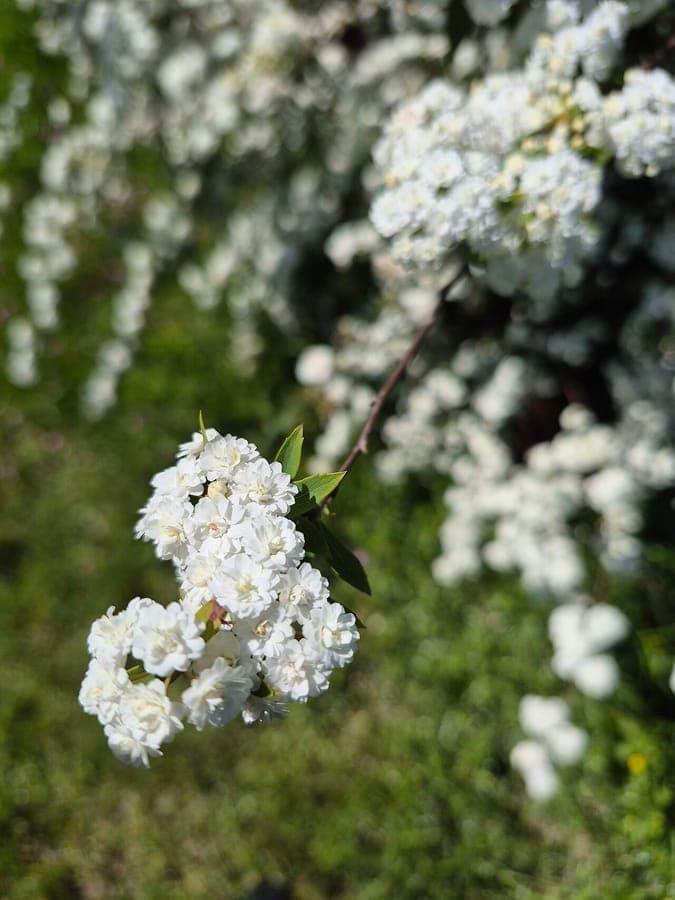
Bageense / CC BY-SA 4.0, via Wikimedia Commons
Reeve's spiraea: complete guide
Spiraea cantoniensis
¿Quieres ver Reeve's spiraea: complete guide en tu jardín?
1 minuto, sin tarjeta de crédito
Overview
Reeve's spiraea (Spiraea cantoniensis) is an ornamental shrub from the Rosaceae family, native to Southeast Asia. This plant is favored by gardeners for its abundant white flowers and elegant growth habit. The shrub reaches heights of 1.5 to 2.5 meters, displaying a fine, airy form that brings lightness to any garden.
Appearance and bloom cycle
Reeve's spiraea is renowned for its profuse, snow-white blooms in spring (April to May). Flowers appear in dense clusters along the branches, covering the plant so completely that the foliage beneath is barely visible. After flowering, small, inconspicuous fruits develop. The foliage is fine, narrow, and deep green, keeping the shrub decorative even after blooming ends.
Ideal location
This spiraea thrives best in full sunlight, requiring at least 4 to 6 hours of direct sun daily. In full sun, the plant flowers more abundantly and grows more compact. Partial shade is tolerated, but flowering diminishes. Avoid locations with strong afternoon shade.
Soil requirements
Reeve's spiraea is not demanding regarding soil. Well-draining, moderately fertile soil is sufficient. The plant tolerates both slightly acidic and neutral soil pH. Soil that remains moist but not waterlogged works best. Mix in garden compost or organic matter when planting.
Diseño gratis
¿Quieres ver Reeve's spiraea: complete guide en tu jardín? Crea un diseño gratis ahora.
Watering
Once established, regular watering is needed only during prolonged drought. Especially in the first summer after planting, maintain consistent moisture. Waterlogging is more dangerous than drought; ensure proper drainage.
Pruning
Prune immediately after flowering (May to June). Avoid pruning after August, as the plant forms next year's flowers then. Remove dead and weak branches, and thin out if the shrub becomes too dense. Regular light pruning creates a better shape.
Maintenance calendar
Spring: check for frost damage, thin out, and apply slow-release fertilizer. Summer: water during dry spells, prune after flowering. Autumn: remove fallen leaves and check for pests. Winter: protect young plants in severe frost with straw.
Winter hardiness
Reeve's spiraea is hardy to approximately -15°C (USDA zone 6b). In milder climates, light frosts may occur, but the plant recovers well. Severe winters may require protection for young specimens.
Companion plants
Reeve's spiraea pairs beautifully with other spring-flowering shrubs like Forsythia or lilac. For structure, underplant with low perennials such as Alchemilla or Geranium. Grouping with other white-flowering plants enhances the effect.
Where to buy
In North America, Reeve's spiraea can be found at garden centers and specialty nurseries. Look for well-developed plants with healthy foliage in spring. Discover more garden plants at gardenworld.app.
¿Quieres ver Reeve's spiraea: complete guide en tu jardín? Crea un diseño gratis ahora.
Sube una foto, elige un estilo y obtén un diseño fotorrealista con lista de plantas en menos de un minuto.
Más de 10.000 jardines diseñados
Sin tarjeta de crédito


Plantas similares
Siberian crab apple: complete guide
Malus x robusta
Complete guide to the Siberian crab apple (Malus x robusta): location, soil, pruning, winter hardiness and the best companion plants for your garden.
Chinese flowering crabapple (Malus x spectabilis): complete guide
Malus x spectabilis
Meet the Chinese flowering crabapple (Malus x spectabilis): a classic spring bloomer with carmine buds and pink blossom.
Potentilla crassinervia: complete guide
Potentilla crassinervia
Potentilla crassinervia, the Corsican cinquefoil, grows wild on Corsica and Sardinia's peaks. Discover how to grow this hardy alpine rock garden gem.