
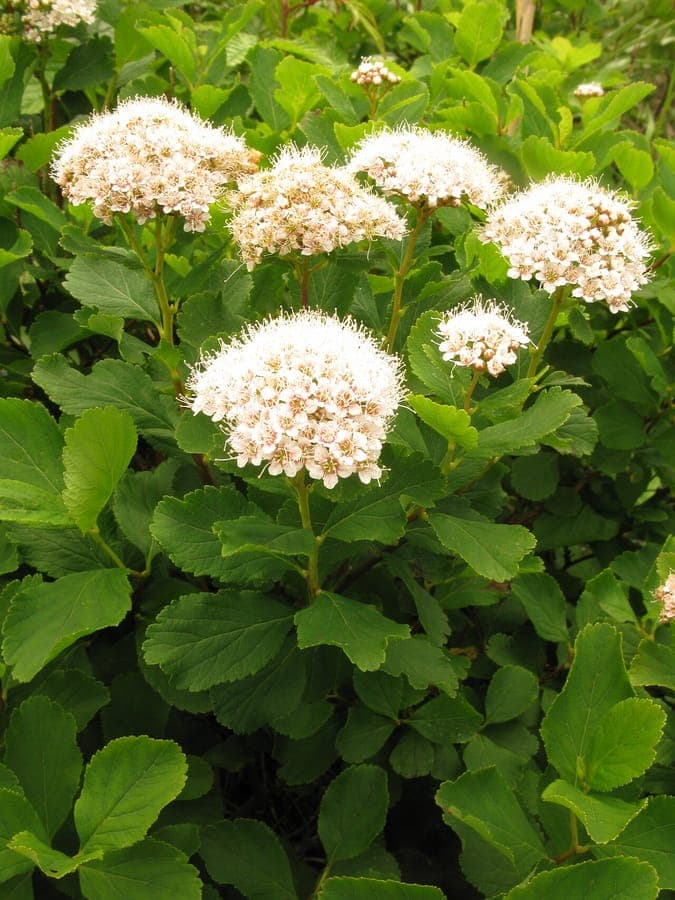
Qwert1234 / Public domain, via Wikimedia Commons
White spirea: complete guide
Spiraea betulifolia
¿Quieres ver White spirea: complete guide en tu jardín?
1 minuto, sin tarjeta de crédito
Overview
Spiraea betulifolia, commonly called White spirea, is a hardy ornamental shrub native to East Siberia, Korea, and Japan. This resilient plant has captured the hearts of gardeners with its delicate white flowers and graceful foliage. Easy to grow and low-maintenance, it is an excellent choice for garden design.
Appearance and bloom
This shrub grows with multiple stems reaching medium height between 1.5 to 2 meters. The foliage is fine and delicate, creating an elegant silhouette throughout the year that remains attractive even in winter. In late spring (May-June), masses of tiny white flowers appear in dense clusters, completely covering the branches in a spectacular floral display. The blooming period lasts several weeks and attracts numerous pollinators including bees and beneficial insects. Each individual flower is tiny but grouped so densely that the effect is stunning and unmissable from across the garden.
Ideal location
White spirea thrives in full sun to partial shade environments with flexibility for many garden situations. For optimal flowering with maximum flower production, provide at least 4-6 hours of direct sunlight daily. The plant tolerates shade but flowers less prolifically with reduced impact. Wind protection is beneficial but not essential as the plant has a sturdy growth habit. East or south-facing positions produce the best results consistently.
Soil
This species is remarkably adaptable and grows in most soil types making it ideal for problem areas. It prefers well-draining, moderately fertile soil with a pH between 6.0 and 7.5. Heavy clay can be improved with sand and compost additions to improve drainage. Good drainage is essential to prevent waterlogging which can cause root problems. Sandy soils benefit from organic matter to increase water retention without becoming boggy.
Watering
Regular watering is important, especially during the growing season and first establishment year. Keep the soil consistently moist but not waterlogged as excess moisture causes stress. Young plants need more frequent watering than established specimens which develop deep roots. Increase watering during dry periods extending from three to five days without rain. Avoid soggy conditions particularly in winter when plants are dormant and water requirements decrease significantly.
Diseño gratis
¿Quieres ver White spirea: complete guide en tu jardín? Crea un diseño gratis ahora.
Pruning
Prune immediately after flowering (June-July) for shaping and rejuvenation while the plant has maximum energy. Remove dead and damaged branches completely, cutting flush to the main stem. Cut back up to 1/3 of the plant to maintain a compact form and encourage bushier regrowth. A major pruning every 3-4 years keeps the plant vigorous and youthful, preventing it from becoming overgrown and leggy with age.
Maintenance calendar
Low-maintenance throughout the year with minimal demands on gardener time. Apply organic mulch annually around the base to support growth and retain moisture during hot weather. No strong fertilizers needed for healthy growth as plants thrive in average fertility. Monitor occasionally for pests or diseases though this is rarely necessary. This plant shows excellent natural resistance to common problems and rarely needs intervention.
Winter hardiness
Extremely hardy, tolerating temperatures down to -30 degrees Celsius making it suitable everywhere. Suitable for all British and Northern European climates from coastal regions to mountain areas. No special winter protection needed under normal conditions. Monitor drainage during wet winters to prevent root rot in low-lying areas with poor natural drainage.
Companion plants
Pair with Philadelphus (mock orange), Weigela, or Forsythia for extended spring interest creating a succession of blooms. Underplant with low-growing perennials like Geranium or Alchemilla creating lovely textural combinations. Combines beautifully with conifers for textural contrast throughout seasons. Design beautiful gardens following expert advice from gardenworld.app/en for inspiration.
Design applications
White spirea works beautifully as a focal point shrub in borders or as a specimen in central positions. The medium height of 1.5-2 meters makes it perfect as a middle layer in tiered plantings. Suitable for informal hedging where delicate texture is valued. Perfect for Japanese gardens where fine foliage is appreciated. In cottage gardens it creates classic elegance that connects seasons.
Closing thoughts
White spirea is a classic ornamental for gardeners of all skill levels from beginners to experienced professionals. With minimal maintenance and years of reliable flowering, it deserves a prominent spot in your garden. Available at specialty nurseries and garden centers throughout the region. Create your dream garden with comprehensive guidance and design assistance from gardenworld.app/en.
¿Quieres ver White spirea: complete guide en tu jardín? Crea un diseño gratis ahora.
Sube una foto, elige un estilo y obtén un diseño fotorrealista con lista de plantas en menos de un minuto.
Más de 10.000 jardines diseñados
Sin tarjeta de crédito


Plantas similares
Siberian crab apple: complete guide
Malus x robusta
Complete guide to the Siberian crab apple (Malus x robusta): location, soil, pruning, winter hardiness and the best companion plants for your garden.
Chinese flowering crabapple (Malus x spectabilis): complete guide
Malus x spectabilis
Meet the Chinese flowering crabapple (Malus x spectabilis): a classic spring bloomer with carmine buds and pink blossom.
Potentilla crassinervia: complete guide
Potentilla crassinervia
Potentilla crassinervia, the Corsican cinquefoil, grows wild on Corsica and Sardinia's peaks. Discover how to grow this hardy alpine rock garden gem.