
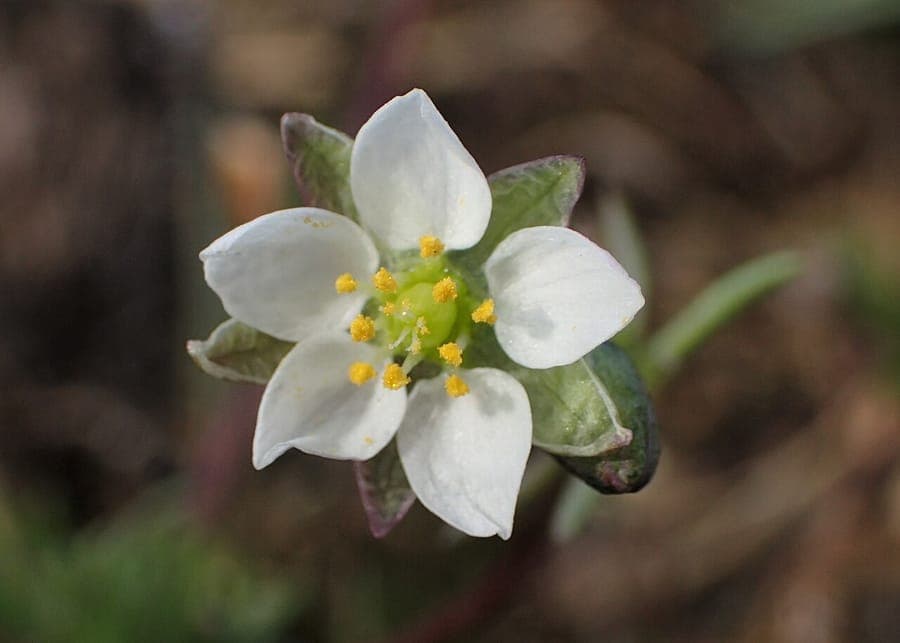
Krzysztof Ziarnek, Kenraiz / CC BY-SA 4.0, via Wikimedia Commons
Spergula morisonii: complete guide
Spergula morisonii
¿Quieres ver Spergula morisonii: complete guide en tu jardín?
1 minuto, sin tarjeta de crédito
Overview
Spergula morisonii, commonly known as Morrison's spurrey or pearlwort spurrey, is an exquisite alpine plant from the Caryophyllaceae family. This delicate herbaceous plant grows naturally in European alpine regions, distributed from France to Poland. The plant is named after botanist Robert Morison and gains increasing popularity among gardeners developing specialized alpine collections.
With its fine needle-like foliage and soft white flowers, this plant offers elegant enhancement to rock gardens and alpine borders. For inspiration regarding alpine garden design, visit gardenworld.app for professional gardening guidance.
This makes starwort an interesting study for botanists and plant collectors. The plant is not toxic and can be safely enjoyed in households with children and animals. The evolutionary adaptation to diverse climates shows the resilience of plants.
The distribution of this plant across so many continents demonstrates how efficient seed dispersal mechanisms can be. Seeds are carried by birds, insects, and water, allowing the plant to spread without human intervention.
Appearance and Bloom Cycle
Spergula morisonii grows as a compact rosette reaching only 5-15 centimeters in height, making it ideal for interplanting among rocks. The leaves are extremely fine, almost thread-like, forming dense rosettes. This delicate needle-like structure gives the plant a refined appearance.
The bloom period is relatively extended, running from April through June, when numerous small flowers emerge. Flowers measure approximately 1 centimeter in diameter and appear in white or very pale pink hues. Following blooming, small seed capsules develop.
The flowers also attract small insects and can play a role in the food chain of small garden inhabitants. This makes starwort not only decorative but also ecologically valuable. A garden with such plants supports natural ecosystems.
The seeds are very small, contributing to their dispersal. They can remain viable in the soil for years and germinate only when conditions are favorable. This is a survival strategy that has proven highly effective in wild habitats.
Ideal Location
Pay careful attention to Spergula morisonii placement. The plant thrives exclusively in fully sunny, exceptionally well-ventilated locations. At least 6-7 hours of direct sunlight daily is essential. Shade leads to plant decline.
The plant excels in rock gardens, alpine troughs, and very well-draining borders. Ensure placement where air circulation is maximal. This prevents fungal diseases that quickly affect this alpine species.
The success of starwort on lean soils lies in its efficient nutrient use. The plant does not demand much, but makes optimal use of what is available. This makes it a sustainable choice for ecological gardening.
Soil Requirements
This is where Spergula morisonii makes significant demands. Absolutely perfect drainage in poor soil is non-negotiable. An ideal mixture comprises 40% coarse sand, 30% gravel/chips, and 30% amendments like peat or very lean potting mix. Rich soils promote uncontrolled growth and plant decline.
The plant thrives on acidic to neutral soils (pH 5.5-7.0). When planting, use specialized alpine soil or create a very well-draining potting mixture. This plant must remain dry both winter and summer.
The pH value affects nutrient availability. Although starwort is tolerant, it grows optimally on acidic to neutral soils. In very alkaline soils, iron deficiencies can occur, though this is rarely problematic.
When examining wild populations, starwort has been found growing on soils containing more than 50% sand. This indicates strong selection for well-draining soils in this plant's evolution.
Watering
Watering is critical for this alpine plant. Water very sparingly, only when the mixture is nearly completely dry (potentially 2-3 weeks between waterings). Overwatering is the primary cause of plant death.
During growth period (April-June), water minimally, perhaps once every 2-3 weeks. After blooming, provide virtually no water. Position the plant in a very dry location during winter, perhaps under an overhang directing rain away.
Diseño gratis
¿Quieres ver Spergula morisonii: complete guide en tu jardín? Crea un diseño gratis ahora.
Pruning
Pruning is essentially unnecessary for Spergula morisonii. The plant naturally forms a compact rosette. Remove only dead leaves and spent flowers to maintain neatness, using a tweezers with care.
When the plant ages (after 3-4 years), renewal through seed propagation is preferable to division, as the plant is delicate and cannot tolerate heavy intervention.
Maintenance Calendar
March-April: Plant in very well-draining mixture. Position on sunny, sheltered spot.
April-June: Bloom season. Water extremely carefully, only during very dry weather.
July-August: Dormancy. No watering at all. Place in dry location.
September-October: Winter preparation. Check drainage. No feeding.
November-February: Winter rest. Plant must remain completely dry. Protect from rainwater.
Winter tasks actually require minimal effort. In most temperate zones, the plant can overwinter without any protection. In areas with extremely cold winters, you can apply a thin layer of mulch, though this is usually unnecessary.
The plant is highly frost-resistant because it has experienced freeze-thaw cycles in its natural habitat. Generations of selection have favored plants with genes that can withstand frost.
Winter Hardiness
Spergula morisonii is winter hardy to approximately -15 degrees Celsius, but the greatest danger is wet feet during winter months. The plant must absolutely remain dry throughout winter. A shelter or protective covering is highly recommended in humid climates.
The plant can suffer frost damage if water freezes within the rosette. Ensure optimal drainage and protection from rainwater.
Companion Plants
Spergula morisonii combines beautifully with other alpine specimens. Suitable companions include:
- Saxifrage species - comparable growth requirements
- Androsace - small alpine rosette-former
- Dianthus alpinus - alpine pink with red flowers
- Veronica prostrata - low-growing blue-flowering companion
- Sedum alpestre - alpine stonecrop with matching dry-soil preferences
Test alpine plant combinations on gardenworld.app before planting together.
Plant Combinations in Practice
When composing plant combinations with Spergula arvensis, it is important to consider bloom periods and colors. The white flowers of starwort contrast beautifully with pink and red flowers of other plants. The distribution of flowers over three months (April through June) ensures prolonged bloom.
Frequently Asked Questions About This Plant
Do I need to prune the plant? In most cases no, but carefully removing dead parts helps. Can I propagate the plant? Yes, via seeds sown in moist soil. How long does a plant live? Usually 3-5 years in good conditions.
What are the benefits of this plant in ecological gardens? They provide nectar for insects, stabilize slopes, and require minimal maintenance. This makes them perfect for sustainable garden design.
Seasonal Care Tips
In spring: ensure good drainage and remove dead parts from previous season. In summer: minimal watering is sufficient. In autumn: check the plant for diseases. In winter: no special maintenance needed.
The plant grows optimally at temperatures between 15-25 degrees Celsius. In extremely hot summers, some shade can be beneficial.
Conclusion
Spergula morisonii represents a challenging yet highly rewarding plant for serious alpine gardeners. The delicate needle-like foliage and graceful flowers bring refinement to rock gardens. Success depends upon perfect drainage and prevention of overwatering.
Need professional guidance for your alpine garden? Visit gardenworld.app for detailed alpine garden design guidance. The app helps compose alpine collections that grow brilliantly.
Searching for Spergula morisonii? This alpine rarity is not available in all garden centers. Check specialized alpine nurseries through garden centers or online alpine plant collectors.
¿Quieres ver Spergula morisonii: complete guide en tu jardín? Crea un diseño gratis ahora.
Sube una foto, elige un estilo y obtén un diseño fotorrealista con lista de plantas en menos de un minuto.
Más de 10.000 jardines diseñados
Sin tarjeta de crédito


Plantas similares
Dianthus karami: complete guide
Dianthus karami
Dianthus karami is a rare Lebanese mountain pink with fringed pink blooms on limestone cliffs, ideal for rock gardens and troughs.
Sicilian pink: complete guide
Dianthus siculus
Discover Dianthus siculus, an elegant purple bloomer from Sicily. Cultivation, June-September flowering and garden combinations.
Alpine mouse-ear chickweed: complete guide
Cerastium pedunculatum
Full growing guide for Cerastium pedunculatum: ideal location, soil, watering, winter hardiness, and companion plants for rock gardens.