
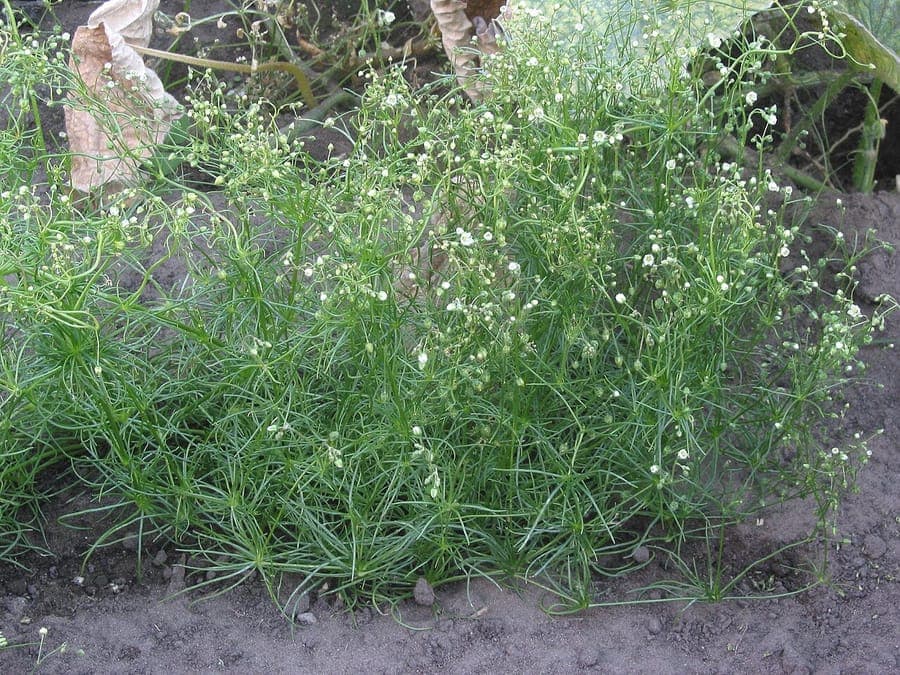
Rasbak / CC BY-SA 3.0, via Wikimedia Commons
Spergula arvensis: complete guide
Spergula arvensis
¿Quieres ver Spergula arvensis: complete guide en tu jardín?
1 minuto, sin tarjeta de crédito
Overview
Spergula arvensis, commonly known as starwort or corn spurrey, is a fascinating plant belonging to the Caryophyllaceae family. This plant has naturally spread across Europe, Siberia, and North Africa, adapting to various growing conditions worldwide. Gardeners increasingly appreciate it for its delicate needle-like foliage and tiny white flowers that create an ethereal appearance in garden beds.
Historically viewed as a field weed, akkerspurrie is now gaining recognition among contemporary gardeners seeking interesting low-growing plants with distinctive character. For more information on integrating wild plants into your garden design, visit gardenworld.app.
This makes starwort an interesting study for botanists and plant collectors. The plant is not toxic and can be safely enjoyed in households with children and animals. The evolutionary adaptation to diverse climates shows the resilience of plants.
The distribution of this plant across so many continents demonstrates how efficient seed dispersal mechanisms can be. Seeds are carried by birds, insects, and water, allowing the plant to spread without human intervention.
Appearance and Bloom Cycle
This plant grows as a compact herb, typically reaching 15-30 centimeters in height. Its most striking feature is the fine, needle-like foliage arranged in rosettes, giving an almost grass-like appearance. During spring, typically April through June, delicate white five-petaled flowers emerge at the tips of thin stems.
Each flower measures only a few millimeters in diameter, yet they appear in abundance, creating a magical tapestry. Following blooming, the plant produces small seed capsules containing numerous seeds for self-propagation.
The flowers also attract small insects and can play a role in the food chain of small garden inhabitants. This makes starwort not only decorative but also ecologically valuable. A garden with such plants supports natural ecosystems.
The seeds are very small, contributing to their dispersal. They can remain viable in the soil for years and germinate only when conditions are favorable. This is a survival strategy that has proven highly effective in wild habitats.
Ideal Location
Spergula arvensis thrives in full sun exposure, receiving at least 6 hours of direct sunlight daily. While it tolerates light shade, the plant becomes less compact and produces fewer flowers in shadier conditions. Ensure adequate air circulation at the planting location to prevent fungal issues.
This plant excels in rock gardens, low-growing borders, and between gravel pathways as a charming ground cover. Visit gardenworld.app to discover elegant ways to incorporate this plant into your garden design.
The success of starwort on lean soils lies in its efficient nutrient use. The plant does not demand much, but makes optimal use of what is available. This makes it a sustainable choice for ecological gardening.
Soil Requirements
Spergula arvensis is remarkably unfussy regarding soil conditions, making it an excellent choice for challenging locations. The plant thrives on lean, sandy soils and tolerates dry conditions well. Excellent drainage is essential - waterlogging must be prevented absolutely, as it causes root rot.
A neutral to slightly acidic pH (6.0-7.5) is ideal. When working with heavy clay soils, improve drainage by incorporating sand and humus. Spergula arvensis also grows well in containers and planters with standard potting soil.
The pH value affects nutrient availability. Although starwort is tolerant, it grows optimally on acidic to neutral soils. In very alkaline soils, iron deficiencies can occur, though this is rarely problematic.
When examining wild populations, starwort has been found growing on soils containing more than 50% sand. This indicates strong selection for well-draining soils in this plant's evolution.
Watering
Once established, Spergula arvensis requires minimal watering. Water regularly during the growing season, but allow the soil to dry somewhat between waterings. Avoid waterlogging entirely. During dry summers, you may increase watering slightly, but always maintain moderation.
Young plants need more consistent moisture for 2-3 weeks after planting. Thereafter, gradually reduce watering frequency. Winter requires virtually no supplementary watering.
Diseño gratis
¿Quieres ver Spergula arvensis: complete guide en tu jardín? Crea un diseño gratis ahora.
Pruning
Spergula arvensis demands minimal pruning maintenance. The plant naturally forms a compact, attractive shape. Remove any withered or damaged portions to maintain neatness. Formal pruning is typically unnecessary.
For more compact growth, gently pinch stem tips during early spring. This encourages bushier development. After flowering, remove spent seed heads if you want to prevent self-seeding, unless you prefer new plants to naturalize.
Maintenance Calendar
March-April: Prepare beds and plant. Ensure well-draining soil and position in sunny location.
April-June: Bloom season. Monitor watering needs and enjoy magnificent white flowers.
July-September: Summer maintenance. Minimal watering (only during extreme drought). Watch for disease.
October-November: Remove dead plant material. Prepare for winter dormancy.
December-February: Winter rest period. No maintenance required. Plant is extremely winter hardy.
Winter tasks actually require minimal effort. In most temperate zones, the plant can overwinter without any protection. In areas with extremely cold winters, you can apply a thin layer of mulch, though this is usually unnecessary.
The plant is highly frost-resistant because it has experienced freeze-thaw cycles in its natural habitat. Generations of selection have favored plants with genes that can withstand frost.
Winter Hardiness
Spergula arvensis is exceptionally winter hardy, tolerating temperatures down to -20 degrees Celsius. In its native European regions, the plant overwinters without difficulty. Even in severe winters, the plant survives intact. Self-sown seedlings often emerge in spring for continuous establishment.
In wet winters with waterlogging risks, ensure proper drainage. Allow water to flow away freely from the planting area.
Companion Plants
Starwort combines beautifully with other low herbaceous plants. Suitable companions include:
- Thyme species (Thymus) - similar height and water requirements
- Sandwort (Arenaria) - comparable appearance and dry-soil preferences
- Sedum varieties - succulents with matching drainage needs
- Subulata phlox - similar bloom time and growth pattern
- Mouse-ear chickweed (Cerastium) - low-growing companion with white flowers
Test plant combinations on paper first (see gardenworld.app) before planting together.
Plant Combinations in Practice
When composing plant combinations with Spergula arvensis, it is important to consider bloom periods and colors. The white flowers of starwort contrast beautifully with pink and red flowers of other plants. The distribution of flowers over three months (April through June) ensures prolonged bloom.
Frequently Asked Questions About This Plant
Do I need to prune the plant? In most cases no, but carefully removing dead parts helps. Can I propagate the plant? Yes, via seeds sown in moist soil. How long does a plant live? Usually 3-5 years in good conditions.
What are the benefits of this plant in ecological gardens? They provide nectar for insects, stabilize slopes, and require minimal maintenance. This makes them perfect for sustainable garden design.
Seasonal Care Tips
In spring: ensure good drainage and remove dead parts from previous season. In summer: minimal watering is sufficient. In autumn: check the plant for diseases. In winter: no special maintenance needed.
The plant grows optimally at temperatures between 15-25 degrees Celsius. In extremely hot summers, some shade can be beneficial.
Conclusion
Spergula arvensis represents a practical and attractive choice for gardeners seeking low-growing, low-maintenance plants with interesting structural qualities. The fine foliage and delicate white flowers add texture to any garden, while the plant proves highly resistant to drought and nutrient-poor conditions.
Need more inspiration for your garden design? Visit gardenworld.app for professional guidance. The app helps create the perfect plant composition for your space, including detailed plant information and maintenance tips. With Spergula arvensis as a foundation, you'll create a low-maintenance planting that performs reliably year after year.
Searching for Spergula arvensis? Many garden centers stock this plant. Check with local garden centres for availability.
¿Quieres ver Spergula arvensis: complete guide en tu jardín? Crea un diseño gratis ahora.
Sube una foto, elige un estilo y obtén un diseño fotorrealista con lista de plantas en menos de un minuto.
Más de 10.000 jardines diseñados
Sin tarjeta de crédito


Plantas similares
Dianthus karami: complete guide
Dianthus karami
Dianthus karami is a rare Lebanese mountain pink with fringed pink blooms on limestone cliffs, ideal for rock gardens and troughs.
Sicilian pink: complete guide
Dianthus siculus
Discover Dianthus siculus, an elegant purple bloomer from Sicily. Cultivation, June-September flowering and garden combinations.
Alpine mouse-ear chickweed: complete guide
Cerastium pedunculatum
Full growing guide for Cerastium pedunculatum: ideal location, soil, watering, winter hardiness, and companion plants for rock gardens.