
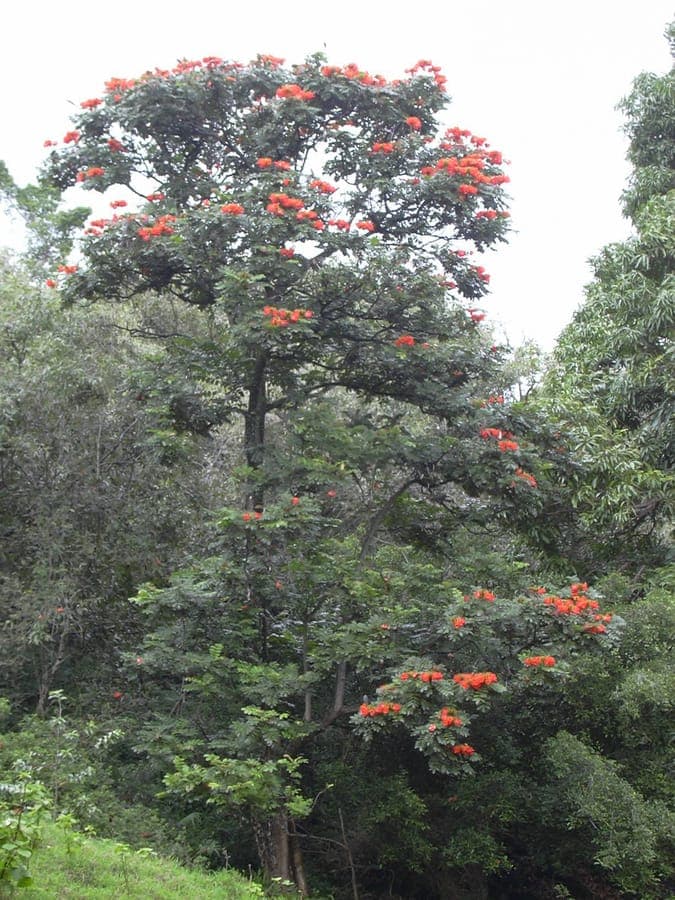
Forest & Kim Starr / CC BY 3.0, via Wikimedia Commons
African Tulip Tree: complete guide
Spathodea campanulata
¿Quieres ver African Tulip Tree: complete guide en tu jardín?
1 minuto, sin tarjeta de crédito
Overview
The African tulip tree (Spathodea campanulata) is a magnificent flowering tree native to West Africa. This fascinating tree is renowned for its striking, fiery-red flowers that resemble tulips. With its imposing growth and spectacular blooms, it is a true eye-catcher in any garden. The tree belongs to the Bignoniaceae family and is also known as the "flame tree" or "African flame." In milder climates, this tree can create fantastic visual effects with its dense crown and glossy foliage.
The African tulip tree grows fastest in tropical and subtropical climates, but can also thrive in warmer temperate zones. The tree can reach up to 20 meters high and provides excellent shade. For garden enthusiasts in milder regions, this is an interesting choice that will attract considerable attention.
Appearance and Bloom
The African tulip tree is an impressive specimen with a broad, dense crown. The trunk is robust and the bark is dark gray to brown. The leaves are large, pinnate and glossy green, adding wonderful texture to the overall composition.
The flowers are the most striking feature. These bell-shaped blooms appear in clusters at the branch tips and display an intense orange-red to scarlet color. They are usually 6-7 centimeters long and have thick, fleshy petals. The flowers typically appear in spring and early summer, with occasional blooms later in the season.
After flowering, long brown seed pods develop containing numerous seeds. These pod fruits also create an interesting architectural element in the tree.
Ideal Location
The African tulip tree thrives best in a sunny position where it receives at least 6-8 hours of direct sunlight per day. Full sun promotes the best flowering. Do not place it in shade, as this will result in fewer flowers and a less dense crown.
Ensure the tree has plenty of space to grow, as it can develop extensive root systems. Plant it at least 5-10 meters away from houses, drainage systems or other underground infrastructure. A sheltered location where the tree receives wind and frost protection is ideal, especially in cooler regions.
Soil
The African tulip tree is not particularly fussy about soil composition, but thrives best in well-draining, fertile soil. The tree prefers neutral to slightly acidic soil (pH 6.0 to 7.5). Heavy clay soils should be improved with organic matter and sand to prevent waterlogging.
For planting, you can fill the hole with a mixture of potting soil, garden compost and sand. This ensures good drainage while retaining adequate nutrients. Mulching around the tree with 5-10 centimeters of compost helps keep the soil moist and regulates temperature.
Diseño gratis
¿Quieres ver African Tulip Tree: complete guide en tu jardín? Crea un diseño gratis ahora.
Watering
Regular watering is important, especially in the first growing year. Ensure the soil is moist rather than dry, but not waterlogged. During dry periods, water weekly, although well-established trees are fairly drought-tolerant.
In areas with regular rainfall, natural rain may be sufficient. However, during dry seasons, water deeply to encourage roots to penetrate the soil. Ensure water drains well, as standing water can rot roots.
Pruning
The African tulip tree requires minimal pruning. Remove dead, damaged or diseased branches as soon as you notice them. Also prune branches that cross or grow inward.
You can perform light formative pruning in late spring to maintain crown shape. Heavy pruning can reduce flowering, so limit this to absolute necessity. Always use sharp, clean tools and disinfect between cuts.
Maintenance Calendar
Spring: plant new trees, apply fertilizer, check for diseases and pests. Summer: water regularly, remove dead branches, enjoy the blooms. Fall: reduce fertilization, prepare for winter. Winter: protect young trees in cold climates, remove dead leaves.
Winter Hardiness
The African tulip tree is frost-sensitive and thrives best in zones where temperatures do not drop below 7-10 degrees Celsius. In cold regions, it can be grown as a container plant and moved indoors for winter. In mild climates, it can overwinter outdoors, but young trees should be protected with burlap or similar material.
Companion Plants
Perfect planting partners for the African tulip tree are other tropical and subtropical shrubs and trees. Consider:
- Plumbago (blue flowers)
- Bougainvillea (pink or purple flowers)
- Lantana (multicolored flowers)
- Hibiscus (red or yellow flowers)
These combinations create a beautiful, colorful tropical effect.
Conclusion
The African tulip tree is a spectacular addition to warmer gardens. With its striking red flowers and robust growth, it offers years of beauty and shade. Provide good drainage, regular watering and a sunny location, and this tree will reward you with stunning blooms. Ideally available at leading garden centers worldwide. For more inspiration on gardenworld.app.
¿Quieres ver African Tulip Tree: complete guide en tu jardín? Crea un diseño gratis ahora.
Sube una foto, elige un estilo y obtén un diseño fotorrealista con lista de plantas en menos de un minuto.
Más de 10.000 jardines diseñados
Sin tarjeta de crédito


Plantas similares
Tabebuia pallida: complete guide
Tabebuia pallida
Full growing guide for Tabebuia pallida: location, soil, watering, pruning, hardiness and companion plants for this tropical trumpet tree.
Northern catalpa: complete guide
Catalpa speciosa
Everything about northern catalpa (Catalpa speciosa): bold white flowers, fast growth, and how to grow this striking tree in your garden.
Desert willow: complete guide to Chilopsis linearis
Chilopsis linearis
Complete growing guide for desert willow (Chilopsis linearis): sun, soil, flowering, pruning, and winter care for this spectacular flowering small tree.