
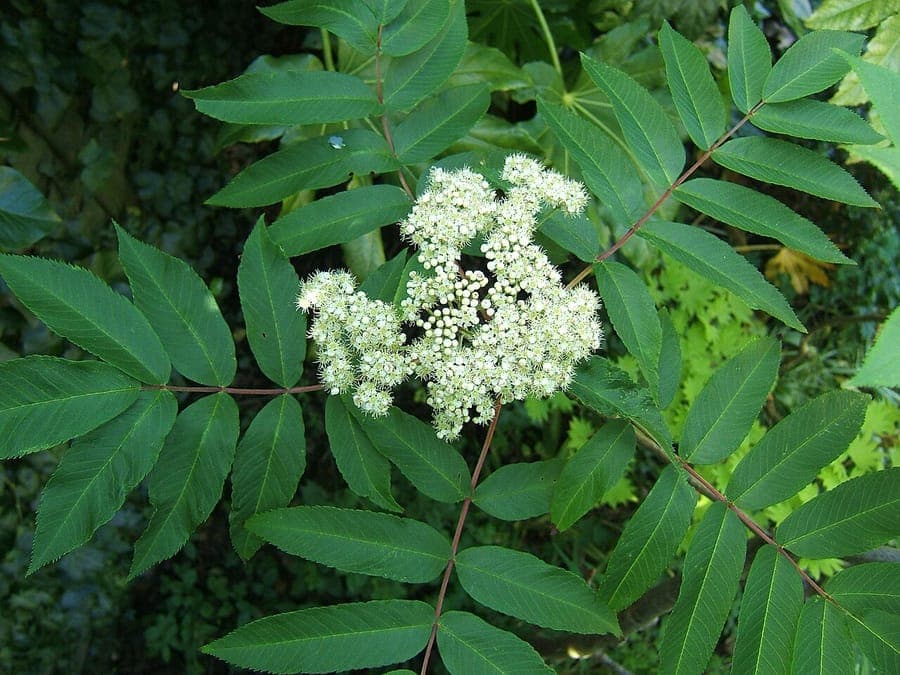
MPF / CC BY-SA 3.0, via Wikimedia Commons
Sargent's rowan: complete guide
Sorbus sargentiana
¿Quieres ver Sargent's rowan: complete guide en tu jardín?
1 minuto, sin tarjeta de crédito
Overview
Sargent's rowan, scientifically Sorbus sargentiana, is an elegant tree from the rose family (Rosaceae). This native Chinese tree is known for its spectacular autumn display - brilliant red berries that remain on branches for months and beautiful golden to orange leaf color. The tree reaches a height of 8-12 meters and forms a pleasant oval silhouette.
Sargent's rowan is hardy to USDA zone 6 and grows well in temperate climates. It offers value year-round - white flowers in spring, green foliage in summer, spectacular fall colors, and red berries that persist deep into winter. Birds and other wildlife eagerly consume the berries.
Appearance & bloom
The tree has compound leaves made up of many small leaflets. In summer, leaves are dark green and provide an attractive texture effect. In autumn, leaves color beautifully yellow to orange before dropping.
White flowers appear in May in large, flat clusters. These flowers are inconspicuous but attract many pollinating insects. After pollination, round red berries form that reach 8-10 mm across. These berries remain on the tree deep into winter.
Ideal location
Place Sargent's rowan in a spot with full sun to partial shade. The tree grows best with at least 4-6 hours of direct sunlight daily. In warm climates, light afternoon shade can be present.
The tree thrives in open locations with good air circulation. This prevents fungal diseases and promotes strong growth. Wind protection is useful because the tree can be susceptible to storm damage.
Soil requirements
Sargent's rowan grows well in well-draining, fertile soil. The soil must not be waterlogged. Sandy loam and loamy soils are ideal. In heavy clay, the tree can struggle, so improve drainage with sand and organic matter.
A pH of 6.0 to 7.5 is ideal. Poor soils can be helped with compost or slow-release fertilizer. Mulch around the trunk helps retain soil moisture.
Diseño gratis
¿Quieres ver Sargent's rowan: complete guide en tu jardín? Crea un diseño gratis ahora.
Watering
Water regularly, especially during the first growing year and in dry periods. The tree needs about 2-3 cm of water per week. Deep watering encourages deep rooting. In wet winters, extra watering may not be needed.
Once established, the tree tolerates drought better than many other trees. In extremely dry periods, supplemental watering can be beneficial.
Pruning
Pruning is not strictly necessary for healthy growth. In the first years, light pruning can help form a strong structure. Remove dead, diseased, or crossing branches.
Avoid heavy pruning because this can promote fungal diseases. Prune during dormancy for least stress.
Maintenance calendar
Spring: Check for insect damage. Start feeding if needed. Saplings can be planted. Summer: Enjoy the flowers, water in dry periods, monitor for pests. Fall: Admire the fall colors and red berries. Collect seed if desired. Winter: Minimal care. Pruning can be done in late winter.
Winter hardiness
Sargent's rowan is hardy to USDA zone 6. This means it survives temperatures to -18 degrees Celsius. In colder areas, damage to young trees can occur during extreme frost.
The tree is not sensitive to snow damage because branches are reasonably strong.
Companion plants
Mix Sargent's rowan with other trees for a mixed woodland effect. Low-growing shrubs like rhododendrons or azaleas fit well beneath the tree. The red berries contrast nicely with dark green foliage.
Avoid strong growers close to the trunk.
Closing
Sargent's rowan is a beautiful year-round statement in the garden. White flowers in spring, green foliage in summer, vibrant fall colors, and long-lasting red berries make this tree essential for gardens wanting four-season interest. This tree also provides food for birds.
Visit gardenworld.app for more inspiration about fruit trees and ornamental trees. Discover more garden designs and planting advice at gardenworld.app.
¿Quieres ver Sargent's rowan: complete guide en tu jardín? Crea un diseño gratis ahora.
Sube una foto, elige un estilo y obtén un diseño fotorrealista con lista de plantas en menos de un minuto.
Más de 10.000 jardines diseñados
Sin tarjeta de crédito


Plantas similares
Siberian crab apple: complete guide
Malus x robusta
Complete guide to the Siberian crab apple (Malus x robusta): location, soil, pruning, winter hardiness and the best companion plants for your garden.
Chinese flowering crabapple (Malus x spectabilis): complete guide
Malus x spectabilis
Meet the Chinese flowering crabapple (Malus x spectabilis): a classic spring bloomer with carmine buds and pink blossom.
Potentilla crassinervia: complete guide
Potentilla crassinervia
Potentilla crassinervia, the Corsican cinquefoil, grows wild on Corsica and Sardinia's peaks. Discover how to grow this hardy alpine rock garden gem.