
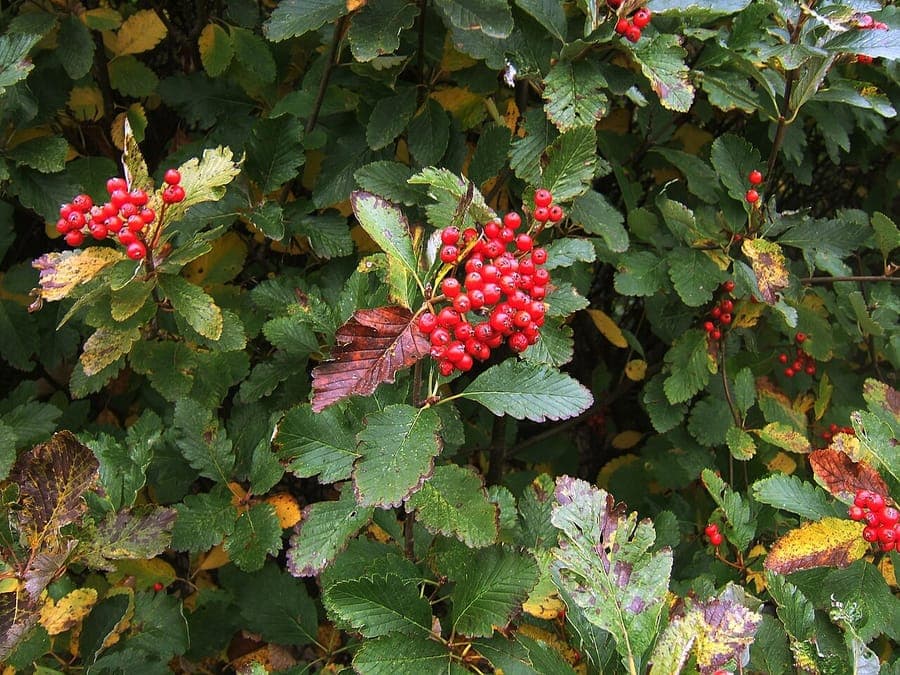
MPF / CC BY-SA 3.0, via Wikimedia Commons
Vosges Whitebeam: complete guide
Sorbus mougeotii
¿Quieres ver Vosges Whitebeam: complete guide en tu jardín?
1 minuto, sin tarjeta de crédito
Overview
Sorbus mougeotii, better known as Vosges whitebeam, is a compact alpine tree from Europe. This distinctive tree is characterized by silvery-white leaves, elegant white flowers, and bird-favored red berries. Perfect for mountain gardens or as a specimen in small, sunny spaces.
Appearance and Bloom
Vosges whitebeam is a compact tree reaching 6-10 meters tall. Leaves are compound consisting of 11-15 fine leaflets silvery-white on the undersides, providing a characteristic silver sheen. In May white flowers appear in flat clusters. The main attraction, however, is the red to orange-red berries persisting September through December. Autumn foliage colors beautifully in red.
Ideal Location
Choose a spot with full sun to light partial shade. Minimum 5-6 hours of sunlight ensures optimal growth and berry set. The tree feels at home on rocky, sloping sites. Protect from strong, drying winds. Highly suitable for small gardens and alpine gardens.
Soil
Well-drained, moderately fertile soil is preferred. Sorbus mougeotii grows better in sandy, gritty soils than in heavy clay. A pH of neutral to slightly acidic (6.0-7.5) is ideal. Add gravel to heavy soils. Definitely not waterlogged.
Watering
Moderate watering. Young trees need regular watering until established. Once established, the tree tolerates drought well. Actually it thrives in drier environments. Overwatering causes root problems. Water regularly during extreme heat.
Diseño gratis
¿Quieres ver Vosges Whitebeam: complete guide en tu jardín? Crea un diseño gratis ahora.
Pruning
Minimal pruning required. Remove dead or diseased branches in late winter. Train in youth to central stem. Maintain natural form. After years underprune to keep base clear. Heavy pruning wounds don't heal well.
Maintenance Calendar
Spring: Check for winter damage, very light feeding. Summer: Water during extreme dry spells. Autumn: Berries form, fall color. Winter: Protect young trees, birds enjoy berries.
Winter Hardiness
Sorbus mougeotii is very winter hardy, to approximately -25 to -30 degrees Celsius. Alpine trees are adapted to severe winters. Mature specimens survive without protection. Young trees may benefit from mulching in their first winter.
Companion Plants
Combine with other alpine plants like Pinus mugo, Larix, or Rhododendron. Low-growing plants like Sedum, Sempervivum, or alpine Phlox form nice underplanting. In alpine gardens it serves as a valuable structural plant.
Closing Thoughts
Sorbus mougeotii is a valuable, compact tree for alpine gardens and small spaces. The silvery-white leaves and red berries remain attractive throughout the season. Perfect as a focal plant in alpine gardens. Find specimens at specialist garden centers. More info at gardenworld.app/en and gardenworld.app/nl.
¿Quieres ver Vosges Whitebeam: complete guide en tu jardín? Crea un diseño gratis ahora.
Sube una foto, elige un estilo y obtén un diseño fotorrealista con lista de plantas en menos de un minuto.
Más de 10.000 jardines diseñados
Sin tarjeta de crédito


Plantas similares
Siberian crab apple: complete guide
Malus x robusta
Complete guide to the Siberian crab apple (Malus x robusta): location, soil, pruning, winter hardiness and the best companion plants for your garden.
Chinese flowering crabapple (Malus x spectabilis): complete guide
Malus x spectabilis
Meet the Chinese flowering crabapple (Malus x spectabilis): a classic spring bloomer with carmine buds and pink blossom.
Potentilla crassinervia: complete guide
Potentilla crassinervia
Potentilla crassinervia, the Corsican cinquefoil, grows wild on Corsica and Sardinia's peaks. Discover how to grow this hardy alpine rock garden gem.