
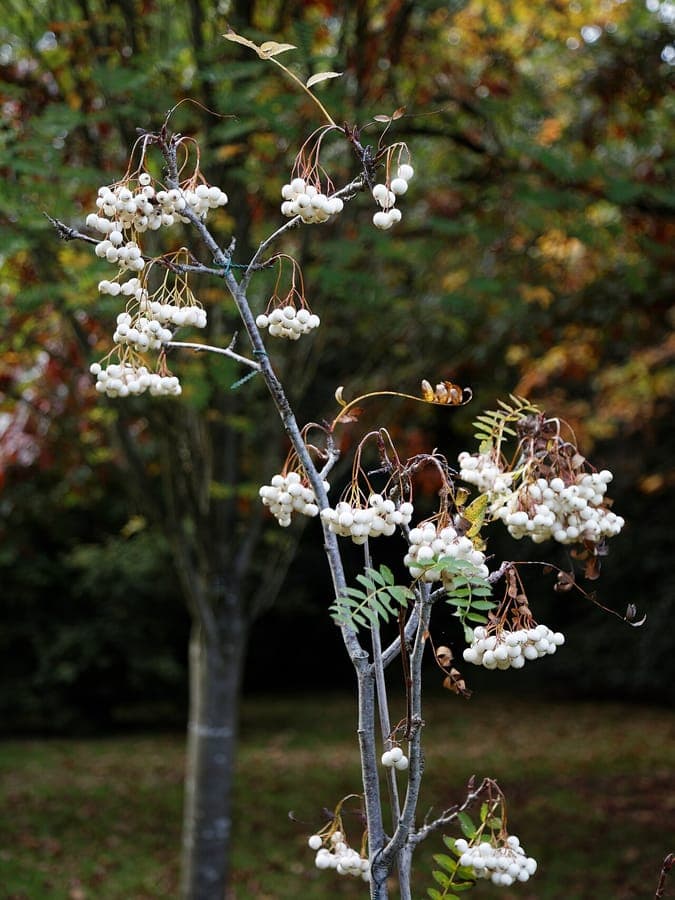
Acabashi / CC BY-SA 4.0, via Wikimedia Commons
Kashmir Rowan: complete guide
Sorbus cashmiriana
¿Quieres ver Kashmir Rowan: complete guide en tu jardín?
1 minuto, sin tarjeta de crédito
Overview
Kashmir Rowan is a graceful mountain tree from the Rose family, native to the Western Himalayas and Afghanistan. This medium-sized tree was first botanically described in 1901 and is known today for its spectacular pale berries and elegant structure. It represents a valuable addition for gardens seeking bird food and year-round interest.
Appearance and Bloom
This tree reaches 8 to 10 meters in height, forming an upright, oval crown. In May, inconspicuous yellowish flowers appear in clusters, followed by magnificent fruits. The fruits are round to slightly flattened, approximately 1 to 1.5 centimeters in diameter, with striking pale white to salmon appearance. The foliage changes to red-orange tones in autumn.
Ideal Location
Choose a spot with full sun to light shade for best fruiting and color. Kashmir Rowan grows well in temperate climates and prefers a location with good air circulation. Ideally, plant it as a specimen tree in an open space where the form can be fully appreciated.
Soil
This tree thrives in well-draining soil with average fertility. All garden soil types suit it, provided they are not waterlogged. A neutral to slightly acidic pH (6.5-7.5) is ideal. Improve poor soil with humus or compost at planting time.
Watering
Once established, Kashmir Rowan is moderately drought-tolerant. Water regularly during the first year after planting. Thereafter, rainfall usually suffices, though watering during dry periods promotes fruiting. Avoid excessive watering, which can promote fungal diseases.
Diseño gratis
¿Quieres ver Kashmir Rowan: complete guide en tu jardín? Crea un diseño gratis ahora.
Pruning
Pruning is minimally necessary. Remove dead, damaged, or crossing branches in winter when the tree is dormant. Shape lightly during youth, but avoid heavy pruning.
Maintenance Calendar
Spring: Monitor for new growth and remove any winter damage. Summer: Water during dry periods. Autumn: Enjoy magnificent fruits and golden foliage coloring. Winter: Prune dead branches. Leave berries for birds to feed on.
Winter Hardiness
Kashmir Rowan is hardy to approximately -15 to -20 degrees Celsius, depending on the origin of planting material. In very cold regions (below -20 degrees), protection of young trees offers benefit.
Companion Plants
Combine with other mountain shrubs and trees that provide bird food, such as Juniperus, Ilex, and other Sorbus species. Underplanting with mountain heather (Erica) or dwarf spiraea creates a picturesque mountain landscape.
Closing
Kashmir Rowan brings elegance, structure, and bird food to modern gardens. With its unique pale berries and hardiness, it represents a valuable investment for gardeners seeking something both elegant and practical. Find this tree at select garden centers and specialist nurseries. Visit gardenworld.app for more inspiration on incorporating mountain shrubs into your landscaping.
With minimal care, you will enjoy your Kashmir Rowan's spectacular fruits and elegant form for many years.
¿Quieres ver Kashmir Rowan: complete guide en tu jardín? Crea un diseño gratis ahora.
Sube una foto, elige un estilo y obtén un diseño fotorrealista con lista de plantas en menos de un minuto.
Más de 10.000 jardines diseñados
Sin tarjeta de crédito


Plantas similares
Siberian crab apple: complete guide
Malus x robusta
Complete guide to the Siberian crab apple (Malus x robusta): location, soil, pruning, winter hardiness and the best companion plants for your garden.
Chinese flowering crabapple (Malus x spectabilis): complete guide
Malus x spectabilis
Meet the Chinese flowering crabapple (Malus x spectabilis): a classic spring bloomer with carmine buds and pink blossom.
Potentilla crassinervia: complete guide
Potentilla crassinervia
Potentilla crassinervia, the Corsican cinquefoil, grows wild on Corsica and Sardinia's peaks. Discover how to grow this hardy alpine rock garden gem.