
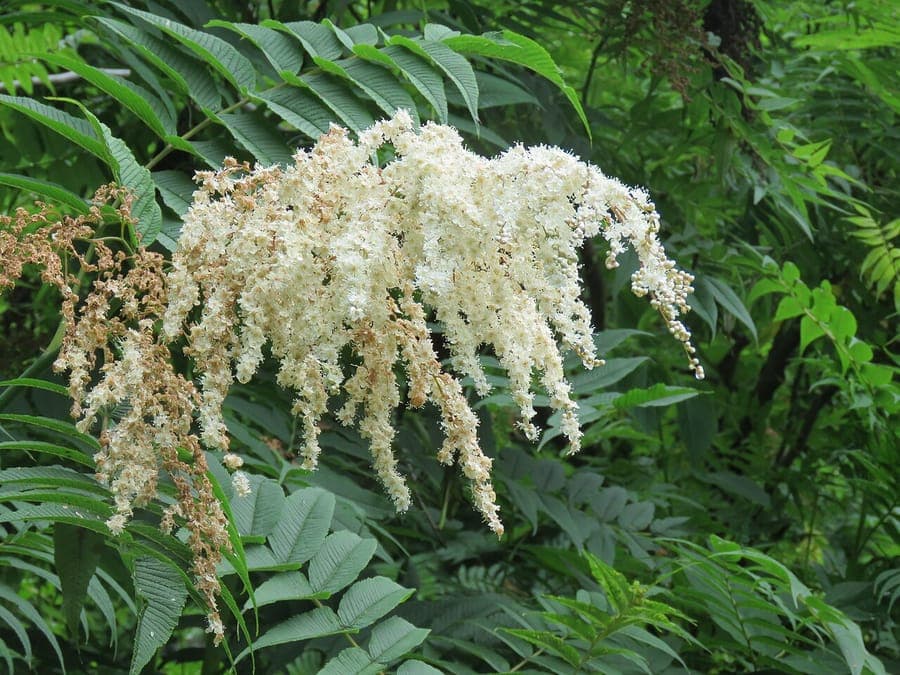
Vinayaraj / CC BY-SA 4.0, via Wikimedia Commons
Himalayan sorbaria: complete guide
Sorbaria tomentosa
¿Quieres ver Himalayan sorbaria: complete guide en tu jardín?
1 minuto, sin tarjeta de crédito
Overview
Himalayan sorbaria (Sorbaria tomentosa), also called Kashmir false spiraea, is an elegant ornamental shrub native to the Himalayan region. This member of the Rosaceae family reaches 3-6 feet in height and width. The plant produces stunning white, feathery flower panicles in summer that transform the garden landscape.
While not as commonly cultivated as some relatives, this shrub is invaluable for gardens seeking height, texture, and subtle elegance.
Appearance and Bloom
Himalayan sorbaria is an upright shrub with finely compound leaves resembling fern foliage. These leaves consist of numerous small leaflets arranged along a central stem. The foliage turns warm yellow in autumn.
Flowers appear in June to July in long, feathery panicles. These panicles consist of countless tiny, star-shaped white flowers packed closely together. A mature plant can display ten or more flower panicles simultaneously.
Ideal Location
Himalayan sorbaria thrives in partial to deep shade. The plant tolerates full sun but appreciates protection from afternoon sun in hot climates. In cooler regions, full sun is acceptable.
Use this shrub in shade gardens where many plants struggle. Plant along woodland edges, beneath large trees, or in northeast-facing locations. It works well in mixed borders, providing structure and height.
Soil
Himalayan sorbaria prefers consistently moist to moderately wet soils. It dislikes dry conditions. Acidic to neutral soil is preferred (pH 5.5-6.5).
Amend soil generously with organic matter at planting for moisture retention and nutrients. Apply mulch annually around the plant.
Diseño gratis
¿Quieres ver Himalayan sorbaria: complete guide en tu jardín? Crea un diseño gratis ahora.
Watering
Regular watering is essential, especially during the growing season and dry periods. The soil should never completely dry out. Deep watering several times weekly is better than shallow daily sprinkling.
In drier climates, consistent moisture may be required for half the growing season. Once established, the plant tolerates some dryness but performs better with consistent moisture.
Pruning
Himalayan sorbaria grows naturally in an attractive form requiring minimal pruning. Remove dead or damaged branches in spring. You may remove crowded twigs to maintain neater shape.
Pruning after blooming in October can keep the plant more compact, though not essential. Avoid heavy pruning during the growing season.
Maintenance Calendar
Spring: Add mulch, prune dead wood. Summer: Water regularly, enjoy flowers. Fall: Observe autumn foliage color. Winter: Minimal activity.
Winter Hardiness
Himalayan sorbaria is hardy to USDA zone 5 (-20 to -30 degrees Fahrenheit). In colder areas, winter protection may be helpful. The plant can freeze back to ground level and resprout in spring.
Companion Plants
Pair Himalayan sorbaria with other shade-tolerant plants. Hostas and other foliage plants contrast beautifully with feathery flowers. Blue astilbes, red rodgersia, and white bridal-wreath create harmonious combinations.
Blue forget-me-nots and hellebores provide early color before sorbaria blooms.
Conclusion
Himalayan sorbaria is a valuable plant for creating graceful shade gardens. With proper care, it remains a shrub of beauty for many years. Find plants at specialty nurseries and large garden centers.
Ideal for gardenworld.app users seeking to transform shaded areas with style and elegance.
¿Quieres ver Himalayan sorbaria: complete guide en tu jardín? Crea un diseño gratis ahora.
Sube una foto, elige un estilo y obtén un diseño fotorrealista con lista de plantas en menos de un minuto.
Más de 10.000 jardines diseñados
Sin tarjeta de crédito


Plantas similares
Siberian crab apple: complete guide
Malus x robusta
Complete guide to the Siberian crab apple (Malus x robusta): location, soil, pruning, winter hardiness and the best companion plants for your garden.
Chinese flowering crabapple (Malus x spectabilis): complete guide
Malus x spectabilis
Meet the Chinese flowering crabapple (Malus x spectabilis): a classic spring bloomer with carmine buds and pink blossom.
Potentilla crassinervia: complete guide
Potentilla crassinervia
Potentilla crassinervia, the Corsican cinquefoil, grows wild on Corsica and Sardinia's peaks. Discover how to grow this hardy alpine rock garden gem.