
Alvesgaspar / CC BY-SA 3.0, via Wikimedia Commons
Sonchus maritimus: complete guide
Sonchus maritimus
¿Quieres ver Sonchus maritimus: complete guide en tu jardín?
1 minuto, sin tarjeta de crédito
Overview
Sonchus maritimus, commonly known as marsh sowthistle or maritime milk-thistle, is an interesting Mediterranean plant from the Asteraceae family (daisy or composite flower family). This plant grows naturally along coasts around the Mediterranean Sea and in Asia, from North Africa to Pakistan.
The plant is known for its adaptations to severe salt conditions, strong wind and dry coastal areas. It is a perfect choice for coastal gardens and sea-influenced areas.
Appearance and Bloom
Sonchus maritimus is a low to medium growing plant that can reach three to six decimeters tall. Growth is moderate, especially in harsh coastal conditions.
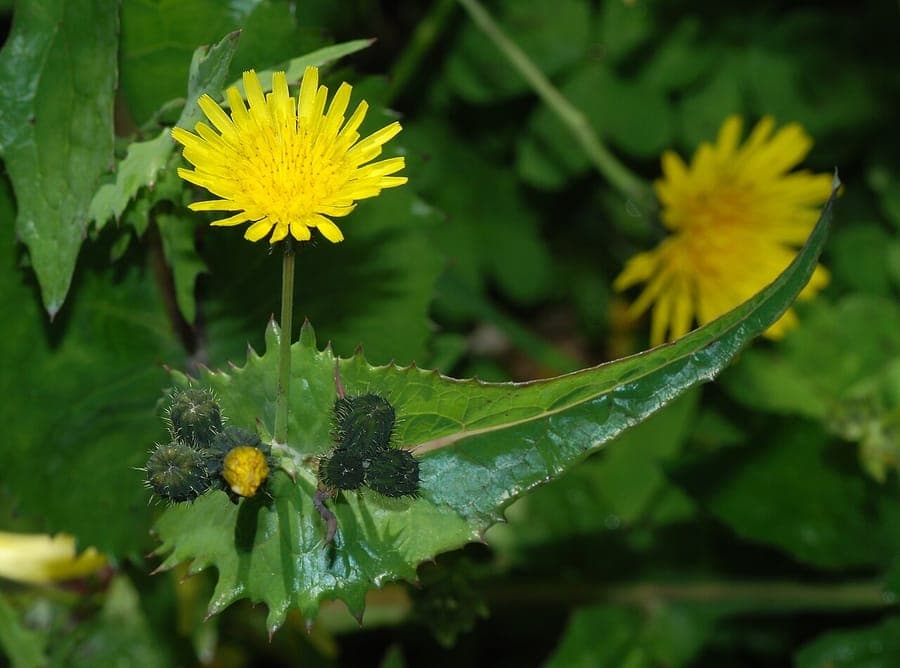
The leaves are the most striking feature. They are elongated to lance-shaped, approximately five to ten centimeters long. The leaves have jagged edges (toothed) and are green to bluish green. The leaves have a fairly rough appearance.
Flowers appear from June to September in northern Europe. The flowers are small to medium, approximately two to three centimeters in diameter. The flowers are bright yellow, with many small ray florets (ray flowers). They grow in flower clusters at the tops of branches.
The fruits are seeds with bristles (pappus), so they are dispersed by wind.
Ideal Location
Sonchus maritimus requires plenty of sun. Plant this plant in a sunny location where it receives at least six hours of direct sunlight per day.
The plant prefers coastal locations. Salt is not a problem - even sea air is good.
Wind is not a problem. The plant actually grows better in ventilated coastal areas.
The plant tolerates wet climates better than many other coastal plants, but still prefers dry conditions.
Soil
Sonchus maritimus prefers well-draining, light soil. Even salty soil is acceptable. Prepare soil as follows:
- Forty percent sand
- Thirty percent potting soil
- Thirty percent perlite
The plant accepts neutral to alkaline pH (6.5 to 8.5).
Good drainage is important. Although the plant tolerates more water than many coastal plants, feet should not be permanently wet.
Diseño gratis
¿Quieres ver Sonchus maritimus: complete guide en tu jardín? Crea un diseño gratis ahora.
Watering
Sonchus maritimus needs moderate water. This is a plant that tolerates both drought and moderately moist soil.
Growing period: Water moderately regularly. Let soil dry slightly between waterings. The plant tolerates sea air and salt well.
Summer period: Plant can tolerate drought. Water when soil feels dry.
Winter period: Minimal water. Plant grows little.
The plant is very adaptable. It will grow in both dry and slightly wetter conditions.
Pruning
Sonchus maritimus needs minimal pruning. Pruning not absolutely necessary.
Remove spent flowers during growing season to encourage more blooms.
Remove dead plant parts as needed.
Maintenance Calendar
February to March: Very light feeding possible to start. April to May: Growth begins. Start regular watering. June to September: Flowering period. Water as needed. Feeding monthly. October to November: Stop feeding. Plant rests. December to January: Minimal water. Plant rests.
Winter Hardiness
Sonchus maritimus is winter hardy in temperate climates. The plant can tolerate temperatures down to minus ten degrees Celsius.
In very wet winters even moderate cold can cause damage. Ensure very good drainage.
In coastal areas where temperatures rarely fall below zero, the plant grows well all year round.
Companion Plants
Sonchus maritimus grows well together with:
- Crithmum: Samphire, other coastal plants
- Eryngium: Sea holly
- Limonium: Statice, other salt plants
- Beta: Sea beet
- Armeria: Thrift plants
- Helichrysum: Everlasting flower, other coastal-tolerant flowering plant
These combinations create beautiful coastal gardens.
Conclusion
Sonchus maritimus is an interesting plant for coastal gardens. The yellow flowers and adaptation to salty conditions make it a valuable element.
With minimal care and plenty of sun, this plant will grow for years in salty coastal conditions. It is a sustainable and reliable choice for coastal gardens.
Seek young plants from coastal specialists or alpine plant centers. The plant is easy to grow in coastal areas.
Visit gardenworld.app for more coastal plant guides and design tips.
Order young plants from online plant suppliers.
Perfect for those seeking a salt-tolerant, yellow-flowering plant for coastal gardens.
¿Quieres ver Sonchus maritimus: complete guide en tu jardín? Crea un diseño gratis ahora.
Sube una foto, elige un estilo y obtén un diseño fotorrealista con lista de plantas en menos de un minuto.
Más de 10.000 jardines diseñados
Sin tarjeta de crédito


Plantas similares
Calendula stellata: complete guide
Calendula stellata
Complete guide to Calendula stellata, the star-flowered marigold from Sicily: location, soil, watering and companion planting tips.
Korean chrysanthemum: complete guide
Chrysanthemum x rubellum
Chrysanthemum x rubellum is a hardy autumn perennial with single pink to copper flowers from August to November. Care and combinations.
Helianthus divaricatus: complete guide
Helianthus divaricatus
Helianthus divaricatus is a North American woodland sunflower with yellow summer blooms, ideal for naturalistic borders and shady edges.